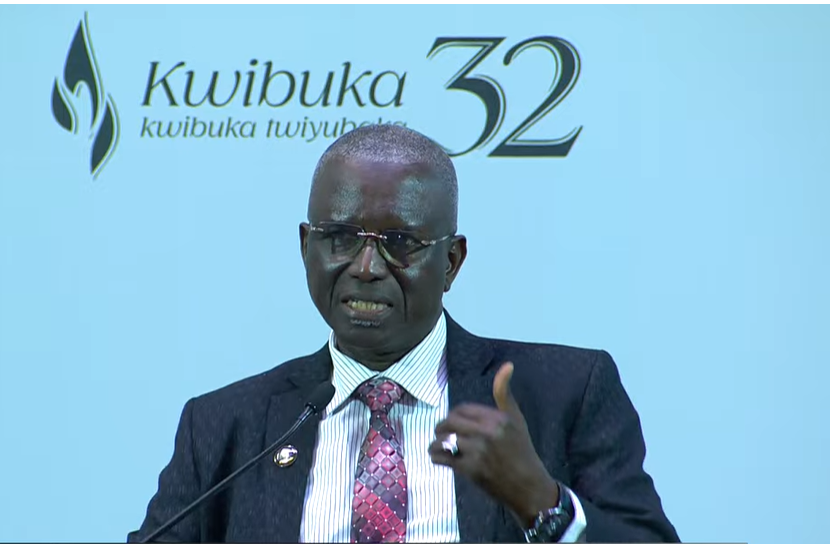
A former United Nations peacekeeper, Gen. Aboubacar Faye, has detailed how early warnings of the 1994 Genocide against the Tutsi were dismissed, despite clear evidence that mass killings were being planned.
Speaking at an international conference on genocide prevention on April 8, 2026, Faye, who served under the United Nations Assistance Mission for Rwanda (MINUAR), said critical intelligence shared with UN headquarters was deliberately disregarded.
He revealed that prior to the outbreak of the genocide, he and Lt. Gen. Romeo Dallaire sent a telegram outlining preparations for large-scale extermination. The message highlighted that the then-government was finalizing plans to target Tutsi, yet no action followed.
“We had clear warning signs. I witnessed it myself, yet we were unable to act to stop what was coming,” Faye said.
Faye pointed to early indicators observed as far back as 1993 in areas including Murindi, Ruhengeri, Byumba, and Kigali—among them, lists of Tutsi marked for killing, militia training, and sustained hate propaganda by RTLM.
He added that when Dallaire requested authorization to intervene, he was instructed not to act and to remain within the limits of his mandate. The now widely cited January 10, 1994 warning—often referred to as the “genocide fax”—was never acted upon.
Faye stressed that the failure to respond to these warnings allowed the genocide to unfold. He is among the few MINUAR soldiers who refused to withdraw as international forces pulled out, choosing instead to protect civilians at Amahoro Stadium in Kigali.
In previous testimonies, he has said he defied orders that would have left vulnerable Tutsi exposed, opting instead to remain and provide protection.