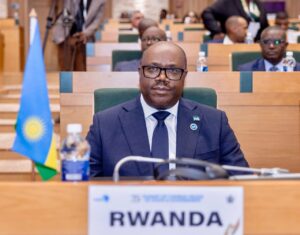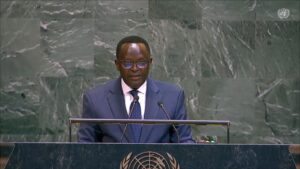
Rwanda’s Minister of Foreign Affairs and International Cooperation, Amb. Olivier Nduhungirehe, has accused the international community of failing to act despite having prior knowledge of the preparations for the 1994 Genocide against the Tutsi.
He made the remarks on Saturday evening, April 11, 2026, during a commemoration event held at the Nyanza ya Kicukiro Genocide Memorial as part of the 32nd commemoration of the Genocide against the Tutsi.
The memorial site is the final resting place of more than 105,000 victims, including about 3,000 Tutsi killed there on April 11, 1994, shortly after being abandoned at ETO Kicukiro by Belgian UN peacekeepers serving under the MINUAR mission.
Nduhungirehe said global institutions, including the United Nations and its Security Council, were in possession of intelligence indicating that mass killings were being planned, but failed to take preventive action.
“The international community, through the United Nations and the Security Council, had access to information. They received it, but nothing was done,” he said.
He also revisited the withdrawal of Belgian troops serving under the UN peacekeeping mission, saying it left civilians at ETO Kicukiro exposed to Interahamwe militia despite their urgent need for protection.
Nduhungirehe argued that the withdrawal amounted to abandonment of civilians in imminent danger.
“A professional soldier who leaves civilians behind while armed militia carrying machetes are approaching is not just abandoning them—it is effectively handing them over to killers,” he said.
He further criticized the United Nations for failing to fulfill its mandate to prevent mass atrocities, noting that decisions taken at the level of the UN Security Council, under international political pressure, contributed to the withdrawal of peacekeepers.
The minister added that international failure extended beyond 1994, pointing to earlier periods—including the colonial era, the preparatory phase of the genocide, and the genocide itself—arguing that global actors played a role through both action and inaction across different stages of the tragedy.