Researcher and author Tom Ndahiro has proposed that genocide memorials in Rwanda should include photographs and documented profiles of individuals who played roles in the 1994 Genocide against the Tutsi, arguing that remembrance must fully reflect both victims and perpetrators.
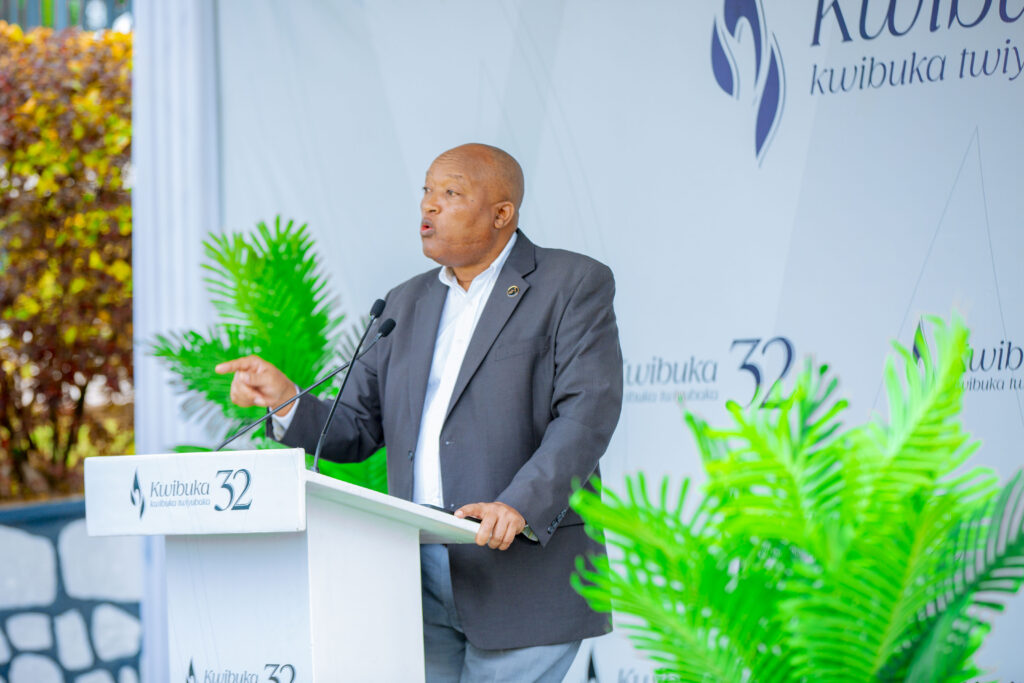
He made the remarks during the 32nd commemoration of the genocide held at the Nyanza District Genocide Memorial in Busasamana Sector, where he emphasized that memorialisation should go beyond honouring victims to clearly identifying those responsible for the atrocities.
Ndahiro argued that displaying perpetrators’ images alongside documented accounts of their actions would help visitors better understand the full history of the genocide and strengthen efforts to counter genocide ideology.
He said those buried in genocide memorials were killed by others, stressing that remembrance should also focus on accountability and historical clarity.
“The people who are buried in these memorials did not die on their own. When we remember, we must also understand who committed the crimes,” he said, adding that genocide remembrance should serve both Rwanda and humanity by preserving the full truth.
Ndahiro also underscored the importance of education in preventing genocide ideology, noting that such ideology is often developed and spread by educated individuals rather than the uninformed. He called for stronger efforts to teach genocide history and prevention at all levels of education, including secondary schools, and urged closer collaboration among institutions such as the Ministry of Education and the Ministry of National Unity and Civic Engagement.
He cited historical examples of individuals involved in extremist movements and genocide planning, arguing that their identities and actions should be documented and made accessible as part of public historical education.
Ndahiro further suggested that even genocide deniers and revisionist writers should be referenced in memorial spaces, saying their narratives form part of the broader historical record that must be confronted rather than ignored.
He maintained that genocide memorialisation should rely strictly on verified documentation, including writings, public statements and historical records, in order to prevent distortion of facts and ensure that future generations fully understand the origins, execution and consequences of genocide ideology.