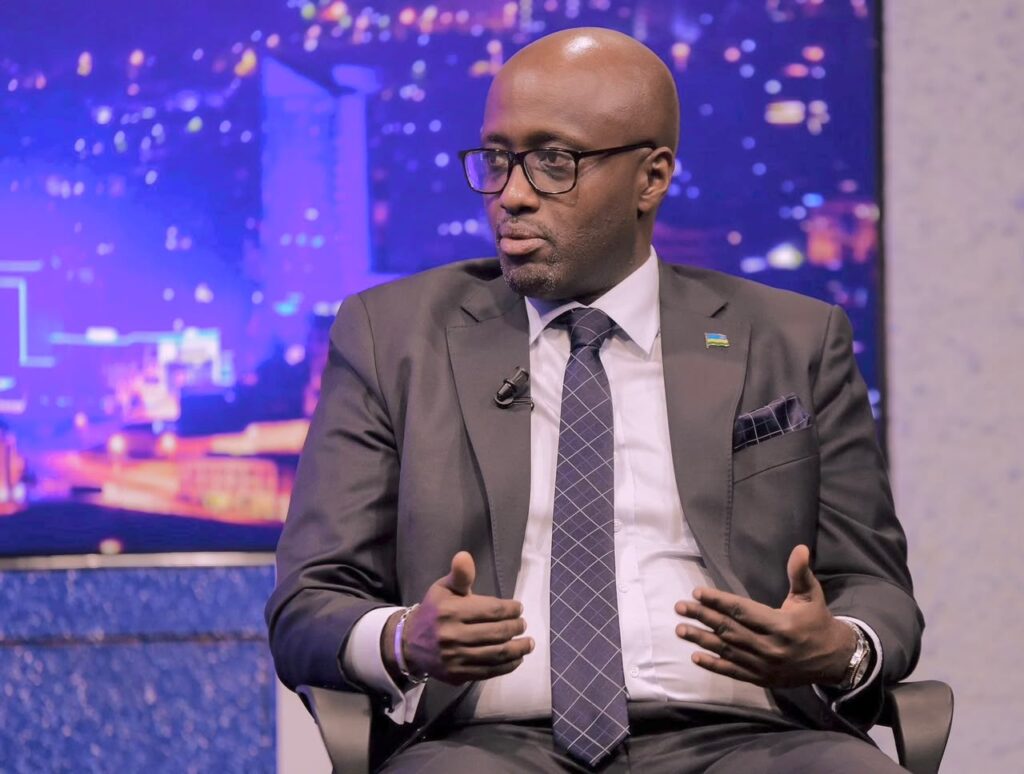
Minister of Foreign Affairs and International Cooperation, Amb. Olivier Nduhungirehe, has said that the continued tensions between Rwanda and the Democratic Republic of Congo (DRC) stem from a combination of historical legacies, internal Congolese dynamics, and governance challenges in Kinshasa.
He made the remarks during an interview with B&B Kigali FM, where he argued that multiple attempts to normalize relations between the two countries have repeatedly stalled due to unresolved underlying issues.
Nduhungirehe said the long-running tensions, which date back more than three decades, have at times shown signs of progress but have often been reversed due to decisions taken by Congolese authorities.
He also criticized international reporting on the conflict in eastern DRC, saying it often misrepresents the situation by framing it primarily as a Rwanda-related issue rather than a complex internal conflict within Congo.
“The issue of Congo is often misrepresented by international media, and even foreign governments tend to frame the conflict in eastern Congo as a Rwanda problem, as if it were a simple narrative, while in reality it is far more complex,” he said.
The minister outlined three main factors he said continue to prevent the full normalization of relations between Kigali and Kinshasa.
The first, he said, is rooted in the aftermath of the 1994 Genocide against the Tutsi, during which perpetrators fled into then-Zaire (now DRC). He said elements of the former Rwandan Armed Forces (FAR) and Interahamwe militias crossed the border without being disarmed and later reorganized.
He said these groups eventually evolved into the FDLR, which he described as an armed threat still operating in eastern DRC. He added that Rwanda maintains defensive measures in response to what it considers ongoing security risks.
Nduhungirehe said regional and international mediation efforts have sought to address these concerns, including agreements reached in Washington that he said provide for the dismantling of the FDLR by the DRC, alongside the lifting of Rwanda’s defensive measures.
The second factor, he said, relates to internal tensions within the DRC, particularly the discrimination and exclusion of communities who speak Kinyarwanda or are perceived as ethnically linked to Rwanda. He said such groups have faced violence, displacement, and marginalization, contributing to cycles of insecurity and the emergence of armed groups.
He linked these dynamics to the formation of groups such as M23 under the AFC coalition, and said misinformation has fueled accusations that Rwanda supports the group for resource-related interests in eastern Congo.
The third factor, according to Nduhungirehe, is governance challenges in the DRC, including corruption, weak public services, and limited infrastructure in sectors such as health and education. He also noted that more than 250 armed groups are currently active in the country, contributing to widespread instability.
He further argued that progress in bilateral relations has been hampered by what he described as a lack of implementation of previously signed agreements, including recent commitments reached in Washington between the two countries.
While he said Rwanda has begun implementing its obligations under the agreements, he claimed progress has been slowed by the DRC’s failure to act on key provisions, particularly those related to the dismantling of the FDLR.
Rwanda and the DRC have signed multiple agreements in recent years aimed at restoring peace and improving relations, but tensions between the two neighbors remain unresolved.