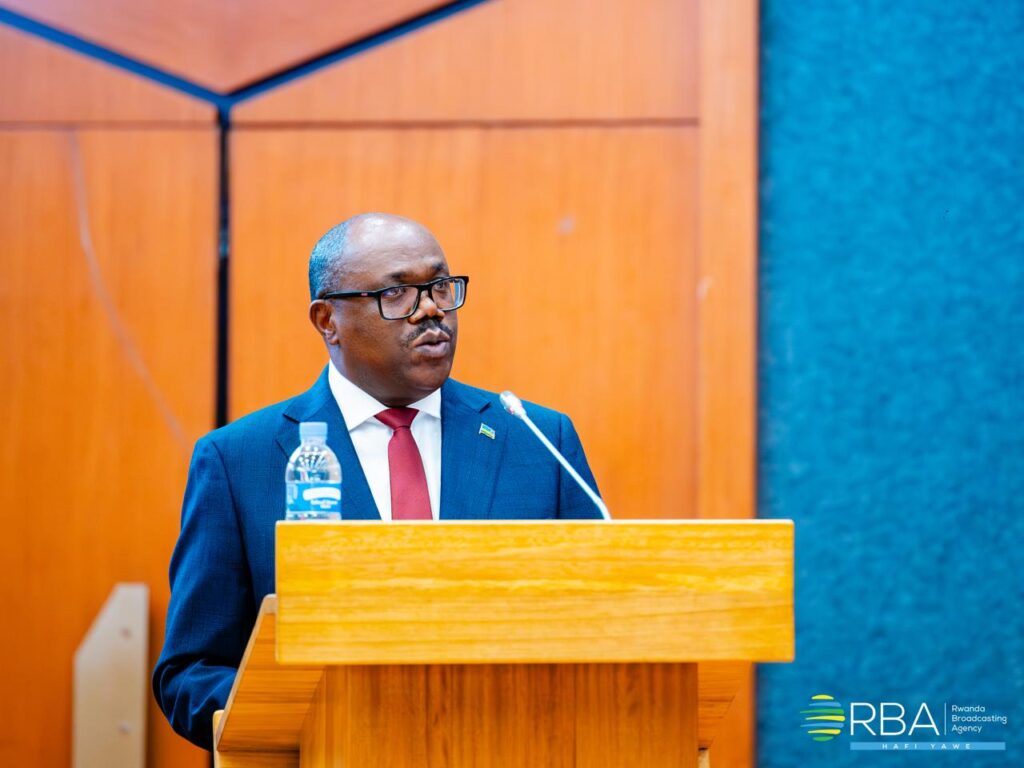
Prime Minister Dr. Justin Nsengiyumva has challenged Rwandan investors to move beyond small-scale personal achievements and pursue ambitious businesses capable of generating greater wealth and transforming the economy.
He made the remarks while addressing Parliament on the government’s efforts to strengthen economic growth and improve citizens’ welfare, following concerns over some industries operating below their full production capacity.
The Prime Minister said some private sector players are held back by limited ambition, despite having the potential to build much larger enterprises.
“Someone can buy a V8 vehicle, build a house and feel satisfied, yet they may have the capacity to do something that can make them a billionaire,” Dr. Nsengiyumva said.
He said Rwanda needs more entrepreneurs with a long-term vision who are willing to invest in expanding production, creating jobs and competing in larger markets.
The comments followed a question from lawmakers about challenges affecting industries, including factories operating below 50% capacity.
Dr. Nsengiyumva said government assessments have found cases where some manufacturers operate at only 30% capacity but continue to cite lack of markets as a major challenge.
“You find a factory operating at 30% capacity saying there is no market, yet its current production accounts for only about 1% of the available market, with the rest being supplied through imports,” he said.
He argued that some businesses need to focus more on increasing production and exploring available opportunities instead of relying heavily on government support.
The Prime Minister also criticised what he described as a dependency mindset among some investors who expect the government to address most challenges facing their businesses.
He contrasted this with foreign investors who often seek basic support, such as access to land, and then invest their own resources to develop businesses.
However, he noted that the situation is gradually changing as a new generation of entrepreneurs with broader ambitions emerges.
Rwanda is seeking to accelerate industrial growth under the Second National Strategy for Transformation (NST2), which targets a 10% annual increase in industrial output.
The country currently has 11 industrial parks covering 1,659 hectares, with more than 1,500 plots available. So far, 303 factories have been established and are producing goods.
A recent report presented to the Senate, however, highlighted persistent challenges facing industrial development, including inadequate infrastructure such as electricity, water supply and roads in some industrial zones.