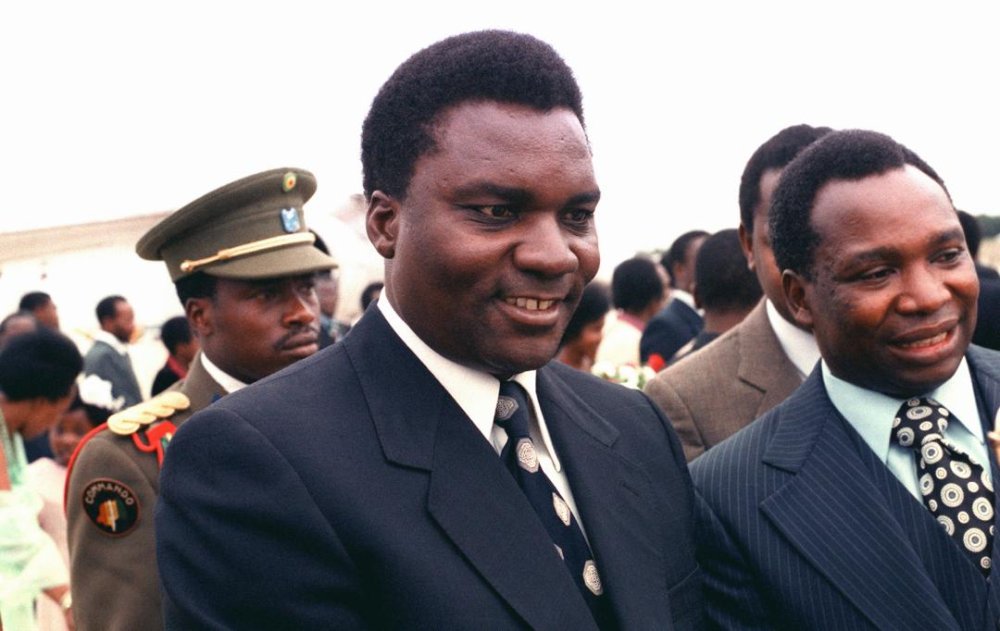
On July 5, 1973, Defence Minister Juvénal Habyarimana seized power in a military coup that removed President Grégoire Kayibanda, bringing an end to Rwanda’s First Republic and beginning more than two decades of rule under his leadership.
The coup was carried out by senior military officers who announced the takeover the following day, presenting it as a response to political instability and a move aimed at restoring peace and national unity.
Kayibanda, Rwanda’s first president after independence, was removed from office and placed under detention alongside members of his family, senior political figures and military officials linked to his administration.
The takeover occurred during a period of growing political and ethnic tensions in Rwanda. In the years leading up to 1973, discrimination against Tutsi had intensified, with restrictions affecting access to education, employment and public institutions.
After consolidating power, Habyarimana established a government that promised a new political direction based on unity, peace and development. In his early public statements, he portrayed the military takeover as necessary to protect the country from instability and restore order.
However, historians and observers have noted that while Habyarimana initially presented himself as a leader seeking national reconciliation, his government later maintained and reinforced systems of exclusion that affected Tutsi communities.
In 1975, Habyarimana created the National Revolutionary Movement for Development (MRND), which became Rwanda’s sole legal political party. The party dominated political life throughout his presidency, while state institutions remained highly centralized.
His administration maintained policies based on ethnic quotas in education and public employment, limiting opportunities for many Tutsi. Critics argue that these policies deepened divisions that had characterized Rwanda’s politics since independence.
Although the initial coup was not accompanied by widespread violence, repression followed in subsequent years. Several senior officials from the previous government were arrested, and some later died in detention.
Kayibanda died in 1976 while under house arrest in Kavumu, in the former Gitarama Prefecture, after being detained by Habyarimana’s government.
Throughout his rule, Habyarimana publicly emphasized national unity and called on citizens to reject divisions based on ethnicity and regional identity. However, his government was later criticized for failing to eliminate discriminatory practices and for allowing extremist political ideas to grow in the early 1990s.
Habyarimana’s presidency ended on April 6, 1994, when the plane carrying him and Burundi’s President Cyprien Ntaryamira was shot down near Kigali. The incident triggered the 1994 Genocide against the Tutsi, in which more than one million people were killed, including Tutsi and moderate Hutu who opposed the violence.
More than three decades after his rise to power, Habyarimana’s legacy remains one of the most debated chapters in Rwanda’s modern history. Supporters highlight periods of stability and development during his rule, while critics focus on political repression, ethnic discrimination and the role of state policies in creating conditions that contributed to the tragedy of 1994.