From the mysterious “pillar of mercy” to the royal Inyambo cattle, Rwanda’s Royal Palace Museum in Rukali offers a rare window into the traditions, symbols and daily life of the country’s former monarchy.
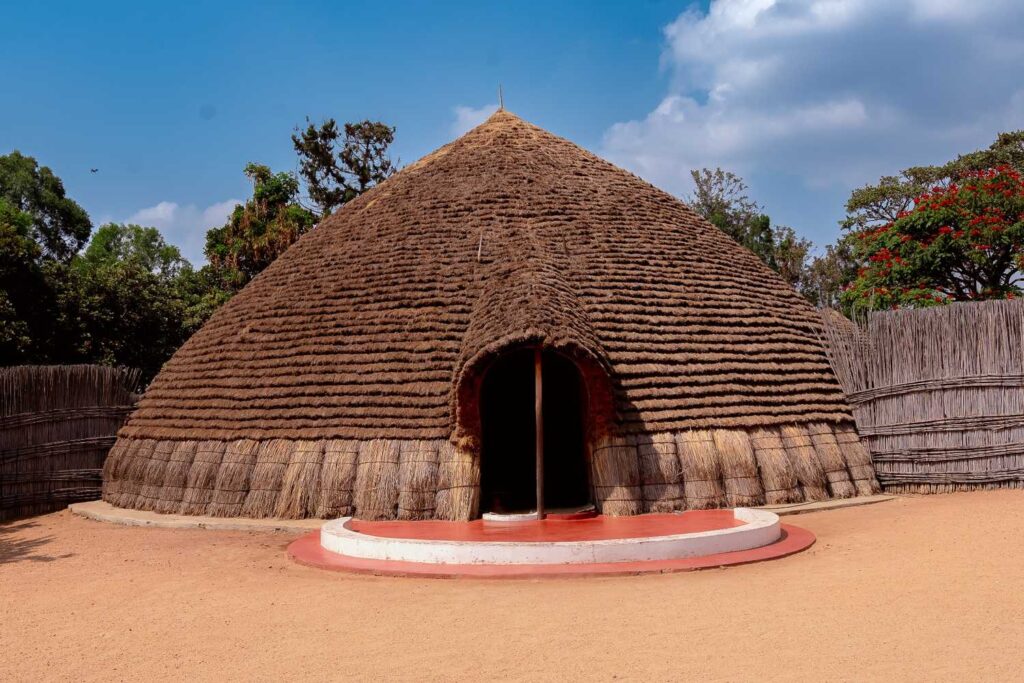
Located in Busasamana Sector, Nyanza District, the museum preserves the legacy of King Mutara III Rudahigwa and showcases the customs that shaped Rwanda’s royal court. The site includes the modern palace built in the 1930s for King Rudahigwa and a traditional royal residence reconstructed to reflect Rwanda’s earlier monarchy.
The palace, which sits about five kilometres from Nyanza town, was built in 1932 and became the residence of King Mutara III Rudahigwa. Today, it remains one of Rwanda’s most important cultural heritage sites, offering visitors insight into the organisation of royal life and governance.
A journey through royal traditions
Before entering the royal compound, visitors first reach Karubanda, an open area where the king held meetings and delivered judgments.
Near the entrance stand important trees, including umuvumu, a tree traditionally associated with blessings and prosperity. Its bark was used to make traditional clothing known as impuzu, while its wood was used for household items such as containers and stools.
Another significant tree is umuko, which is linked to traditional stories about Ryangombe, a figure regarded by some communities as a mediator between humans and the divine.
In the past, entering the royal residence required strict respect for royal protocol. Visitors had to introduce themselves by mentioning their names and ancestry, sometimes tracing their lineage back several generations, before being granted access to meet the king.
The pillar of mercy
Inside the royal compound was a restricted area known as Nyirantarengwa, marked by a white boundary that visitors were not allowed to cross.
A special pillar at the entrance, known as Inkingi y’Imbabazi (the pillar of mercy), carried a powerful symbolic meaning. According to tradition, a person who had been sentenced to death but managed to reach and touch the pillar would be granted forgiveness.
The palace also contained symbols that reflected social status and authority, including special structures on the roof that identified royal and high-ranking residences.
Inside the king’s residence
The interior of the palace was organised according to different functions. Separate sections were designated for men and women waiting for audiences with the king.
Visitors can still see areas that reflected royal life, including the king’s living quarters and traditional storage facilities for clothing and other belongings.
The royal compound also had specialised buildings, including a milk house and a traditional brewery where royal beverages were prepared and stored.
The royal Inyambo cattle
One of the museum’s biggest attractions is the Inyambo cattle, known for their long, impressive horns and their connection to Rwanda’s royal heritage. These cattle were historically symbols of prestige and were closely associated with the king’s court.
The animals remain a living representation of Rwanda’s cultural traditions, with visitors able to experience the unique relationship between the cattle and their caretakers.
Today, the Royal Palace Museum in Rukali stands as a gateway to understanding Rwanda’s history, preserving stories of leadership, culture and traditions for future generations.