Rwanda’s Minister of National Unity and Civic Engagement, Dr. Jean-Damascène Bizimana, has warned journalist Etienne Gatanazi over giving a platform to Charles Ndereyehe Ntahontuye, a man convicted of genocide crimes and sentenced to life imprisonment.
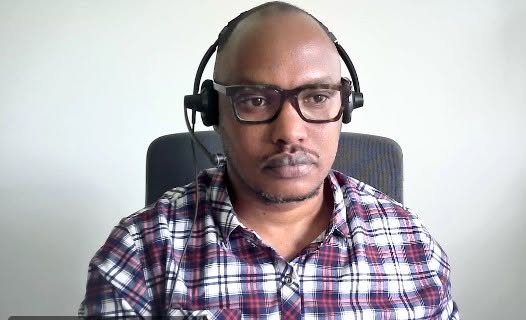
Gatanazi interviewed Ndereyehe about agriculture on his YouTube programme, The Real Talk. The interview has sparked criticism, with Bizimana arguing that the issue is not Ndereyehe’s discussion of agriculture but his history and the decision to present him as an ordinary public figure.
Bizimana said anyone giving Ndereyehe a platform should be aware of his judicial record and alleged role in the 1994 Genocide against the Tutsi.
“Anyone who gives Ndereyehe a platform or supports him in any way should understand that Ndereyehe is not an innocent politician; he is a convicted mass murderer,” Bizimana said.
The minister linked Ndereyehe’s activities to the period before and during the genocide, particularly his leadership of the agricultural and livestock development project known as PDAG in Gikongoro from 1988.
Bizimana alleged that Ndereyehe was involved in activities targeting Tutsi and played a role in the establishment of the Interahamwe militia in Gikongoro, alongside Captain Faustin Sebuhura and other officials.
He further alleged that vehicles were used to transport Interahamwe members to training sessions and locations where attacks against Tutsi were carried out.
Bizimana also said Ndereyehe began openly persecuting Tutsi following the outbreak of the war in October 1990, including employees at PDAG, which he headed.
Ndereyehe’s genocide conviction
Ndereyehe later served as Director General of the Agricultural Research Institute of Rwanda (ISAR) at Rubona during the 1994 Genocide against the Tutsi.
A Huye District report on the history of the genocide states that he became director general of ISAR Rubona on January 27, 1992, before later fleeing to the Netherlands. The report says he was accused of genocide crimes committed at the institution in 1994.
The former National Commission for the Fight against Genocide (CNLG), whose responsibilities were transferred to the Ministry of National Unity and Civic Engagement, identified Ndereyehe as one of the founders of the CDR political party, which was involved in the planning and implementation of the genocide.
The Gikirambwa Gacaca Court sentenced Ndereyehe to life imprisonment on November 5, 2008, after convicting him of genocide-related crimes connected to ISAR. The trial was conducted in his absence.
Bizimana cites international prosecutions
Bizimana said international justice efforts continue to pursue people accused of involvement in the Genocide against the Tutsi who remain in different countries.
He cited Dr. Sosthène Munyemana and Dr. Eugène Rwamucyo, who were convicted by French courts in cases related to the genocide.
Bizimana urged people who give Ndereyehe a platform to exercise caution, stressing that genocide crimes are not subject to a statute of limitations.
“Those promoting Ndereyehe should be careful and stop insulting the memory of the Tutsi who were killed because of his brutality. The crime of genocide does not expire,” he said.
The remarks have renewed discussion about the responsibility of media practitioners and online content creators when interviewing people convicted of genocide crimes, particularly the importance of providing sufficient historical and judicial context.