Public schools continue to face challenges in matching the academic performance of private institutions, with Rwanda’s latest national examination results highlighting disparities in student achievement and learning conditions.
The National Examination and School Inspection Authority (NESA) released the results of the 2025/26 Primary Leaving Examination (PLE) and Ordinary Level (O’Level) examinations on August 20, 2026. The results showed a marked improvement in overall performance at both levels compared with the previous academic year.
At primary level, 88.21% of candidates passed the national examination, up from 75.6% in 2024/25. A total of 277,579 candidates sat the examination, with boys recording a pass rate of 89.59%, compared with 87.1% for girls.
However, the strong national performance has also drawn attention to differences between public and private schools, with many of the top-performing candidates coming from private institutions.
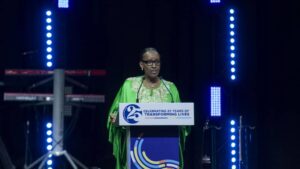
State Minister for Education Claudette Irere acknowledged that students in public schools face learning conditions that can affect their performance, particularly overcrowding in classrooms.
“You cannot ignore the fact that sometimes children learn under different conditions. Some students study in large numbers, and you cannot compare them with those studying in smaller groups. But that is why we are here—to continue supporting them so that they can also perform well,” Irere said.
She said the government was focused on addressing such challenges and ensuring that students in public schools also have the opportunity to achieve stronger results.
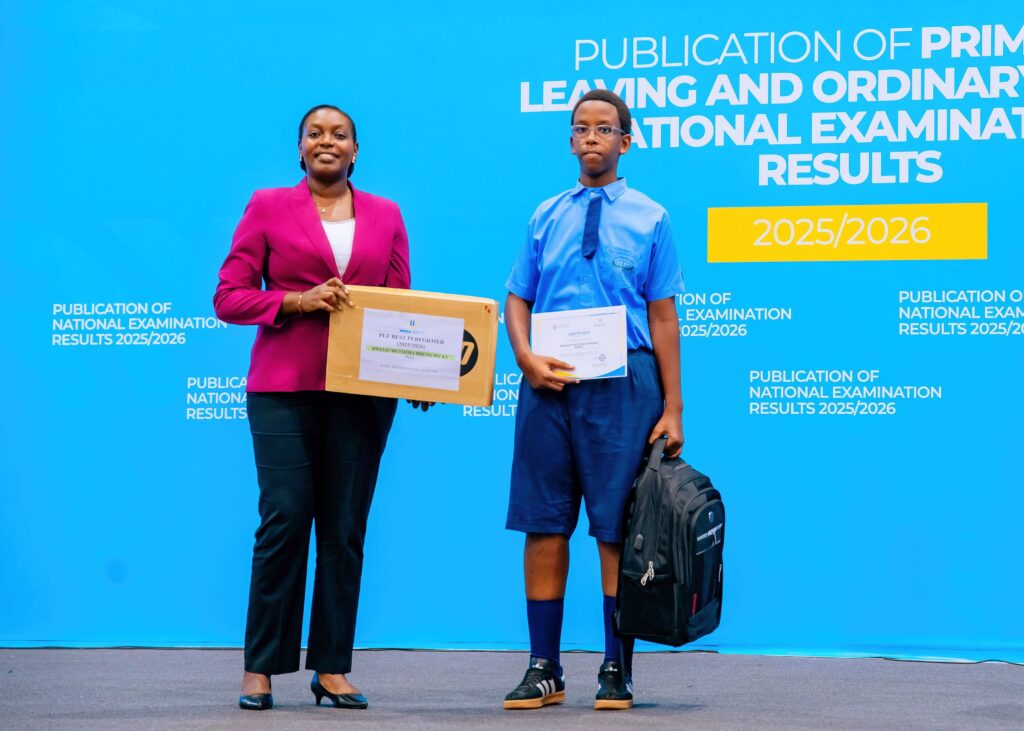
Rwego Mutijima Bruno, a student at Ecole Internationale La Racine in Bugesera District, emerged as the top-performing candidate in the Primary Leaving Examination, scoring 99.6%.
Among the primary school graduates who qualified for secondary education, 243,958 were allocated places in secondary schools. Of these, 17,412 were placed in boarding schools, while 225,546 were assigned to day schools.
At O’Level, 149,015 students sat the national examinations, with 85.70% passing. Boys recorded a pass rate of 89.8%, while girls recorded 82.63%.
Uwamariya Leontine of ASF Nyamasheke and Isimbi Musonga Olla of FAWE Girls School in Gasabo District were the joint top performers at O’Level, each scoring 98.7%.
District-level results also revealed significant differences in performance. Kirehe recorded the strongest results, followed by Musanze and other high-performing districts, while Nyarugenge and Gasabo were among those with weaker O’Level performance. Kirehe recorded almost 100% pass rates at both primary and O’Level, according to the results.
The improvement in national results was particularly notable in several primary-level subjects. Mathematics recorded a major increase in the pass rate, rising from 27.6% to 50%, while Science improved from 71% to 81%. General Knowledge and Religious Education also rose from 75% to 95%.
However, English performance declined from 72% to 68%, while Kinyarwanda edged down slightly from 98.4% to 98.3%, pointing to areas where further intervention may be needed.
NESA Director General Dr. Bernard Bahati said the number of students scoring below 50% had fallen significantly compared with the previous academic year, indicating that more learners had moved into higher performance categories.
The latest results therefore present a mixed picture for Rwanda’s education sector: national performance has improved substantially, but differences in learning environments and school-level outcomes remain a concern.
For policymakers, the challenge will now be to sustain the gains while ensuring that improvements are shared more evenly across public and private schools and between districts.