Rwanda is stepping up efforts to detect emerging disease threats before they develop into outbreaks, as health authorities move to strengthen the country’s ability to track how infectious diseases change at the genetic level.
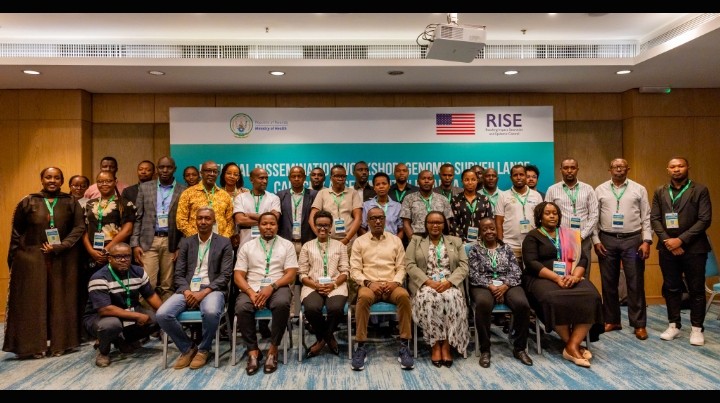
The Rwanda Biomedical Centre (RBC), together with its partners, on Friday convened infectious disease specialists, laboratory professionals and researchers to assess the country’s genomic surveillance capacity and identify areas that need further strengthening.
Genomic surveillance allows scientists to examine the genetic makeup of pathogens and monitor how they evolve, helping health authorities identify new variants and changes that could influence how diseases spread or respond to interventions.
For Rwanda, the goal is to ensure that warning signs are detected early enough to allow authorities to act before a health threat becomes more difficult to control.
Prof. Claude Mambo Muvunyi, Director General of RBC, said genomic surveillance is not simply about acquiring sophisticated technology but about strengthening the country’s ability to anticipate and respond to health threats.
“Genomic surveillance goes beyond technology; it enables us to detect potential threats to health early and protect healthcare workers, researchers and communities,” Muvunyi said.
Rwanda has developed considerable experience in disease surveillance and outbreak response, supported by laboratory systems, trained health professionals and mechanisms for monitoring infectious diseases.
However, health authorities say strengthening genomic surveillance will provide an additional layer of intelligence by showing not only which pathogens are circulating, but also how they are changing.
This can help scientists identify emerging pathogens or important genetic changes in diseases already present in the country, giving policymakers more evidence to guide public-health interventions.
The initiative comes as Rwanda seeks to strengthen its preparedness for future epidemics and other health emergencies.
Under the country’s 2026–2030 health priorities, Rwanda plans to expand disease surveillance, strengthen laboratory and genomic analysis capacity and develop the skills of scientists and other specialists working in the field.
The investment is expected to improve the speed and accuracy with which health authorities can identify potential threats and support rapid decision-making.
For RBC, genomic surveillance is increasingly becoming a critical tool in moving from a largely reactive approach to outbreak control towards earlier detection and prevention.
Rather than waiting for an outbreak to spread before understanding its characteristics, authorities hope stronger genomic capabilities will provide an early warning system—giving Rwanda more time to investigate threats, target interventions and protect communities.
The approach also strengthens Rwanda’s broader health security efforts by linking laboratory science, disease surveillance, research and public-health decision-making.
As infectious diseases continue to evolve and cross borders more easily, Rwanda says building this capacity will be essential to identifying the next health threat early and responding before it grows into a wider crisis.