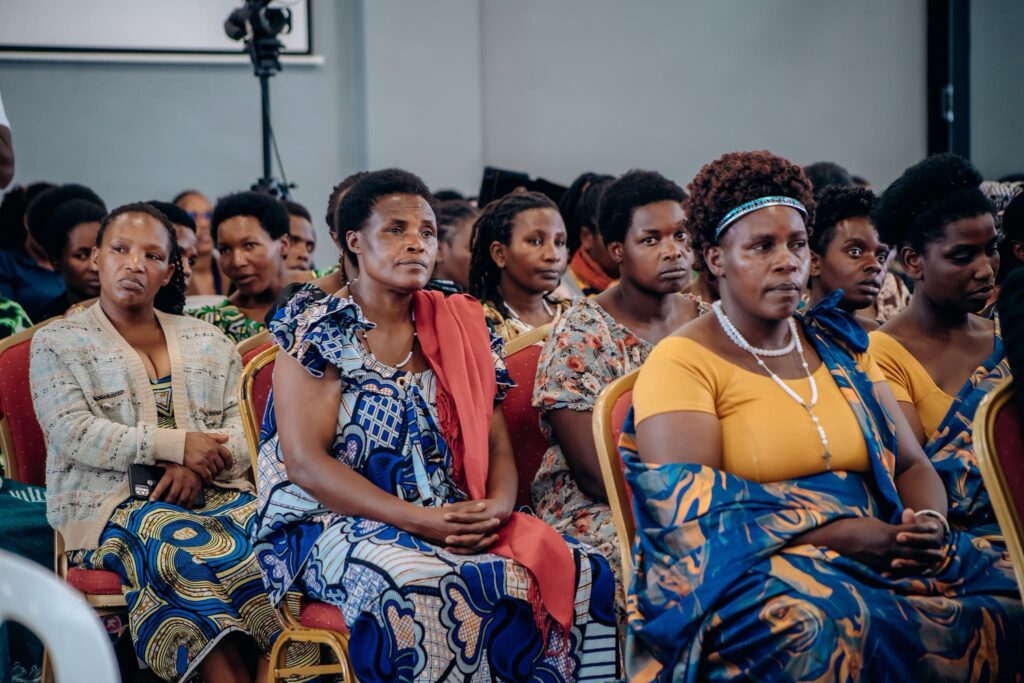
More than 615,000 women across 21 districts have been reached through Gendana Konti, a financial inclusion programme launched by the National Bank of Rwanda (BNR) to help women access and manage financial services.
BNR says 615,470 women have so far participated in the programme, while 218,388 have been connected to mobile money services.
The programme is helping some women gain greater control over their finances and improve the way they manage money in their businesses and households.
In Burera District, some beneficiaries say access to financial services through their own mobile phones has made it easier to receive payments and manage income from small businesses.
One woman said she previously depended on her husband’s phone number when customers wanted to pay her because she did not have her own mobile money account.
“You would find that I had gone to sell without my husband, and someone wanted to pay me. I would tell them that I did not have a SIM card and would have to give them my husband’s number. If the person was dishonest, they could fail to send him the money,” she said.
BNR says such challenges demonstrate the importance of giving women direct access to financial services, particularly mobile money, so they can independently manage their income and participate in economic activities.
In Burera, more than 36,000 women have so far been reached through the Gendana Konti campaign.
Burera District Mayor Mukamana Solina called for continued efforts to encourage households to embrace financial services, including among women, young people and persons with disabilities.
“I want to encourage women, especially my fellow women, to continue sensitising families, particularly our husbands, but also children, young people and persons with disabilities, so that every group embraces the Gendana Konti programme as a standard practice,” she said.
Gendana Konti was launched by BNR in 2022, initially in Nyaruguru and Nyamasheke districts, before being expanded to 21 districts.
BNR Governor Soraya Hakuziyaremye said expanding access to financial services is important for ensuring that more citizens can participate in and benefit from economic growth.
“For the country to achieve its goals, every citizen must have access to the economy and sustainable prosperity. It is not simply about having money, but about what you produce and how you use it to improve your life and the wellbeing of your family,” she said.
BNR said it plans to extend its financial inclusion activities to young people in rural districts, with the broader goal of increasing access to financial services and supporting progress towards Vision 2050.