For more than 75 years, Formula 1 has grown beyond a motor racing competition into a global platform for cutting-edge technology, elite drivers, major automotive manufacturers, business and entertainment, attracting millions of fans worldwide.
Rwanda is preparing to become part of this history following the announcement on October 13, 2026, of a 10-year agreement to host the Formula 1 African Grand Prix in Bugesera from 2030. The event is expected to bring Formula 1 back to the African continent after more than 35 years.
Announcing the agreement, FIA President Mohammed Ben Sulayem, Formula 1 President Stefano Domenicali and President Paul Kagame said the project would go beyond hosting a single race. It is also intended to promote tourism, business, technical knowledge and the development of African talent in motorsport.
The move would place Rwanda among the countries capable of hosting major international sporting events, following its experience with competitions such as the UCI cycling championships and the Basketball Africa League (BAL).
What is Formula 1, and why is it called that?
Formula 1 began in 1950.
The name refers to the set of technical and sporting regulations governing the design of the cars, driver safety, engines, vehicle weight and dimensions, and the way races are conducted. All participating teams must comply with these rules.
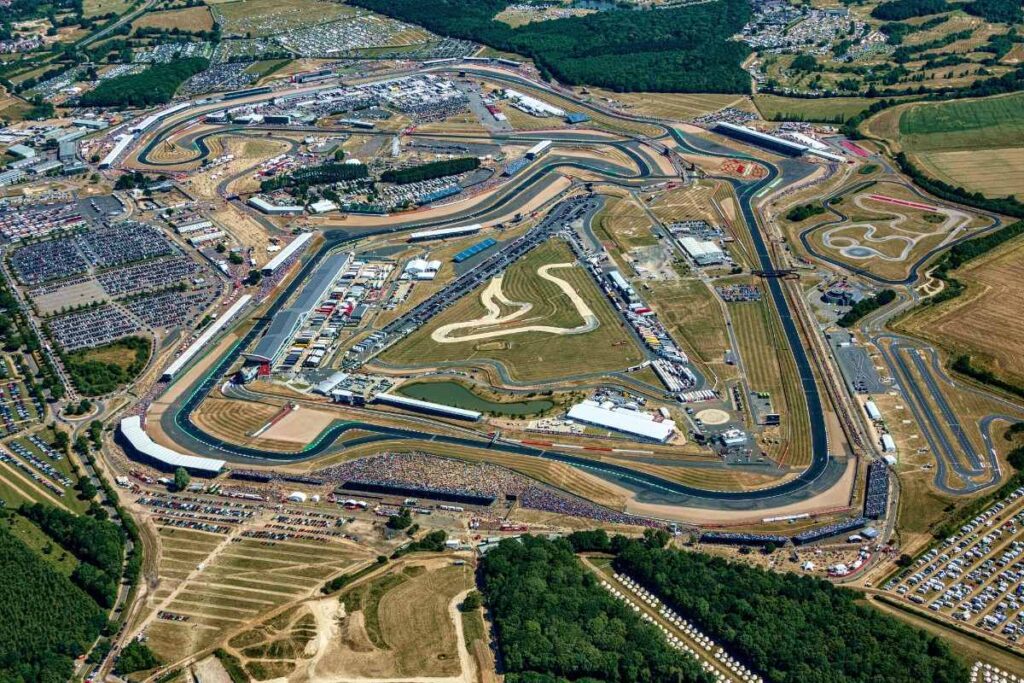
Motor racing dates back to the early 20th century, but the Formula 1 World Championship was established in 1950. The first championship race took place on May 13 that year at Silverstone in the United Kingdom, on a former military airfield. Italian driver Giuseppe Farina won the inaugural race.
Formula 1 has two major championships. The Drivers’ World Championship goes to the driver who accumulates the most points throughout the season, while the Constructors’ Championship is awarded to the team whose two drivers collectively earn the most points.
Races take place at different types of venues. Some are purpose-built circuits, such as Silverstone in the United Kingdom, while others use city streets, as in Monaco and Singapore. Other circuits are designed for a range of motorsport activities.
Since its establishment in 1950, the championship has been held annually. A season typically runs from March to December, with races staged across several months of the year.
The overall competition is known as Formula 1, while each individual race is called a Grand Prix. Different countries host races on the calendar, and Rwanda’s planned event has been named the African Grand Prix. A typical season features around 24 Grands Prix.
Each Grand Prix generally lasts between 90 minutes and two hours, although the duration can vary depending on race conditions and interruptions.
What makes Formula 1 cars special?
Formula 1 is not a competition involving ordinary road cars. It uses highly specialised, low-slung, single-seat racing cars designed for exceptional speed and performance. Under suitable conditions, these cars can reach speeds of around 375 kilometres per hour.
The cars use hybrid power units that combine an internal combustion engine with an electrical system capable of recovering and deploying energy to improve performance.
They also rely on aerodynamics. The shape of the car’s body and wings helps generate downforce, improving grip on the track while managing air resistance.
Safety is another major feature. The cars have a strong protective survival cell around the driver and a structure known as the Halo, which helps protect the driver’s head during a crash.
Teams constantly monitor tyre temperatures, energy use, fuel consumption and the performance of different car components. They use this data to make strategic decisions during races.
Pit crews also play a crucial role. During a pit stop, mechanics can change all four tyres in approximately two seconds under ideal conditions, although the exact time varies.
In the 2026 season, Formula 1 has 11 teams, each fielding two drivers, meaning 22 cars compete for championship points.
The teams include Ferrari and Racing Bulls, based in Italy; McLaren, Williams and Aston Martin, based in the United Kingdom; Mercedes and Audi, based in Germany; Red Bull Racing, based in Austria; Alpine, based in France; and Haas and Cadillac, based in the United States.
What will make Rwanda’s African Grand Prix unique?
From the first race at Silverstone in 1950 to the major events held around the world today, Formula 1 has continued to expand, bringing together sport, technology and business.
Rwanda is set to become part of that history through the African Grand Prix, which would mark Formula 1’s return to the African continent for the first time since 1993, when South Africa last hosted a race.
The name African Grand Prix carries significance beyond a competition held in one country. The event could give Africa a platform to demonstrate its ability to host major international sporting events, develop motorsport and connect with Formula 1 fans across the continent.
Rwanda’s distinction will not simply be that it is hosting Formula 1, since the championship has been held in many other countries. Rather, the project is expected to combine the race with Rwanda’s tourism offering, the development of a new international airport and wider opportunities for business and investment.
Formula 1 races take place on circuits, which are tracks specifically designed or adapted for motor racing. Rwanda’s planned circuit will be built in Bugesera District, near the site of the new international airport.
The proposed track is expected to measure approximately six kilometres and feature 17 corners.
According to information reported by Reuters, the circuit is expected to be designed by former Formula 1 driver Alex Wurz in collaboration with the circuit-design firm led by Hermann Tilke. It is planned to accommodate up to 100,000 spectators.
Before a new circuit can host a Formula 1 race, the Fédération Internationale de l’Automobile (FIA), the sport’s governing body, must assess its design and safety provisions. An inspection is also required after construction to establish whether the facility meets the necessary standards.
Although some preliminary details of the Bugesera circuit have been announced, its final design and other technical specifications are still awaited.
Before Rwanda’s planned entry, Africa had previously hosted Formula 1 championship races in Morocco and South Africa.
Morocco hosted one World Championship race, the 1958 Moroccan Grand Prix, held on the Ain-Diab circuit near Casablanca.
South Africa hosted the South African Grand Prix on several occasions, including races between 1962 and 1993. The most recent took place at Kyalami in 1993.
Drivers who have made Formula 1 history
Throughout Formula 1’s history, several drivers have distinguished themselves by winning multiple world championships and recording numerous race victories.
Lewis Hamilton and Michael Schumacher jointly lead the list of drivers with the most world championship titles, with seven each. They are followed by Juan Manuel Fangio, who won five titles, while Alain Prost, Sebastian Vettel and Max Verstappen have four apiece.
Hamilton won his first championship in 2008 with McLaren before securing six more titles with Mercedes between 2014 and 2020.
Schumacher won two championships with Benetton and five consecutive titles with Ferrari between 2000 and 2004. Verstappen also won four consecutive championships from 2021 through 2024.
In terms of Grand Prix victories, Hamilton leads the all-time list with 106 wins, followed by Schumacher with 91 and Verstappen with 73.