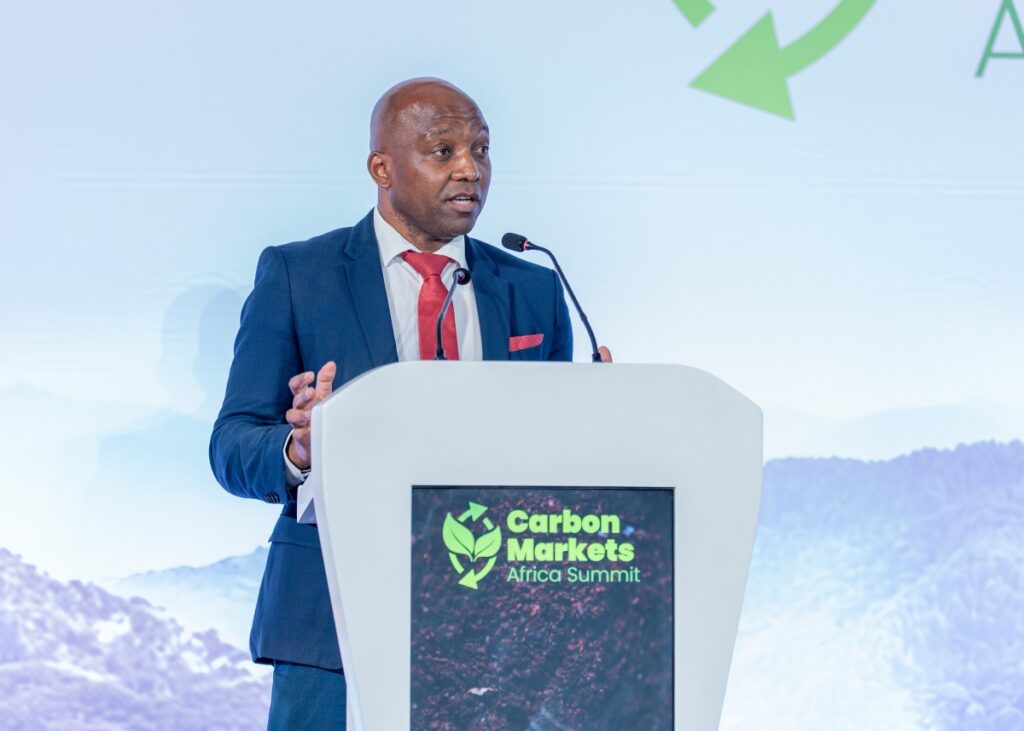
African countries have been urged to introduce reforms that increase the financial benefits communities receive from carbon markets, recognising their important role in environmental conservation and protecting forests that help reduce greenhouse gas emissions.
The call was made during the Africa Carbon Markets Summit 2026, taking place in Kigali from October 13 to 15.
Maxwell Gomera, head of the Africa Sustainable Finance Hub and a representative of the United Nations Development Programme (UNDP), said African communities deserved a greater share of the benefits generated by carbon markets because their activities contribute to the environmental protection efforts that enable countries to earn revenue from the sector.
“It is encouraging to see Rwanda, despite its size, doing what it can to enable countries to participate in global environmental conservation efforts. However, carbon markets must also make a difference in the lives of the people who protect forests. We need clear laws that safeguard communities’ rights,” he said.
Gomera noted that communities across Africa were not receiving adequate benefits from various initiatives because countries lacked clear mechanisms to protect their interests, including ensuring that they had a recognised right to revenue generated through carbon markets.
Rwanda entered the carbon market in 2023 and has since registered 29 projects, generating more than Rwf2.2 billion. Improved cookstoves accounted for 87 per cent of the revenue.
Entrepreneurs investing in the sector have commended Rwanda for creating opportunities to develop the market, although they continue to cite limited knowledge of how carbon trading works as a major challenge.
Minister of Environment Dr Bernadette Arakwiye said more projects needed to be developed to ensure that carbon markets deliver greater benefits to communities.
“What we are learning together is how to assess what we have achieved, including the 29 projects. However, this is not enough, which is why we are exploring ways to scale them up,” she said.
Rwanda has committed to reducing greenhouse gas emissions by 53 per cent below the level projected under a business-as-usual scenario by 2035. Achieving this target is expected to require more than $12 billion in financing.
Africa accounts for approximately four per cent of global greenhouse gas emissions but receives only two per cent of the value generated by global carbon markets.
During the summit, Rwanda and Singapore also established a joint framework to monitor carbon projects and credits traded on international markets, with the aim of ensuring that claimed emissions reductions are genuine and verifiable.
Faustin Munyazikwiye, Deputy Director General of the Rwanda Environment Management Authority (REMA), said the cooperation is based on Article 6.2 of the Paris Agreement, which provides a framework for countries to cooperate in addressing climate change.
He explained that the agreement would establish mechanisms to monitor emissions-reduction activities and ensure that carbon credits sold on the market are backed by actual, measured and verified results.
Munyazikwiye said achieving these objectives requires distinguishing between climate actions a country can implement using its own resources and those that depend on international support.
Under Rwanda’s emissions-reduction plan, seven per cent of the targeted actions are expected to be implemented without additional support, while the remaining 46 per cent will require financial assistance to be realised.
To implement the cooperation, Rwanda and Singapore have established a joint committee responsible for monitoring and verifying carbon projects and credits covered by their bilateral agreement.
The committee will assess whether projects meet the required standards, whether reported emissions reductions are real and verifiable, and whether the agreed procedures for accounting and reporting are followed.
The arrangement is intended to prevent double counting, a situation in which the same emissions reduction is claimed by two different parties to demonstrate progress towards their respective climate targets.
It is also expected to strengthen confidence among investors and buyers of carbon credits by ensuring that transactions are supported by reliable data and mutually agreed rules.