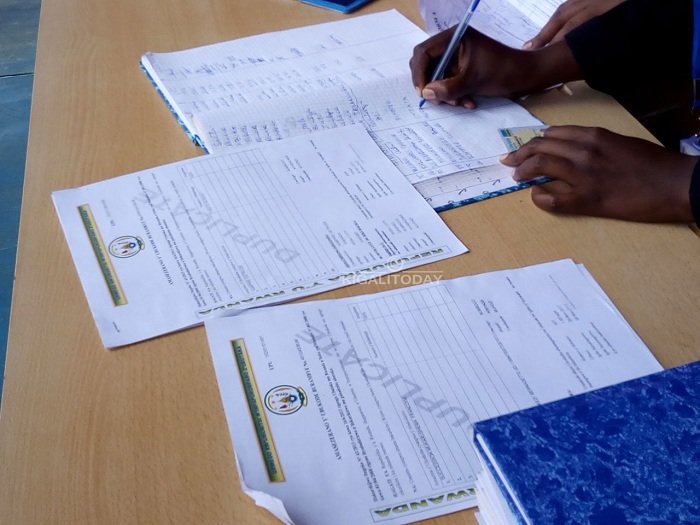
Land-related disputes accounted for 38 per cent of all complaints received by Rwanda’s Office of the Ombudsman in the 2025/2026 fiscal year, highlighting persistent challenges involving land ownership and transactions.
The figures were presented on October 22, 2026, when Chief Ombudsman Nirere Madeleine submitted the institution’s annual activity report for 2025/2026 and its plans for 2026/2027 to a joint sitting of both chambers of Parliament.
Nirere told lawmakers that the Office of the Ombudsman received 255 written complaints related to land during the year, representing 38 per cent of all complaints it received.
She attributed many of the disputes to boundary conflicts, land purchases conducted without local authorities present or without written agreements, fraud, and failure to transfer land ownership documents to new buyers.
“In urban areas, for example, many disputes arise between people who are building on neighbouring plots. There are also cases involving land transfers, where people bought land years ago but did not change the ownership documents, particularly in rural areas. Ten years may pass, the land increases in value, and the seller may sell it to someone else or claim that the original buyer underpaid,” she said.
Complaints concerning court judgments that had not been enforced accounted for 13 per cent of the total, while 12 per cent involved dissatisfaction with court decisions.
Overall, the Office of the Ombudsman received 3,106 complaints during the fiscal year. Of these, 2,212 were resolved, 388 were still being followed up by the relevant institutions, and 506 remained under review by the Ombudsman.
During the parliamentary session, senators raised concerns about the misuse of the right to lodge complaints with the Ombudsman. They said some people deliberately delayed the enforcement of court judgments by challenging decisions they disliked, potentially slowing access to justice for others with valid claims.
They also identified corruption as a continuing obstacle to timely justice, warning that it could contribute to an increase in complaints submitted to the Ombudsman.
On land-related corruption, lawmakers cited figures from the Rwanda Governance Board’s Citizen Report Card (CRC), which showed that the reported level of corruption in the land sector rose to 36 per cent in 2025/2026, up from 26 per cent in the previous year.
Perceived injustice also increased, reaching 31.2 per cent, compared with 28.9 per cent previously. Senators called for targeted measures to reverse the rising figures.
Regarding asset declarations, the report indicated a compliance rate of 99.9 per cent. However, verification exercises found that 11 public officials could not explain the sources of their wealth.
Reports concerning six of the officials were submitted to the Rwanda Investigation Bureau (RIB) for investigation, while the remaining five cases were still being handled by the Office of the Ombudsman.
Nirere identified strengthening alternative dispute resolution mechanisms, including mediation, as one way to reduce the number of cases reaching the courts.