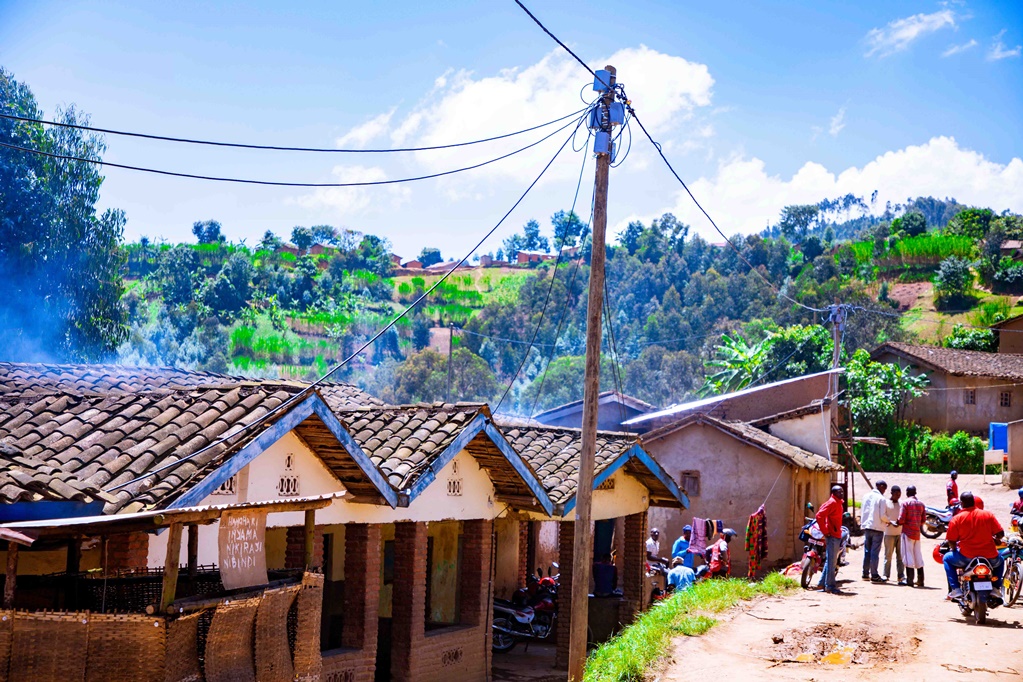
Electricity access in Rwanda has reached 88.3% of households, as the government continues to invest in infrastructure to support economic growth and improve living standards.
Canoth Manishimwe, Permanent Secretary at the Ministry of Infrastructure (MININFRA), announced the figures on October 27, 2026, during a meeting with members of Parliament’s Committee on Governance, Gender Equality and Family Promotion.
He briefed the lawmakers on the ministry’s strategies to accelerate implementation of the government’s Second National Strategy for Transformation (NST2).
Manishimwe said that during the 2025/2026 fiscal year, 234,432 households were connected to electricity through the national grid, while another 62,636 gained access through solar power systems.
He told the lawmakers that the government would continue expanding and improving infrastructure to ensure every household has access to electricity.
Expanding electricity access is part of Rwanda’s efforts to stimulate economic growth, support businesses and industries, improve service delivery and create more opportunities for households.
Under NST2, the government aims to achieve universal electricity access across the country by 2030.
The announcement comes amid concerns raised recently by the Senate’s Committee on Finance and Economic Affairs about the reliability of electricity access figures, particularly where households have been counted as connected through solar systems that are no longer functioning.
Residents in several parts of the country have also reported delays in receiving electricity despite the Rwanda Energy Group (REG) having installed poles and wires in their areas for up to two years. Others say their solar systems have stopped working, leaving them without a reliable source of electricity.
At the beginning of 2026, only 15 of Rwanda’s 2,148 cells reportedly remained without access to electricity through either the national grid or solar power systems.