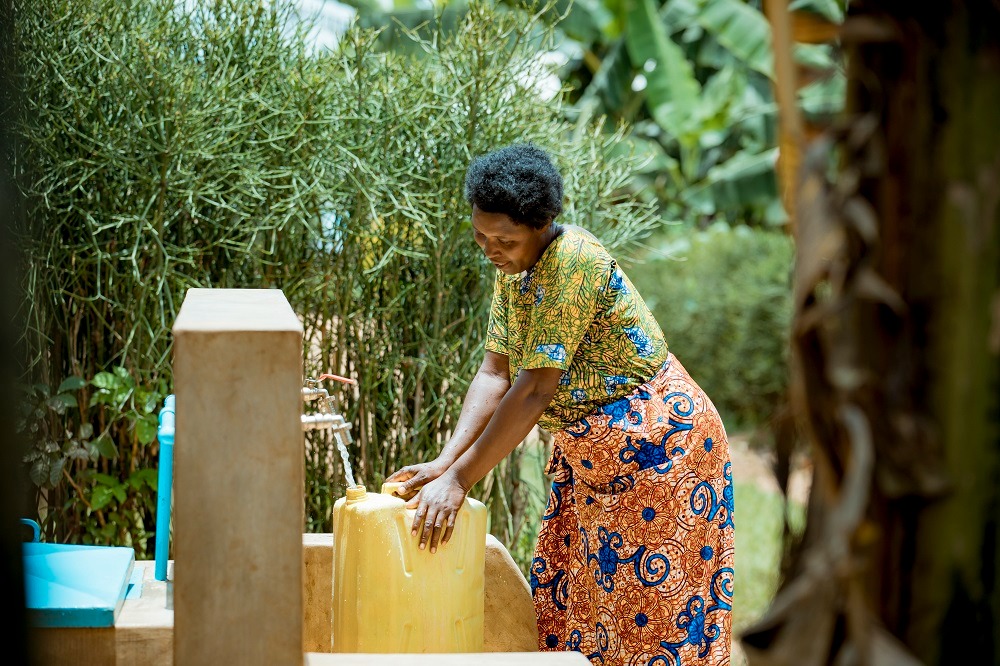
Rwanda has provided access to clean water to 89.7% of its population, as the government continues to expand water distribution networks and increase treatment capacity.
The figures were announced by Canoth Manishimwe, Permanent Secretary at the Ministry of Infrastructure, during discussions with members of Parliament’s Committee on Governance, Gender Equality and Family Promotion.
Manishimwe said the total length of water supply networks across the country increased to 36,674 kilometres in the 2025/2026 fiscal year, up from 35,538 kilometres in 2024/2025. This represents an addition of 1,136 kilometres.
“Access to clean water services stands at 89.7% of the population. New water supply networks have been constructed, increasing the total length from 35,538 kilometres in 2024/2025 to 36,674 kilometres in 2025/2026,” he said.
He added that WASAC Group had increased the number of its branches by 12, from 20 to 32, as part of efforts to bring water services closer to communities.
The country’s daily clean water production capacity also rose from 346,736 cubic metres in 2024/2025 to 367,176 cubic metres in 2025/2026.
Manishimwe further reported the completion of water treatment plants serving Sake, Muhazi, the Kivu Belt, the Volcano Belt and Ngororero.
The government, through the Ministry of Infrastructure and other institutions, has set a target of ensuring that the entire population has access to clean water by 2029.