People with dwarfism in Rwanda say they continue to face challenges that affect their lives, including exclusion from education, dropping out of school, abuse on social media and difficulties accessing healthcare services.
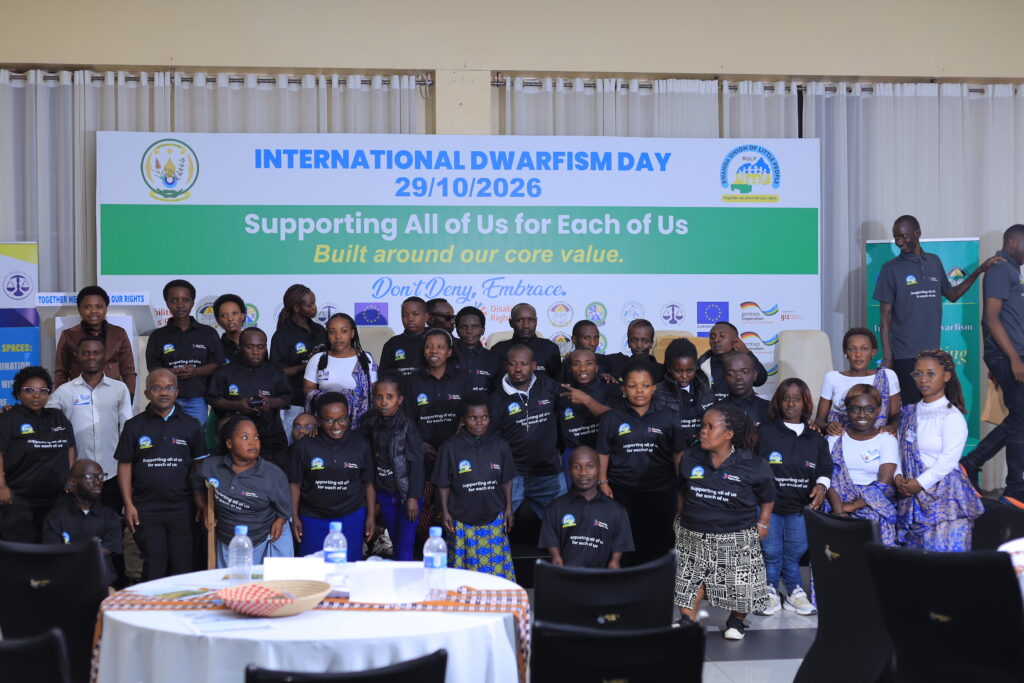
They raised these concerns on October 29, 2026, during the celebration of the International Dwarfism Awareness Day, held under the theme, “Standing Together for Everyone: Don’t Deny It, Embrace It.”
The event brought together people with dwarfism, representatives of public institutions and private sector organisations to discuss progress in protecting the rights of people with disabilities and the challenges that still need to be addressed.
Tuyishimire Honorine, Executive Secretary of the Rwanda Union of Little People (RULP), said the organisation had helped its members become more aware of their rights, but significant barriers continued to prevent them from enjoying equal opportunities.
She cited abuse, particularly on social media, as well as difficulties accessing healthcare, education, employment and other opportunities for economic advancement.
“We still have a large number of people with dwarfism who have never attended school or have dropped out because of challenges such as discrimination, a lack of appropriate assistive equipment, including specially designed chairs, and the absence of reasonable accommodations. All these factors cause some of them to leave school,” she said.
Only four hospitals have delivery beds designed for women with dwarfism
Tuyishimire said challenges also persist in healthcare, particularly for women with dwarfism, as only a few hospitals have specially designed beds to accommodate them during childbirth.
“Currently, only four hospitals in Rwanda have beds on which women with dwarfism can give birth. If a woman does not go to one of these hospitals, she may have to undergo a caesarean section because she cannot deliver safely without a specially designed bed,” she said.
She added that some service centres are not designed to accommodate people of different heights, making it difficult for people with dwarfism to reach service counters and access services on an equal basis with others.
RULP operates in nine districts: Gasabo, Kicukiro, Nyarugenge, Musanze, Gakenke, Rutsiro, Nyamasheke, Kayonza and Gicumbi. The organisation has identified 470 people with dwarfism across these districts.
Despite the challenges, Tuyishimire highlighted progress in access to education and employment.
She said that when the organisation began, it had only one member who had completed university. It now has 25 members who have completed undergraduate or master’s degrees, 21 who are still pursuing their studies and two who have completed postgraduate doctoral studies.
She added that 17 people with dwarfism are employed in the public sector, while another 49 are self-employed.
Tuyishimire said RULP continues to work with public and private institutions to expand employment opportunities for people with dwarfism based on their abilities, rather than allowing discriminatory perceptions about their capabilities to limit their prospects.
Government pledges continued protection of their rights
Mbabazi Olivia, a representative of people with disabilities in the Chamber of Deputies, said the government would continue establishing legal frameworks to protect the rights of people with disabilities.
She urged victims of abuse and other offences not to remain silent but to report such cases to the relevant authorities so that perpetrators could be held accountable.
Mukobwa Justine, Executive Secretary of the National Council of Persons with Disabilities (NCPD), said Rwanda follows the principle of ensuring that no one is left behind in the country’s development.
She said the challenges raised by people with dwarfism would continue to receive attention as efforts were made to find lasting solutions.
“Rwanda follows the principle of leaving no one behind. We will continue doing everything possible to ensure that the challenges they have raised gradually diminish until they are completely eliminated,” she said.
NCPD figures from June 2025 show that Rwanda has 562,184 people with disabilities. Of these, 44.5% are men, 55.2% are women, while the remaining 0.3% have no sufficient demographic information recorded.
The figures also show that 145,362 people with disabilities, representing 25.8%, are employed. Another 317,360, or 56.4%, are unemployed, while information on the employment status of 99,462 people, representing 17.7%, is unavailable.
These figures highlight the continuing employment gap affecting people with disabilities in general and the need for sustained efforts to promote inclusive education, expand employment opportunities and improve access to quality services. Such measures would help ensure that people with dwarfism and others with disabilities enjoy equal opportunities to participate in and benefit from Rwanda’s development.