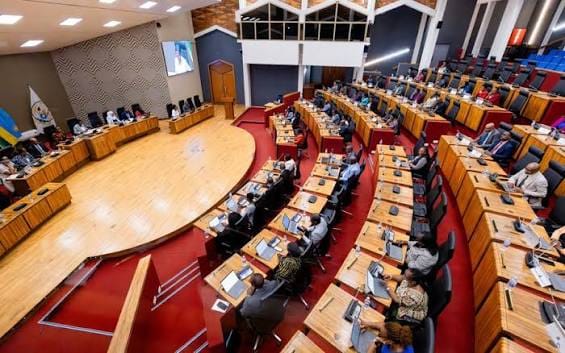
The Chamber of Deputies has begun voting article by article on a draft law governing obligations, which contains 753 articles and seeks to establish clear rules for contractual relationships and the resolution of disputes arising from agreements.
The proposed legislation covers various types of agreements, including sales, purchases, leases, loans and guarantees. It also provides for ways to settle disagreements between parties without immediately resorting to courts or other public institutions.
Presenting the draft law to the plenary, the Chairperson of the Committee on Governance and Gender Affairs, MP Anastase Nabahire, said the legislation is intended to give citizens greater freedom to manage their relationships while respecting the law and national values.
She explained that it would encourage parties to resolve disputes through mediation, conciliation or arbitration before seeking intervention from public authorities, where necessary.
“The aim is to give people the freedom to continue looking for solutions that work for them when disagreements arise, without immediately turning to government institutions or other parties. They should only do so when they find that they cannot resolve the matter themselves, but without allowing the situation to escalate,” she said.
During discussions on the draft law, some MPs called for greater clarity on the types of disputes it would address, particularly unforeseen situations that may arise outside conventional contractual arrangements.
MP Judith Mukarugwiza raised concerns about the possibility of new types of agreements and obligations emerging, particularly in business, investment services and the wider economy.
She noted that Rwanda is preparing to position itself as an international financial centre, a development that could bring new contractual arrangements and business practices requiring a clear legal framework for resolving disputes.
MP Angélique Nyirabazayire also called for a clearer explanation of the distinction between obligations and contracts, how the two relate and how the proposed provisions would be applied in practice.
After adopting the committee’s report on the draft law, the plenary began voting on each of its 753 articles individually.
The legislation is expected to provide clearer rules governing contractual relationships and encourage parties to resolve disagreements at an early stage, potentially reducing the number of disputes that end up in court.