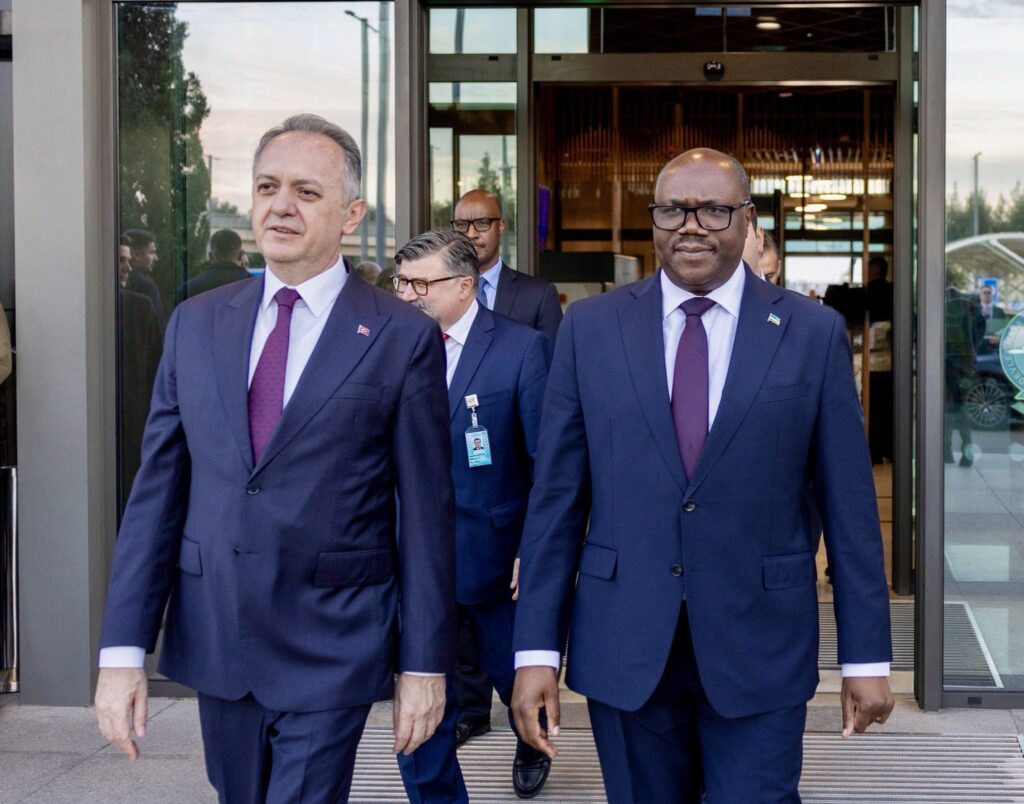
Prime Minister Dr Justin Nsengiyumva has arrived in Antalya, Türkiye, to represent President Paul Kagame at the 31st United Nations Climate Change Conference (COP31), where Rwanda is seeking increased climate finance and greater investment in environmentally sustainable projects.
The conference has brought together delegations from 196 countries, including 95 heads of state and more than 100 government representatives.
Rwanda is attending the summit with several priorities, including calling for increased financial support to help countries address the effects of climate change, promoting green investment and strengthening international cooperation.
During the discussions, Rwanda will push for the implementation of a commitment to provide $300 billion annually to support countries in tackling climate change.
Other priorities include strengthening countries’ capacity to respond to climate-related impacts, developing carbon markets, attracting investment in projects that reduce greenhouse gas emissions and supporting countries affected by climate-related losses and damage.
Rwanda will also highlight the importance of expanding access to technology, training and financial support to help countries reduce emissions, while promoting the adoption of clean energy, particularly in developing countries.
The conference will also provide Rwanda with an opportunity to showcase investment prospects in renewable energy, climate-resilient agriculture, environmentally friendly transport, electric vehicles and natural resource conservation.
Rwanda will further call on participating countries to ratify and accelerate the implementation of the Kigali Amendment, which seeks to reduce the use of climate-warming gases, following renewed calls at the 38th Meeting of the Parties (MOP38).
The country also intends to use COP31 to present its Nationally Determined Contribution (NDC) climate action plan, showcase investment opportunities in green projects and seek partnerships to support sustainable development.
One of the anticipated outcomes of the conference is the establishment of a new mechanism to help developing countries access climate finance and investment to address climate change.
The proposed mechanism will connect countries with private-sector players operating in international carbon markets, with the aim of addressing existing market challenges and making it easier for countries to mobilise funding for projects that reduce greenhouse gas emissions.
The mechanism’s operational framework is expected to be signed on November 12, 2026, a development expected to expand investment opportunities in environmental protection, particularly in developing countries.