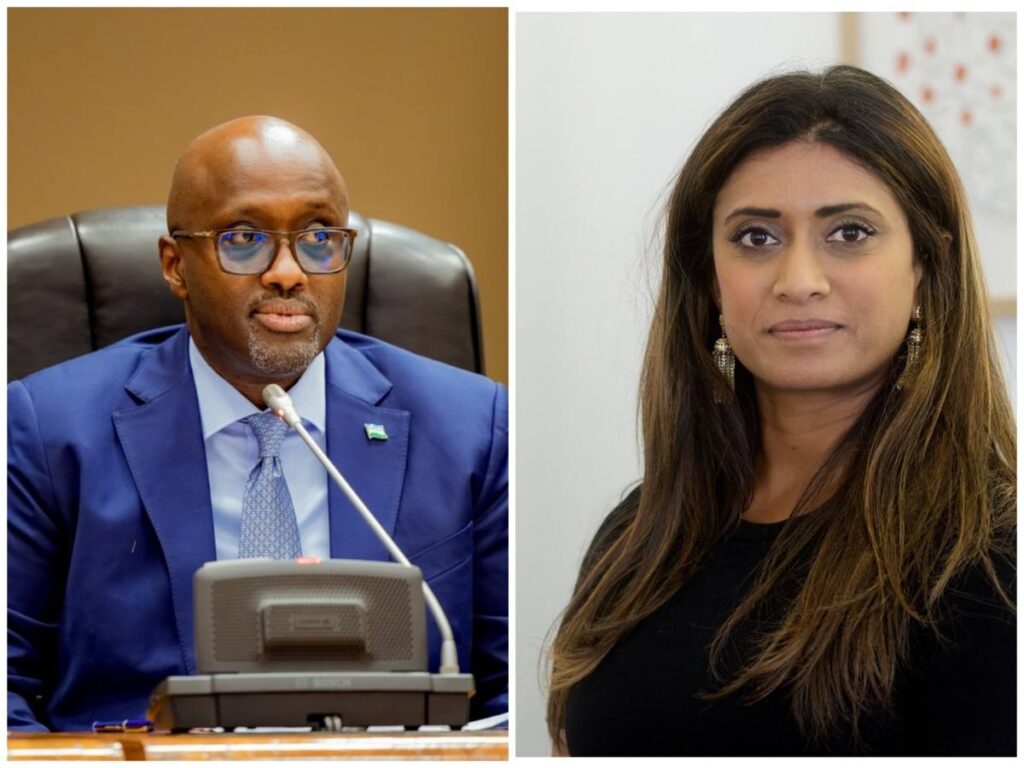
Rwanda’s Minister of Foreign Affairs and International Cooperation, Amb. Olivier Nduhungirehe, has criticised French MP Prisca Thevenot over her concerns about a programme to relocate migrants whose asylum applications have been rejected in Europe to Rwanda, accusing her of spreading misleading information and misrepresenting the initiative.
Thevenot, a member of France’s Renaissance party, raised concerns during an interview with French television channel BFMTV, questioning the living conditions and treatment migrants would receive in Rwanda.
She also expressed concerns about the accommodation facilities planned for them, comparing them to camps that could raise issues related to their welfare and human rights.
In a response posted on X, Nduhungirehe said Rwanda had a strong record of hosting refugees and migrants and should not be accused of establishing detention centres. He explained that the programme was intended to provide temporary accommodation and help migrants find alternative destinations where they could rebuild their lives.
The minister noted that Rwanda has hosted more than 3,200 migrants evacuated from Libya since 2019 under a programme designed to protect people facing difficult conditions there. Of these, 80% have been resettled in European and North American countries, while others have been integrated into Rwandan communities.
Nduhungirehe also pointed out that Rwanda currently hosts more than 140,000 refugees, mainly from neighbouring countries, including the Democratic Republic of Congo and Burundi.
He explained that Rwanda’s refugee policy goes beyond providing accommodation in camps. It allows refugees to obtain documentation, access education and vocational training, and participate in the country’s social and economic life. He added that this approach has received recognition from the United Nations High Commissioner for Refugees (UNHCR).
The minister also cited Rwanda’s support for female students from Afghanistan following the Taliban’s return to power in Kabul in 2021.
He said Rwanda welcomed students from the School of Leadership Afghanistan (SOLA), enabling them to continue their education. He also recalled Rwanda’s decision to host Sudanese medical students who were studying abroad when fighting intensified in their country.
Regarding the programme for migrants whose asylum applications have been rejected in Europe, Nduhungirehe clarified that they would not be placed in refugee camps but would instead receive temporary accommodation in designated housing facilities.
He said the Rwandan government would provide them with legal documentation to stay in the country and assist those wishing to return voluntarily to their countries of origin or relocate to other countries willing to receive them.
Those who choose to remain in Rwanda would also be supported in integrating into local communities, including through economic projects designed to help them become self-reliant.
Nduhungirehe stressed that the migration crisis was not created by Rwanda but was largely rooted in challenges between countries of origin and destination, particularly European nations.
He said Rwanda was contributing to efforts to address the crisis by offering migrants an opportunity to rebuild their lives while helping combat human trafficking.
The minister further warned against what he described as dismissive remarks and misleading statements from people who lacked sufficient information about the programme.
He maintained that the initiative was grounded in international law and supported by both UNHCR and the International Organization for Migration (IOM).