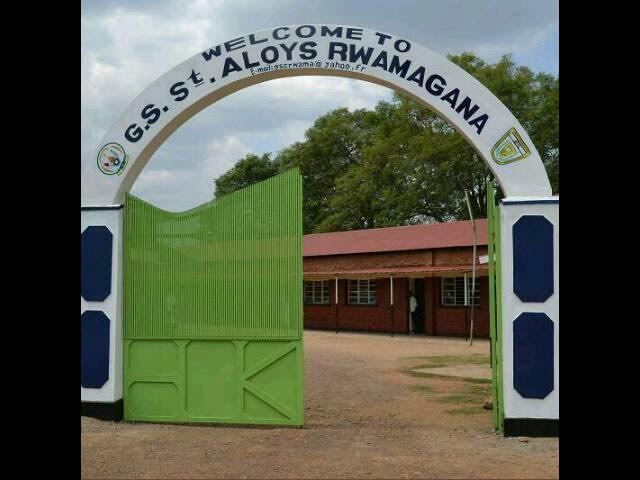
More than 28,000 students competed for just 120 places at GS Saint Aloys in Rwamagana District, making it the most sought-after secondary school in Rwanda’s 2025/26 student placement exercise.
According to the National Examination and School Inspection Authority (NESA), 28,221 students selected the school as their preferred destination for Senior One, but only 120 places were available.
The figures reveal the intense competition for admission to some of Rwanda’s most popular secondary schools, where demand is far greater than available capacity.
Ecole des Sciences de Musanze was the second-most sought-after school, attracting more than 22,000 applications for only 105 places.
E.S. Kayonza Modern received more than 19,000 applications, but had 140 places available.
College Saint André in Nyarugenge District attracted about 18,000 applicants for 118 places, while Lycée de Kigali received more than 17,000 applications for only 65 places.
GS St. Joseph recorded more than 16,000 applications but had just 37 places available.
Ecole des Sciences Byimana received 14,826 applications for 92 places, while GS Officiel de Butare attracted more than 14,000 applications for 168 places.
The figures illustrate the growing competition for places in schools that are perceived as offering strong academic opportunities, particularly among students transitioning from primary to secondary education.
Nationwide, 243,958 students who successfully completed the 2025/26 Primary Leaving Examination were allocated places in secondary schools.
Of these, 17,412 were placed in boarding schools, while 225,546 were assigned to day schools.
Among students completing O’Level and progressing to Senior Four in general education, 18,944 were allocated boarding places and 57,276 were placed in day schools.
In technical and vocational education and training (TVET), 43,845 students were allocated places. Of these, 26,098 were placed in boarding programmes, while 17,747 were assigned to day programmes.
A further 7,645 students were placed in professional education programmes, including 7,497 in boarding arrangements and 148 in day programmes.
NESA said school placement is based on three key factors: students’ examination results, the capacity of the selected schools and the choices made by students.
The high demand for a limited number of places at certain schools highlights continued pressure on secondary school capacity and the need to expand access to quality education across the country.
Rwanda had 4,996 schools during the 2024/25 academic year, according to Ministry of Education figures. These included 1,576 public schools, 2,083 government-subsidised schools operating under partnership arrangements and 1,337 private schools.