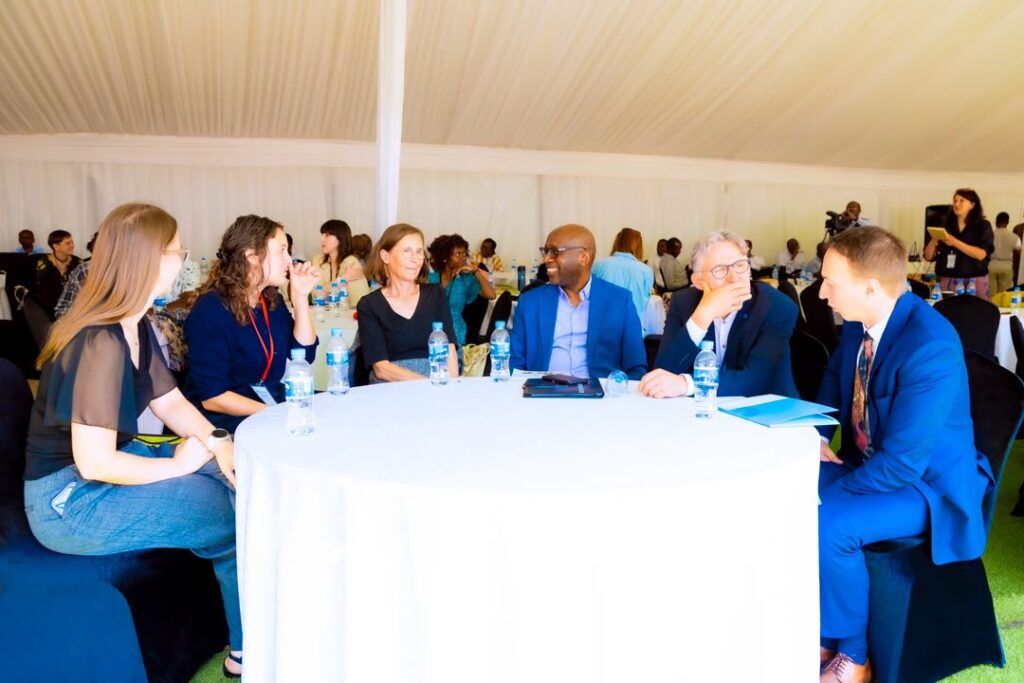
More than 50 museum and heritage professionals from 13 African countries are in Rwanda for a learning tour focused on history and heritage sites, as they seek to learn from the country’s experience in preserving and promoting its history.
Rwanda is hosting The Museums Lab 2026 for the fifth time, bringing together professionals working in museums and heritage institutions to exchange knowledge and ideas on how history can be used to shape the future.
The participants will spend six days in Rwanda, visiting museums and Genocide against the Tutsi memorial sites to learn how the country preserves, teaches and uses its history to safeguard its heritage.
Fidelia Serwaa Ametwee from Ghana said visiting heritage sites provides a deeper understanding of history than can be gained from written materials alone.
“When you visit a historical site or memorial, you get a broader picture of what happened. Historical sites and memorials often provide detailed information that may not be readily available elsewhere,” she said.
Pal Omholt-Jensen from Norway said the programme provides an opportunity for professionals from different countries to connect and explore areas of potential collaboration.
“We have a lot to share between institutions and organisations in Europe and Africa, but I am particularly interested in building relationships with my colleagues from institutions in Rwanda, especially in Kigali,” he said.
The programme has been organised for six years by a German museum in partnership with different African countries.
Meryem Korun, the programme’s director, said this year’s theme is centred on the idea of building the future through history.
She explained that working with museums and heritage sites enables people to revisit and understand the past while using it to reflect on a shared future.
“We need to constantly reflect on how we tell history and how we understand it. We should use history as a resource to help us understand the future we share,” she said.
At the launch of The Museums Lab 2026, participants visited the Rwanda Art Museum. During their six-day stay, they are expected to visit other museums and Genocide against the Tutsi memorial sites across the country.
Amb. Masozera Robert, Director General of the Rwanda Cultural Heritage Academy, said hosting the programme is not only an opportunity for international participants to learn about Rwanda, but also a chance for Rwandan professionals to connect with their counterparts from around the world.
“It is not simply about saying, ‘Let us host this important international programme.’ We also want Rwanda to become part of the community of professionals and experts working in history and heritage,” he said.
He added that while participants will have an opportunity to learn about Rwanda and its people, Rwanda will also gain knowledge and experience from other countries.
Since The Museums Lab began operating in Africa, it has been held in four countries, with Rwanda becoming the fifth. This year’s participants include more than 50 professionals from 31 countries around the world.