Leaders of the Anglican Church of Rwanda Diocese of Kivu publicly knelt before a survivor of the 1994 Genocide against the Tutsi, asking for forgiveness over the actions of a former church pastor who refused to shelter her during the killings.
The emotional moment unfolded during the 32nd commemoration of the Genocide against the Tutsi organised by the Anglican Diocese of Kivu, where survivor Drocella shared painful testimony about being turned away from a church while fleeing for her life in 1994.
According to her testimony, she sought refuge at the Anglican church in Shyembe Parish and pleaded with the then pastor to open the church so she and others could hide from Interahamwe militias. Instead, she said, the pastor chased them away.
Drocella told mourners the incident left her traumatised and caused her to lose trust in the Anglican Church for many years.
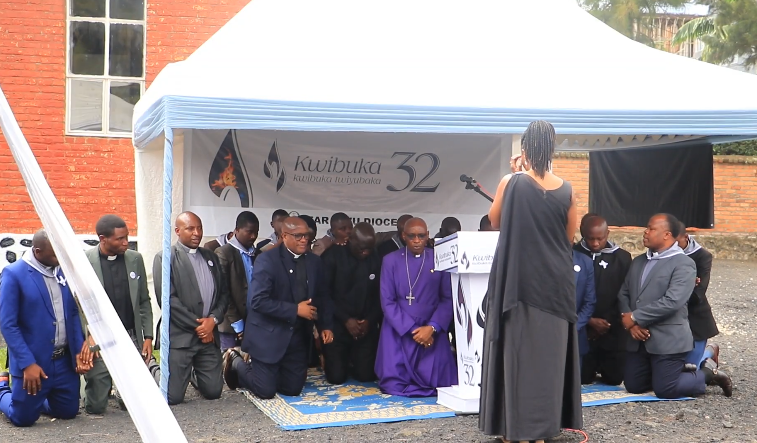
Following her testimony, Bishop Augustin Ahimana called all Anglican pastors attending the event to come forward before the congregation.
The bishop described the actions of the former pastor as a grave moral failure and acknowledged the church’s shortcomings during the Genocide.
“This testimony has placed us before a painful judgment,” Bishop Ahimana said. “A shepherd who was meant to protect people became like a wolf. Our pastoral mission failed.”
He added that while Drocella survived by what he described as God’s grace, many others who were denied protection by church leaders were killed.
Addressing the survivor directly, the bishop said: “We failed you. We abandoned you when you needed protection most. Today, we stand ashamed before God and before you, asking for forgiveness.”
The bishop and the pastors then knelt before Drocella in an act of repentance while singing hymns of remorse.
The gesture drew emotional reactions from mourners and later received widespread praise on social media, where many described it as a rare and courageous act of accountability and reconciliation.
Some commentators also called on other religious leaders and churches linked to the 1994 Genocide against the Tutsi to publicly acknowledge their past failures and seek forgiveness from survivors.