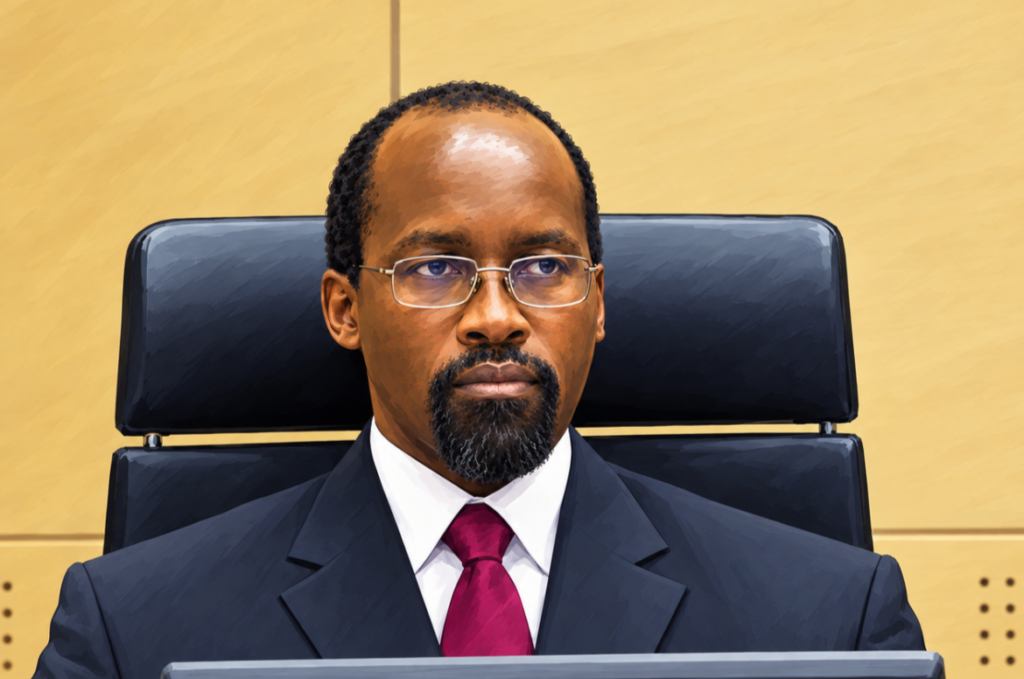
Callixte Mbarushimana, a former secretary-general of the Democratic Forces for the Liberation of Rwanda (FDLR), is reported to have died in France while still under investigation over allegations linked to the 1994 Genocide against the Tutsi.
Reports of his death began circulating on social media on the evening of October 5, 2026.
Mbarushimana was born in Ndusu, in the former Ruhengeri Prefecture, now Musanze District, on July 24, 1963.
He initially worked for the United Nations Development Programme (UNDP) before joining the FDLR, an armed group operating in eastern Democratic Republic of Congo that includes former members and others linked to the forces that took part in the 1994 Genocide against the Tutsi.
Mbarushimana began working for UNDP in Kigali in 1992, where he specialized in information technology. When the Genocide against the Tutsi began in April 1994, he remained in Rwanda after foreign UN staff left the country.
After the genocide, witnesses accused him of using his position at UNDP to assist the government forces and Interahamwe militia. The allegations included providing vehicles and equipment, helping compile lists of people targeted for killing and participating in the killing of people, including Florence Ngirumpatse, who worked for UNDP in Kigali.
However, Mbarushimana was never convicted of those allegations. The International Criminal Tribunal for Rwanda (ICTR) examined his case but did not indict him.
He later joined the FDLR and rose to senior positions within the group’s leadership. In 2007, he became its secretary-general responsible for political affairs and operated from France, where he carried out political activities on behalf of the group.
On March 3, 2009, the United Nations Security Council placed him under sanctions, accusing him of contributing to efforts to obstruct the disarmament and repatriation of FDLR combatants.
On September 28, 2010, the International Criminal Court (ICC) issued a warrant for his arrest over alleged war crimes and crimes against humanity reportedly committed by FDLR fighters in North and South Kivu provinces of the Democratic Republic of Congo in 2009.
French police arrested him in Paris on October 3, 2010. He was later transferred to The Hague in the Netherlands on January 25, 2011.
In December 2011, ICC judges ruled that the evidence presented by prosecutors was insufficient to send the case to trial. He was released on December 23, 2011, and a subsequent appeal by prosecutors did not overturn the decision.
Although he was released by the ICC, an investigation continued in France into his alleged role in crimes linked to the 1994 Genocide against the Tutsi.
On October 1, 2024, a French investigating judge had ordered the case closed, citing concerns raised about witness testimony.
However, on May 21, 2025, the Paris Court of Appeal ordered the investigation to resume, saying some evidence had not been sufficiently examined and that further investigation was necessary.
A United Nations report published in 2025 also confirmed that the decision had been taken to reopen the investigation.
If Mbarushimana’s death is officially confirmed, it would come while the French investigation was still ongoing, meaning he would not have been brought before a court for a final judicial determination of the allegations against him.
As of now, no court has convicted him of the offences alleged in those cases.