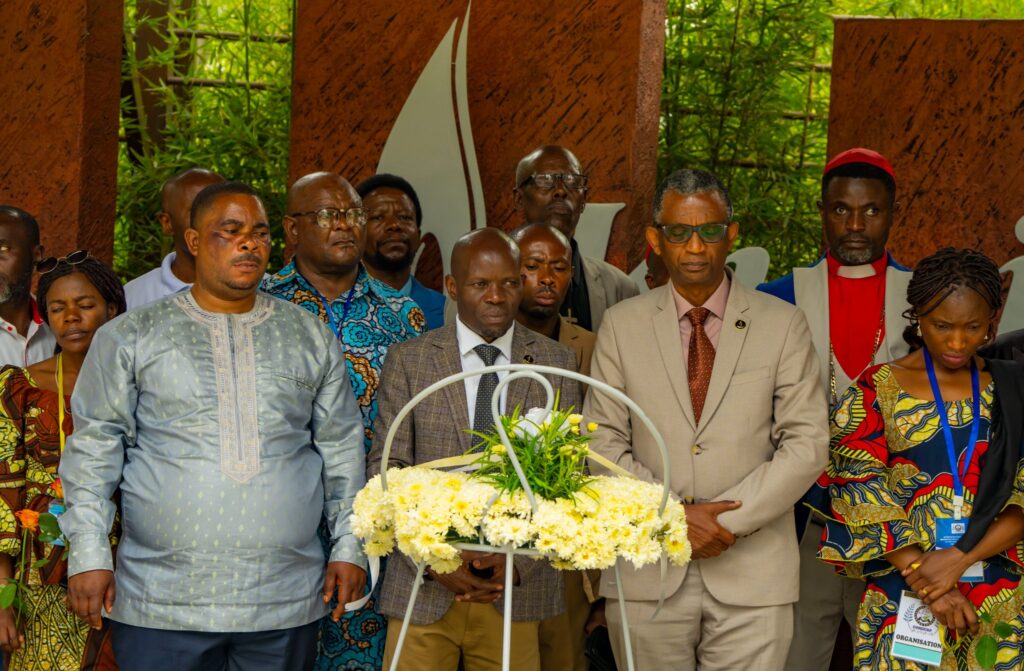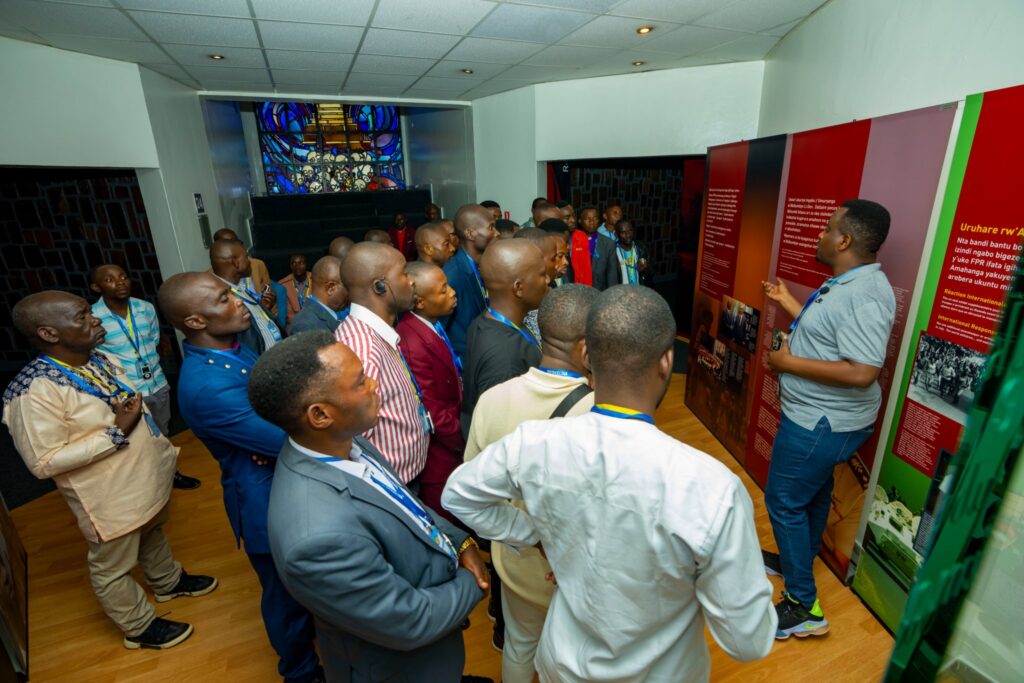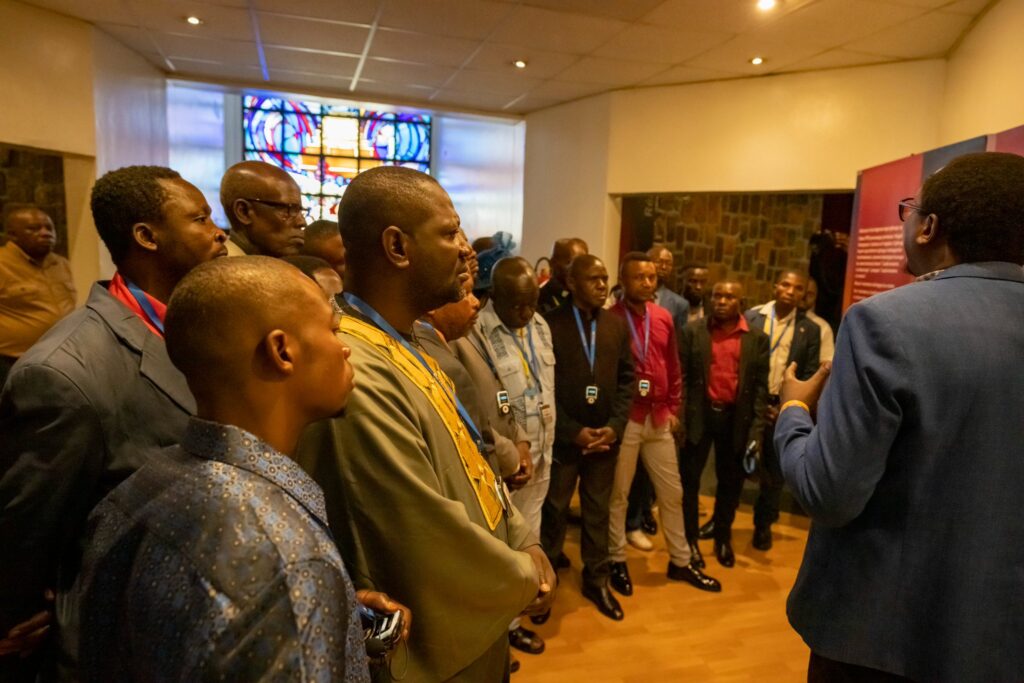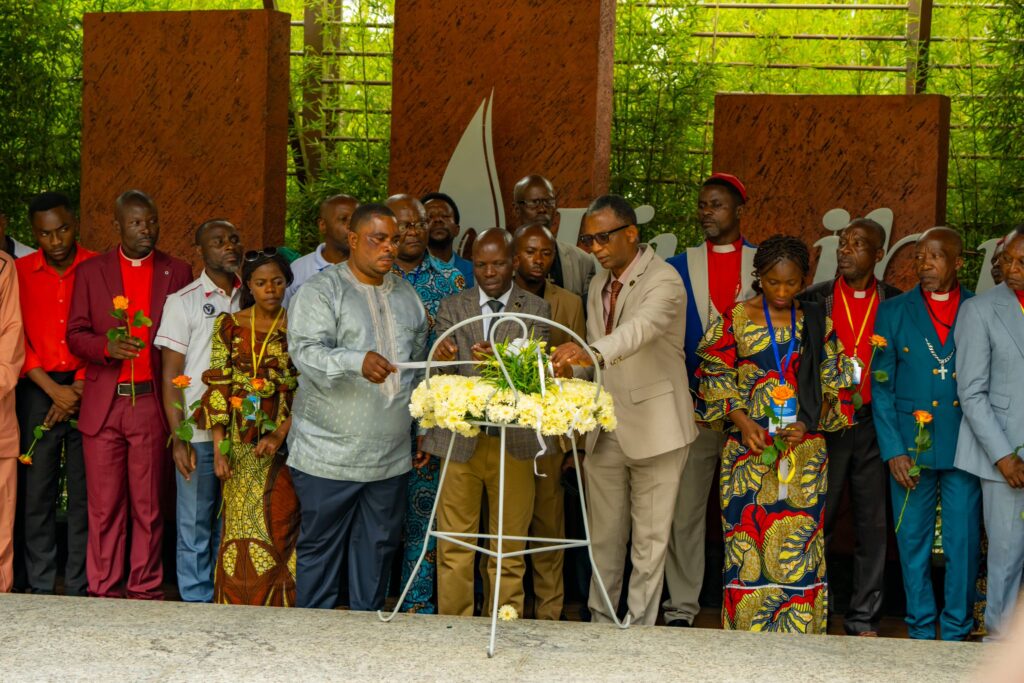
A delegation of 120 religious and traditional leaders from South Kivu in the Democratic Republic of the Congo has visited the Kigali Genocide Memorial, where they paid tribute to victims of the 1994 Genocide against the Tutsi and renewed calls for peace across the Great Lakes region.
The visit formed part of efforts to deepen understanding of the genocide and draw lessons that can support peacebuilding initiatives, particularly in eastern DR Congo, where insecurity linked to armed groups remains a major concern.
Participants said the tour provided them with deeper insight into the historical roots and consequences of the genocide, highlighting the dangers of hate, division and discrimination that culminated in the 1994 atrocities.
They pledged to step up efforts to promote messages of peace and reconciliation within their communities, while actively countering genocide ideology and hate speech, which they warned continue to destabilize the region.
The delegation also pointed to the role of negative narratives propagated by groups and individuals linked to the perpetrators of the genocide, vowing to challenge such narratives through awareness and community engagement.
As part of the visit, the leaders toured the Mutobo Demobilization Centre, where they were briefed on armed groups including the FDLR and Rwanda’s approach to disarmament, rehabilitation and reintegration of former combatants.
Officials outlined ongoing efforts to support ex-combatants in returning to civilian life and reintegrating into communities, as part of broader strategies to promote long-term stability.
The delegation commended Rwanda’s progress in unity and reconciliation, describing it as a practical model for post-conflict recovery. They said the lessons learned would inform their efforts to foster sustainable peace and social cohesion in their respective communities.