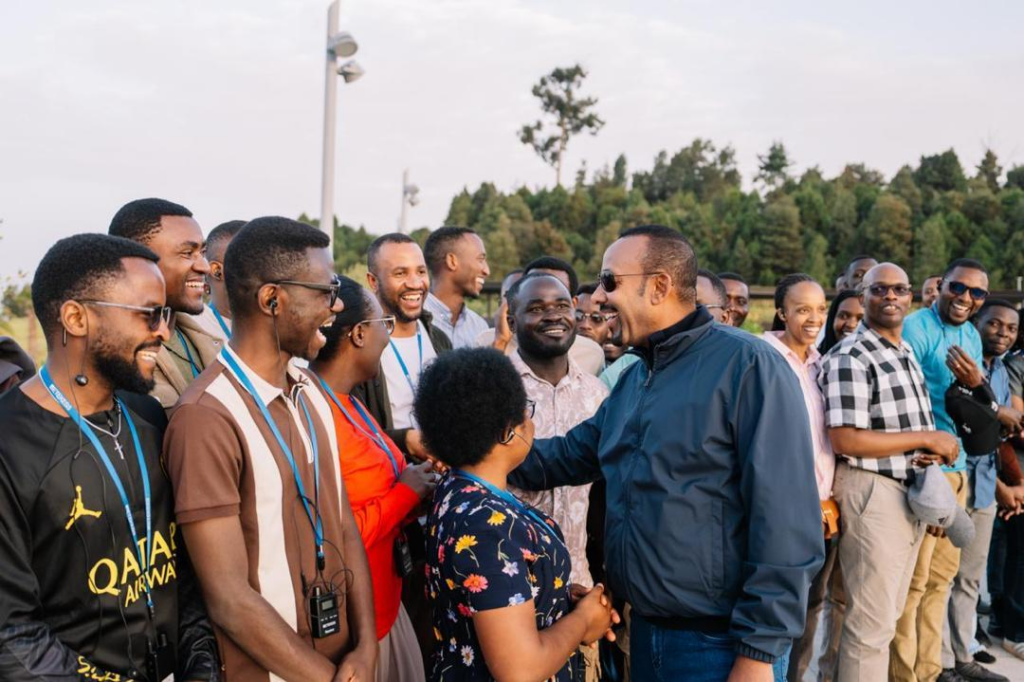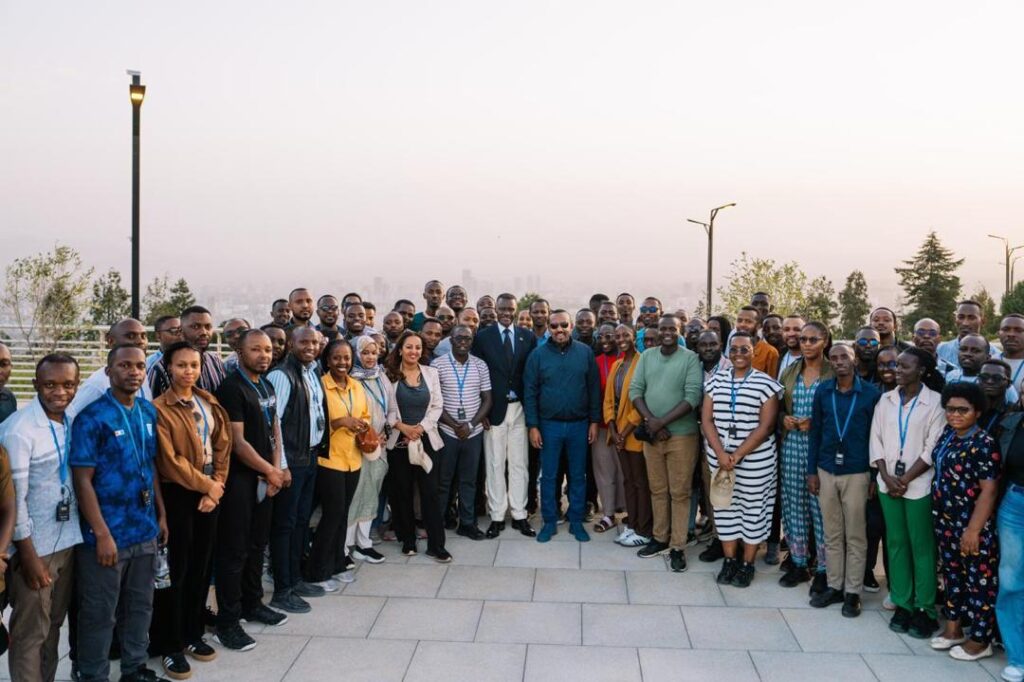
Abiy Ahmed has received 128 Rwandan doctors currently undergoing specialized medical training in Ethiopia, highlighting the growing healthcare partnership between Rwanda and Ethiopia.
The meeting took place on the evening of Sunday, May 24, 2026, and also brought together more than 400 medical professionals from across Africa participating in the continental training initiative.
In a message shared on X, Prime Minister Abiy said he was pleased to host the Rwandan doctors alongside their fellow African trainees pursuing specialist studies in Ethiopia.
The Rwandan delegation was accompanied by Rwanda’s Ambassador to Ethiopia, Charles Karamba.
According to the Embassy of Rwanda in Ethiopia, the engagement reflects the strong bilateral cooperation between the two countries, particularly in the health and medical sectors.
The embassy further noted that the programme supports Rwanda’s ambition to significantly expand its healthcare workforce over the next four years.
The doctors received by Abiy Ahmed arrived in Ethiopia in April 2026 to pursue advanced training in various medical specialties. They are the third cohort of Rwandan medical professionals sent to Ethiopia under the initiative.
The programme forms part of Rwanda’s national healthcare transformation agenda, known as the Rwanda 4×4 Reform, which aims to increase the number of highly qualified specialist doctors and strengthen healthcare delivery across the country.
Health cooperation between Rwanda and Ethiopia has steadily deepened over the years, especially following the signing of 11 bilateral agreements during the 2017 visit to Kigali by former Ethiopian Prime Minister Hailemariam Desalegn.
The two nations continue to strengthen collaboration through regular exchanges and partnerships focused on medical training, healthcare financing and service delivery reforms.
As part of its long-term healthcare targets under the second National Strategy for Transformation (NST2), Rwanda aims to increase the ratio of doctors from one doctor per 1,000 people to four doctors per 1,000 people within the next four years.