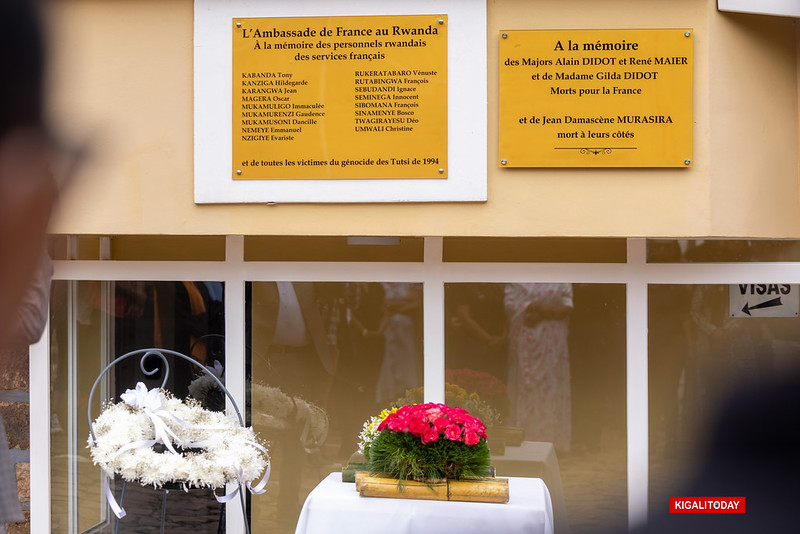
France has confirmed that 36 Rwandans are currently under investigation over suspected involvement in crimes related to the 1994 Genocide against the Tutsi, as judicial proceedings continue aimed at bringing genocide suspects residing in the country to justice.
The announcement was made by France’s National Anti-Terrorism Prosecutor, Olivier Christen, during a commemoration event organized by the French Embassy in Rwanda in honour of employees of French cooperation services who were killed during the genocide.
Christen said the investigations are part of ongoing judicial efforts intensified following French President Emmanuel Macron’s visit to Rwanda in 2021, which reinforced commitments to address genocide-related cases through France’s justice system.
He noted that France is also preparing additional trials involving genocide suspects, with several hearings scheduled in Paris courts in the coming months.
According to Christen, one trial is expected to take place in June and July before the Paris Assize Court of Appeal, while another is scheduled for November and December before a lower criminal chamber. He further indicated that two additional cases are planned between 2027 and 2028.
He added that, alongside these scheduled trials, investigations remain active into 36 individuals suspected of involvement in the Genocide against the Tutsi.
Call for remembrance and accountability
France’s Ambassador to Rwanda, Aurélie Royet-Gounin, said remembrance should remain a shared responsibility aimed at preventing the recurrence of genocide.
“Gathering here today reflects France’s commitment to human rights, justice and historical truth. It is also a reminder of the importance of collective memory and vigilance in confronting hatred and intolerance. We honour the victims so that such crimes never happen again,” she said.
Survivors from families of former French cooperation staff killed during the genocide welcomed the establishment of a dedicated remembrance day by the French Embassy, describing it as an important gesture of recognition and dignity for victims.
Historical context remains sensitive
According to a statement by Rwanda’s Minister of National Unity and Civic Engagement, Dr Jean-Damascène Bizimana, France was aware of preparations for genocide as early as April 9, 1994, when mass killings were intensifying across the country.
The statement further alleges that French military operations at the time prioritized the evacuation of French nationals and other foreigners, leaving vulnerable Tutsi populations exposed to attacks by Interahamwe militias.
The role of France during and after the genocide remains a sensitive and debated issue in bilateral relations, even as both countries continue to cooperate on judicial matters and historical dialogue.
French authorities maintain that ongoing prosecutions and investigations reflect a continued commitment to accountability and the fight against impunity for genocide-related crimes.