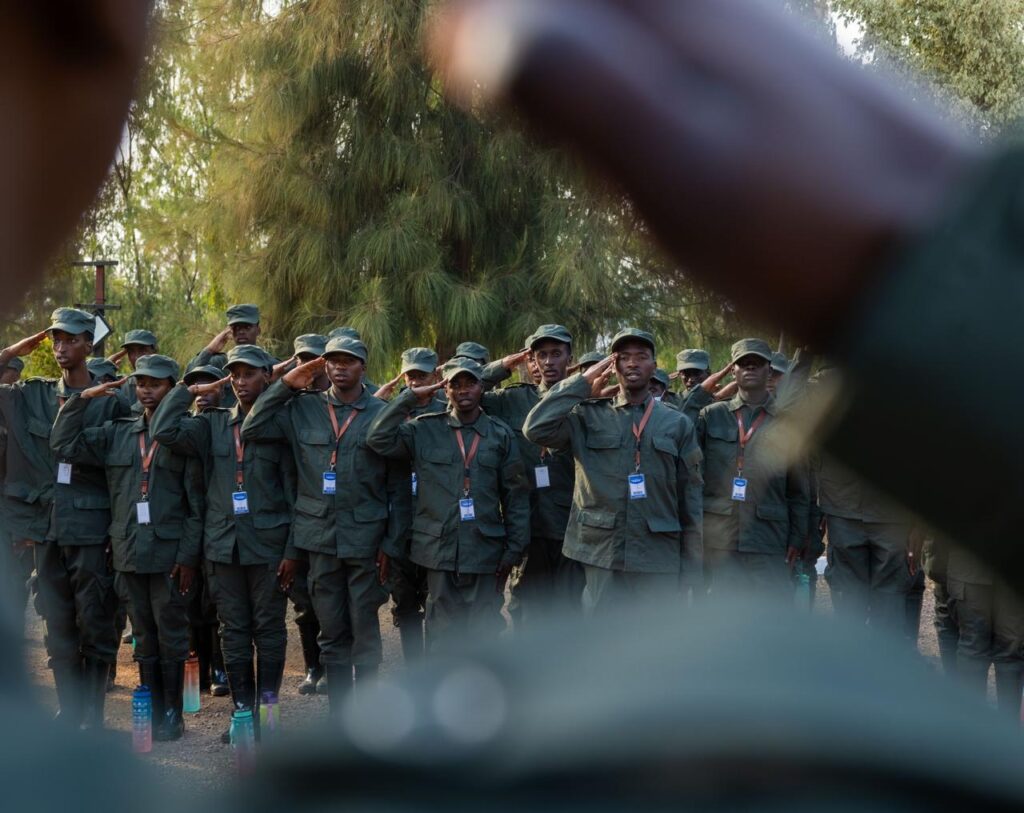
More than 700 participants in the Indangamirwa civic education programme have reaffirmed their commitment to preserving the history of the 1994 Genocide against the Tutsi and combating genocide ideology and denial following a visit to the Kiziguro Genocide Memorial in Gatsibo District.
The participants visited the memorial on July 22 as part of their training at the Gabiro Military Training School, where they are attending the 16th edition of the Indangamirwa programme. During the visit, they paid tribute to more than 23,000 victims of the Genocide against the Tutsi laid to rest at the memorial.
The memorial stands on the site of the former Murambi Commune, where thousands of Tutsi were killed during the 1994 Genocide against the Tutsi. According to historical accounts presented during the visit, more than 20,000 people were killed on Kiziguro Hill within the first five days of the genocide. The commune was administered by former burgomaster Jean Baptiste Gatete, who was later convicted for his role in planning and directing the killings.
The participants received a historical briefing from Jean Nepo Sibomana, president of IBUKA in Gatsibo District and National Guardian of the Covenant (Umurinzi w’Igihango). He traced the origins of the genocide, described the persecution endured by Tutsi before and during the killings, and explained how the Rwanda Patriotic Army (RPA) brought the genocide to an end.
Sibomana, himself a survivor from the area, recounted growing up under discrimination and threats before the genocide. He said government policies at the time promoted division and incited violence against Tutsi.
“A government always has two choices: good choices and bad choices,” he said. “The government of that time chose the wrong path by teaching people to kill, while today’s government chose unity.”
He also described the killings that took place at Kiziguro, including victims murdered inside Kiziguro Catholic Church and others whose bodies were thrown into a nearby pit that now forms part of the memorial site. Sibomana said he survived after the intervention of the RPA.
The testimonies prompted reflection among participants, several of whom said the visit had strengthened their understanding of Rwanda’s history and the importance of safeguarding it for future generations.
Felix Bizumuremyi said the experience had deepened his appreciation of the role played by the RPA in ending the genocide.
“I now better understand the role the Inkotanyi played in stopping the genocide,” he said. “The responsibility I leave with is to promote unity, tell our history truthfully and challenge those who distort it.”
Another participant, Linda Amanda Kalinda, said young people have an important role to play in countering genocide denial, particularly on social media.
“We need to understand this history thoroughly,” she said. “When you know the facts, it becomes much more difficult for anyone to mislead you.”
Eric Mahoro, Permanent Secretary at the Ministry of National Unity and Civic Engagement (MINUBUMWE), said understanding Rwanda’s history is essential, particularly for young people born after the genocide.
He said learning about the country’s past helps young people appreciate the importance of making responsible choices and contributes to national unity and reconciliation.
The Indangamirwa programme aims to equip young Rwandans with knowledge of the country’s history, values and civic responsibilities. The current intake began on July 1 at the Gabiro Military Training School and will conclude on August 10.
Participants include Rwandan students studying abroad, graduates of international secondary schools in Rwanda, top performers from the 13th Inkomezabigwi National Service programme, and students from universities and other higher learning institutions.
According to MINUBUMWE, more than 5,000 young people have completed the Indangamirwa programme since its inception. The ministry says graduates have gone on to promote Rwanda’s values and contribute to preserving the country’s history both at home and abroad.