



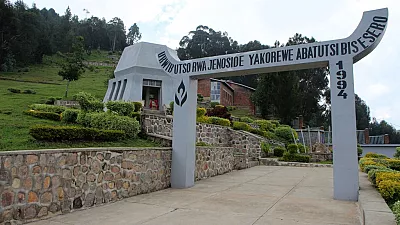
June 11, 1994 marked the 67th day of the 100-day Genocide against the Tutsi, a period in which mass killings continued across Rwanda as extremist forces pursued their extermination campaign, while the Rwandan Patriotic Front (RPF-Inkotanyi) continued military operations to liberate different parts of the country and rescue survivors.
During this period, the interim government led by Jean Kambanda continued efforts to coordinate and sustain the killings, including the distribution of weapons and logistical support to militias operating in areas still outside RPF control.
One of the most tragic episodes recorded on this date occurred in Bisesero, in present-day Western Province, where Interahamwe militia intensified attacks against Tutsi civilians who had taken refuge in the surrounding hills.
Bisesero had been home to tens of thousands of Tutsi before the genocide. The area became widely known for the extraordinary resistance of survivors who organized themselves to defend against repeated attacks, managing to hold off militias for several weeks through collective self-defense in the rugged hills.
However, as the genocide expanded, militia groups later reinforced their operations in the area. On June 11, 1994, Interahamwe fighters intensified coordinated assaults on the remaining survivors hiding in the hills, resulting in large-scale killings.
The attacks were reportedly led by various militia elements, including individuals such as businessman Obed Ruzindana, who is said to have facilitated the movement of attackers to the area.
Despite earlier resistance by the Tutsi community in Bisesero, many of those who had survived initial waves of violence were eventually killed during the renewed assaults, making the area one of the most tragic and symbolic sites of mass violence during the 1994 Genocide against the Tutsi.




