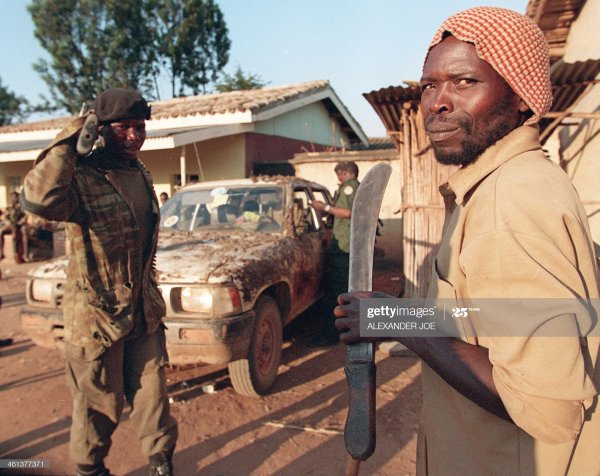
June 9, 1994 marked the 65th day of the 100-day Genocide against the Tutsi, and the 160th day of the year. By this time, the genocidal regime was intensifying efforts to exterminate Tutsi civilians, while the Rwandan Patriotic Army (RPA) continued its military advance, liberating different parts of the country and rescuing survivors in several areas.
On this date, the genocidal authorities continued holding meetings aimed at accelerating the killing campaign, as violence persisted across the country.
By June 1994, the genocide had already claimed a vast number of Tutsi lives across all prefectures of Rwanda, with killings continuing at an unprecedented scale.
Available records indicate that RWF 50 million provided by the government was allocated to support activities linked to the so-called “civilian self-defence” (auto-défense civile) programme, as reflected in the agenda of Édouard Karemera, then Minister of Local Government.
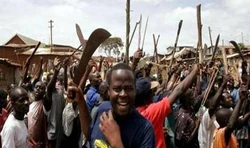
The “auto-défense civile” programme had been introduced in 1990 under the government of President Juvénal Habyarimana, initially presented as a community self-protection initiative. However, it evolved into a structured system that mobilized, trained, and armed civilians—particularly youth—for participation in mass violence.
In 1991, the programme was formalized and expanded, with training and distribution of weapons contributing to the organization of armed groups that later played a central role in the genocide against the Tutsi.
The June 1994 allocation came amid continued importation of weapons ordered by the government led by Prime Minister Jean Kambanda, aimed at strengthening ongoing killings targeting Tutsi in hiding across the country.
On the same day, government officials also confirmed that additional imported weapons were expected to arrive shortly, further reinforcing the ongoing violence.
These resources added to existing stockpiles of weapons already in the country and used in the execution of the genocide.
By this stage, the genocide had devastated Tutsi communities nationwide, with killings continuing in areas not yet liberated by the Rwandan Patriotic Army, where militia groups, including the Interahamwe, operated alongside elements of the former Rwandan Armed Forces (FAR).