Rwanda’s Ministry of Education (MINEDUC) has ruled out the return of corporal punishment in schools, saying students who misbehave should be disciplined through alternative measures rather than physical punishment.
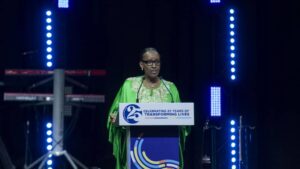
Minister of State for Education Claudette Irere made the remarks on August 20, 2026, during the release of national examination results for primary and lower secondary school students.
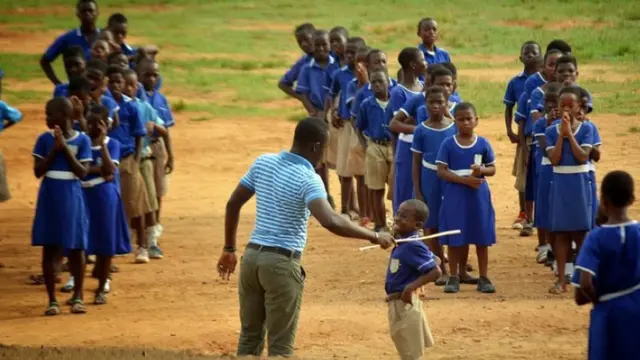
Irere was responding to a question about whether the government could reconsider the use of the cane to discipline students who commit offences at school.
She firmly rejected the proposal, saying physical punishment is not an appropriate way to correct students’ behaviour.
“Children’s mistakes cannot be solved through caning. Sometimes a cane can turn into a beating. MINEDUC will not allow caning to return. However, a student who makes a mistake will not simply be tolerated,” she said.
The minister said schools should instead use other disciplinary measures that help correct misconduct while protecting students from physical punishment.
The position comes as MINEDUC rolls out four major education reforms aimed at improving the quality of teaching and learning, strengthening teachers’ capacity and tackling misconduct in schools.
Announcing the reforms, Education Minister Dr. Justin Nsengiyumva said the government wants schools to remain safe and orderly environments, with students who engage in serious misconduct facing appropriate disciplinary measures.
He also warned against the presence of alcohol and drugs in schools, saying a small number of teachers and students have been taking such substances onto school premises.
Nsengiyumva said anyone found bringing alcohol or drugs to school would face immediate dismissal, regardless of whether they are a student, teacher, school administrator or kitchen worker.
“A school must be a place completely free of alcohol and drugs. They should not be found there at all. Anyone caught with them at school, whether a student, teacher, school administrator or kitchen worker, will be immediately dismissed,” he said.
For students, he said authorities would work with local leaders to provide support and rehabilitation outside the school environment.
The government has also urged parents to play their part in supporting schools through required contributions to help improve learning conditions.
Meanwhile, the National Examination and School Inspection Authority (NESA) reported a significant improvement in primary school leaving examination results.
A total of 88.21% of candidates who sat the 2025/26 national primary leaving examinations passed, up from 75.6% in the previous academic year.
Girls recorded a pass rate of 87.1%, while boys achieved 89.59%.
A total of 276,579 candidates from 3,895 schools across the country sat the examinations. Boys accounted for 44.35% of the candidates, while girls represented 55.65%.
The government’s position confirms that Rwanda’s schools will continue to pursue discipline through non-violent approaches rather than a return to corporal punishment.