The close political and military relationship between former Rwandan President Juvénal Habyarimana and former Zairean President Mobutu Sese Seko helped create conditions that enabled forces linked to the former Rwandan government and the 1994 Genocide against the Tutsi to regroup in eastern Zaire, according to historical accounts and testimony from a former FDLR member.
Habyarimana ruled Rwanda from 1973 until 1994, while Mobutu governed Zaire, now the Democratic Republic of the Congo (DRC), from 1965 to 1997. Their relationship extended beyond diplomatic ties, developing into a close political and personal alliance.
Mobutu was among Habyarimana’s key regional allies and supported his government during periods of political and military instability. Their cooperation was also shaped by a shared opposition to forces they considered threats to their respective governments.
In 1985, the two leaders reportedly reached a confidential mutual-defence arrangement under which each would consider an attack against the other a threat requiring support.
When the Rwandan Patriotic Front (RPF) launched its campaign in October 1990, Zaire deployed troops to support Habyarimana’s government and the former Rwandan Armed Forces (FAR).
According to historical accounts, Zairean troops were deployed in northern Rwanda, with additional soldiers arriving from Goma on October 12, 1990. The intervention, however, failed to halt the RPF advance.
Post-1994 regrouping
Following the defeat of the former Rwandan government and the 1994 Genocide against the Tutsi, former FAR members and Interahamwe militia fighters fled into Zaire alongside hundreds of thousands of civilians.
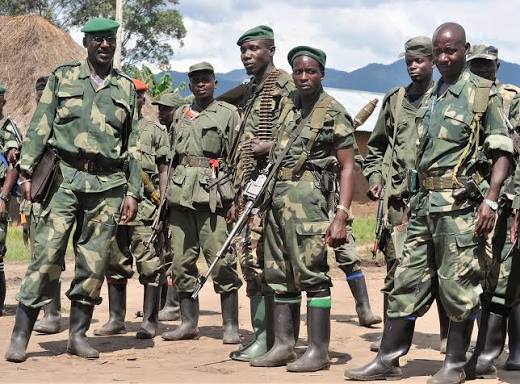
The former combatants subsequently reorganised in eastern Zaire. Some of the armed groups that emerged from this network eventually became part of the FDLR, which has remained active in eastern DRC.
Former FDLR member Lt Col (Rtd) Emilien Mpakaniye told Rwanda Broadcasting Agency that cooperation between elements of the Congolese authorities and the group dates back to the period before the RPF took power.
He said the relationship continued after former Rwandan forces crossed into Zaire, alleging that they received various forms of assistance that enabled them to maintain their military organisation.
Mpakaniye also claimed that cooperation continued after the refugee camps were dismantled and former combatants moved into remote areas of eastern DRC.
FDLR remains a regional security concern
Mpakaniye further alleged that cooperation intensified during fighting between the DRC government and M23 in 2024 and 2025, claiming that some FDLR elements received logistical and financial support.
The FDLR has its origins in groups that included former members of the Rwandan armed forces and Interahamwe militia associated with the 1994 Genocide against the Tutsi. The group has remained one of the armed organisations operating in eastern DRC and has been repeatedly identified by Rwanda as a security threat.
The alleged links between FDLR and elements within the Congolese security establishment have remained a major source of tension between Kigali and Kinshasa.
Rwanda has repeatedly accused successive governments in Kinshasa of supporting the FDLR, while Congolese authorities have disputed or denied such allegations.
The issue remains central to the wider security crisis in eastern DRC, where competing armed groups, regional interests and unresolved tensions between neighbouring countries continue to complicate efforts to achieve lasting peace.