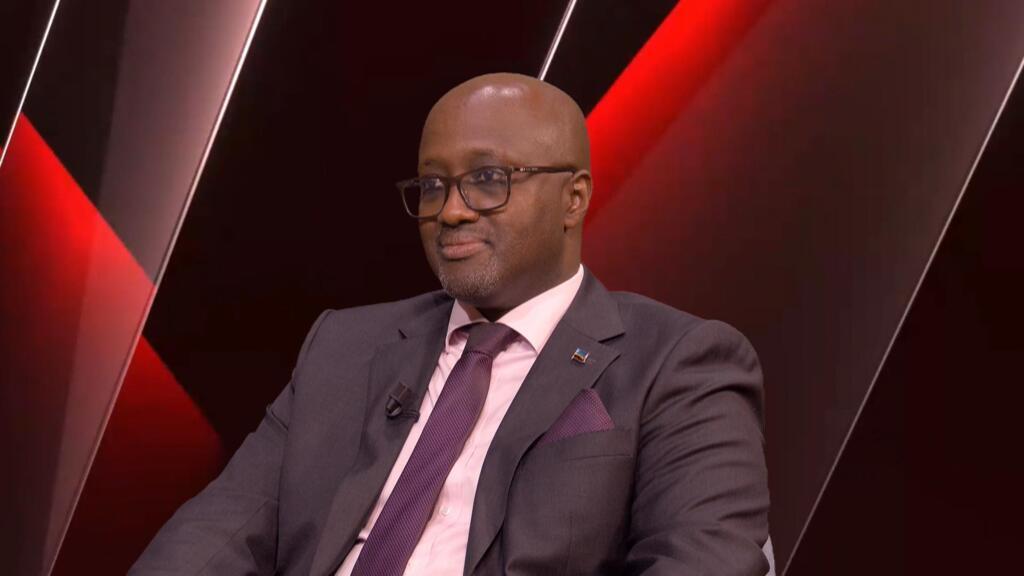
Rwanda’s Minister of Foreign Affairs and International Cooperation, Amb. Olivier Nduhungirehe, has criticised US sanctions against Rwanda, describing them as biased, while also addressing the controversy surrounding the Organisation internationale de la Francophonie (OIF) leadership election and Rwanda’s ongoing discussions with European countries over receiving migrants whose asylum applications have been rejected.
He discussed the issues in an interview with France 24 journalist Marc Perelman on November 19, 2026, focusing on diplomatic tensions involving Rwanda, the Democratic Republic of Congo (DRC) and international partners, including the recent disagreements within the OIF.
Nduhungirehe criticised the administration of US President Donald Trump for imposing sanctions on Rwanda, arguing that Washington had taken sides in the conflict in eastern DRC without adequately considering the role of other actors.
He said the United States should monitor the implementation of peace agreements aimed at resolving the DRC conflict impartially, arguing that the sanctions against Rwanda did not reflect equal scrutiny of all parties involved.
The minister noted that Rwanda had faced successive sanctions while other individuals allegedly involved in the security crisis in the DRC had not faced similar measures.
Among those he cited was Erik Prince, founder of private military company Blackwater, who has been mentioned in allegations concerning support for mercenaries assisting the DRC armed forces in their fight against the M23 rebel group.
Nduhungirehe argued that Prince had not faced sanctions comparable to those imposed on Rwanda and was continuing his activities.
“It is regrettable because the US administration and President Trump played a role in securing the historic Washington Accords for Peace and Prosperity. They are among the most comprehensive agreements ever attempted to resolve the conflict in eastern DRC,” he said.
The minister said this demonstrated that Washington was not addressing the conflict from all sides but was instead taking decisions against one party, an approach he considered inappropriate for a country leading efforts to restore peace in the region.
France and DRC blamed for OIF election dispute
Nduhungirehe also addressed the disagreements that emerged during the 20th Summit of Heads of State and Government of the OIF in Phnom Penh, Cambodia, where member states failed to agree on a successor to Louise Mushikiwabo.
He attributed the dispute to diplomatic tensions between Rwanda and the DRC, accusing France and the DRC of playing a role in triggering and escalating the disagreement. He suggested that the situation had been orchestrated by the two countries.
The summit ended without the election of a new Secretary-General. Instead, member states agreed that Mushikiwabo would remain in office for another 12 months to allow time to resolve the disagreements and prepare for the organisation’s continued operations.
Nduhungirehe said Rwanda was dissatisfied with how the matter had been handled, stressing that the OIF should remain an organisation where all member states enjoy equal rights rather than a platform dominated by powerful countries seeking greater influence over its leadership and decisions.
Rwanda ready to receive migrants from Europe
During the interview, Nduhungirehe also discussed negotiations Rwanda is conducting with five European countries — Germany, Austria, Denmark, Greece and the Netherlands — over arrangements to receive people whose asylum applications have been rejected and provide them with support and opportunities to rebuild their lives.
He said Rwanda was prepared to receive the migrants, noting that the country had the capacity to help them start afresh. He described the initiative as an opportunity to give them a second chance.
The discussions come as European countries continue exploring ways to manage migration, particularly involving people who enter their territories but do not qualify for permission to remain after seeking asylum.
Eastern DRC conflict remains a major concern
The interview also revisited the security situation in eastern DRC, with Nduhungirehe again criticising the US approach to monitoring the implementation of peace agreements.
He insisted that the responsibilities of all parties must be considered if lasting peace is to be achieved.
The minister reiterated Rwanda’s dissatisfaction with the sanctions, calling for a fair approach to resolving regional disputes rather than treating one country as solely responsible for the wider security crisis.
The interview comes amid continued diplomatic tensions in the region, despite ongoing efforts to support peace agreements intended to end the conflict between Rwanda and the DRC and establish lasting stability in the Great Lakes region.