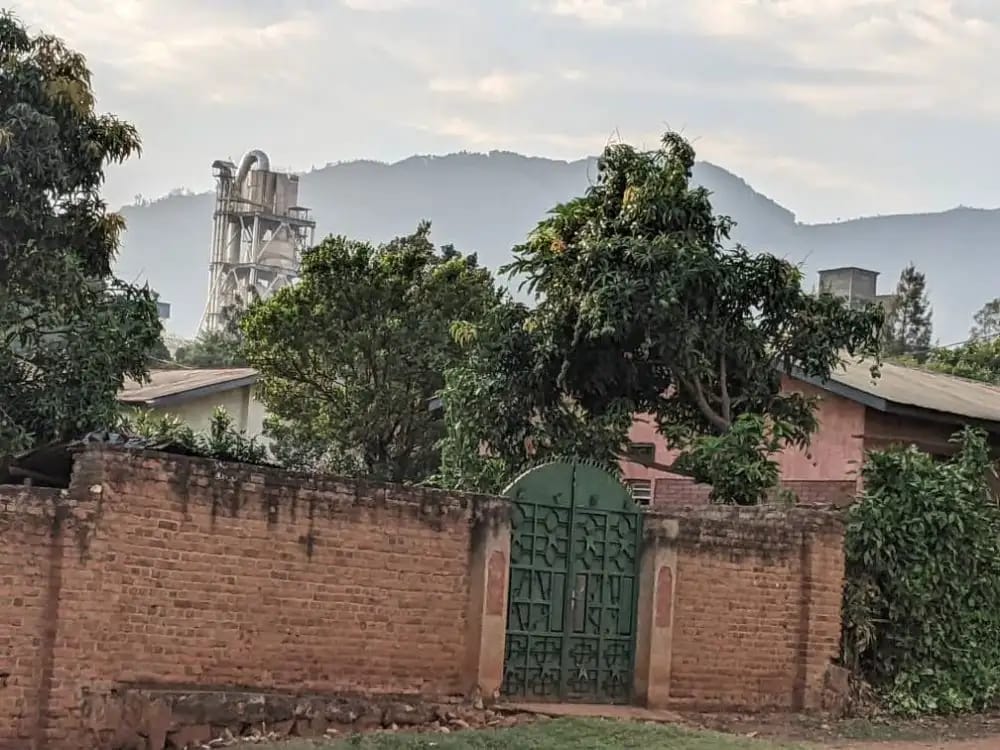
At least 127 households living near the CIMERWA cement plant in Rusizi District are set to be relocated in the first phase of a government plan aimed at addressing long-standing concerns over the factory’s impact on nearby communities.
Residents say they have lived with dust, noise and vibrations from the plant’s operations for more than a decade. Some also associate the conditions with respiratory and other health problems.
They further complain about wastewater and runoff from the factory, which they say can appear dark and contain waste, with heavy flows sometimes damaging homes.
For years, residents have been waiting for relocation, while restrictions on major construction and repairs have left some families uncertain about how to improve their homes as they await a permanent solution.
Rusizi District authorities say an assessment identified 427 households living close to the plant that could be relocated.
Rusizi District Mayor Phanuel Sindayiheba said the relocation will be implemented in phases, starting with households considered most vulnerable and those located closest to the factory.
“An assessment was conducted of the households and families living there, and 427 households were identified. A relocation plan is being considered in the interest of public health and to allow the factory to expand,” Sindayiheba said.
He said 127 households have been prioritised for the first phase.
“We divided them into two groups. There are those who are in urgent need of relocation — 127 households that are closest to the factory and are vulnerable. Together with central government institutions, we are mobilising resources to relocate these households in the first phase, before moving on to the others in the second phase,” he said.
Residents seek a clear timeline
Despite the planned relocation, some residents say the problem has persisted for too long and are calling for a clear timeline and concrete action.
They say the inability to undertake significant repairs or rebuild their homes while waiting for relocation has made their living conditions increasingly difficult.
Dust remains one of their major concerns, particularly for families living closest to the plant.
Sindayiheba said authorities will also consider alternative uses for the areas vacated after relocation, ensuring that future activities do not pose risks to residents or interfere with the factory’s operations.
“The area where they currently live will be considered for other activities that do not harm the environment and are not affected by the factory’s operations,” he said.
The immediate focus is now on securing resources and beginning the relocation of the 127 priority households, while a second phase is expected to cover the remaining families.
Until the relocation is completed, residents are calling for stronger measures to control dust, wastewater, noise and vibrations from the factory.