Rwanda and the United Nations Children’s Fund (UNICEF) have pledged to strengthen their partnership in improving children’s education, health and nutrition, with a particular focus on increasing investment in programmes that protect and support early childhood development.
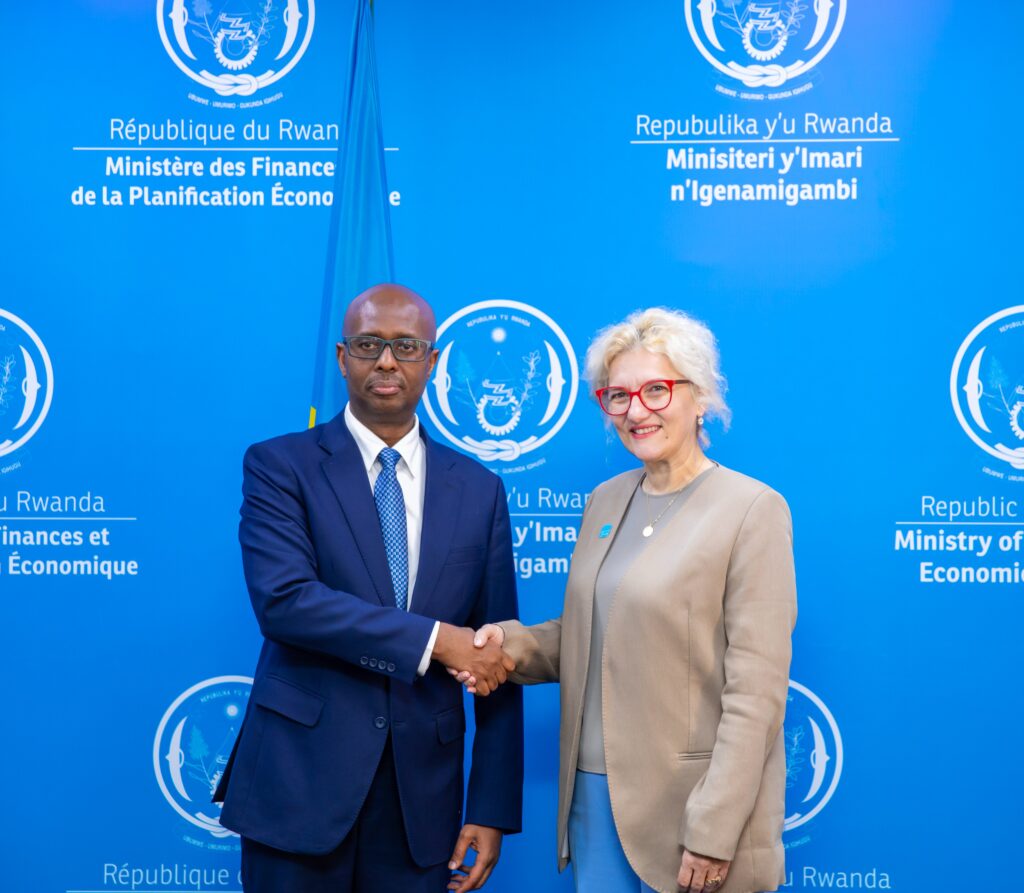
The commitment was highlighted during a meeting between Rwanda’s Minister of Finance and Economic Planning, Yusuf Murangwa, and Etleva Kadilli, UNICEF Regional Director for Eastern and Southern Africa, who is visiting Rwanda. The meeting took place in Kigali on Thursday, November 19, 2026.
Discussions focused on progress made under the existing partnership, opportunities to expand cooperation and ways to increase investment in programmes aimed at improving children’s well-being.
One of the key areas identified for greater attention is Early Childhood Development (ECD), a programme designed to support children’s physical, cognitive, emotional and social development.
The programme encompasses various interventions, including providing children with foundational education, ensuring access to nutritious food, improving childcare, preventing diseases and creating safe environments for their growth.
UNICEF emphasises that the early years of a child’s life, particularly the first 1,000 days from conception to the age of two, are critical for brain development and the ability to learn and cope with life’s challenges. According to the organisation, nearly 80 per cent of a child’s brain develops by the age of three.
In Rwanda, ECD programmes are implemented in collaboration with government institutions, civil society organisations and other partners to ensure children and their families have access to healthcare, proper nutrition, childcare and early education services.
More investment needed to improve children’s well-being
The meeting between Murangwa and Kadilli comes as Rwanda prepares its 2027/2028 national budget, with investment in sectors that directly benefit children among the priorities under consideration.
On November 12, 2026, the Ministry of Finance and Economic Planning and UNICEF released an analysis of budget allocations to social sectors, including education, health, social protection, water and sanitation.
The analysis shows that allocations to these sectors increased by 4.2 per cent in the 2026/2027 fiscal year compared with the previous year, against a total national budget of RWF 7.7963 trillion.
In its report, UNICEF stressed the need for the 2027/2028 budget planning process to protect funding for maternal and child health, nutrition programmes and early childhood development, particularly as external development assistance continues to change.
This reflects a partnership that goes beyond maintaining existing programmes, with both sides also seeking ways to ensure that investments in children deliver lasting results.
Investment in children’s well-being showing results
The report indicates that Rwanda continues to increase investment in social development, particularly in programmes targeting children.
Currently, 88 per cent of education funding comes from domestic resources, while government spending on social protection programmes has increased by two-thirds to compensate for funding gaps caused by declining support from development partners.
These investments are also reflected in improvements in the living conditions of children and their families.
The latest Integrated Household Living Conditions Survey (EICV7) shows that the proportion of Rwandans living below the poverty line declined from 39.8 per cent in 2017 to 27.4 per cent in 2024.
Extreme poverty also fell by more than half over the same period, from 11.3 per cent to 5.4 per cent.
In nutrition, the prevalence of stunting among children under five declined from 33 per cent in 2020 to 27 per cent in 2025.
Under-five mortality also decreased from 45 deaths per 1,000 live births in 2019/2020 to 36 in 2025.
In education, the gross enrolment ratio in pre-primary education more than doubled, rising from 24.2 per cent in the 2021/2022 academic year to 50.3 per cent in 2024/2025.
Four decades of Rwanda-UNICEF partnership in advancing children’s welfare
Rwanda and UNICEF established their partnership in 1986, marking 40 years of cooperation in promoting children’s rights, health, education, nutrition, social welfare and protection against abuse.
Over the years, UNICEF has supported various government programmes, including the expansion of Early Childhood Development centres, improved healthcare and nutrition services, and initiatives to help families provide better care for children.
As part of the 40th anniversary celebrations, Rwanda and UNICEF launched a tree-planting initiative on November 13, 2026, targeting primary schools and Early Childhood Development centres.
The initiative aims to plant more than 202,000 fruit trees in 4,996 schools and 232 ECD centres to help combat malnutrition while promoting environmental conservation.
UNICEF says the 40-year partnership provides a strong foundation for continued cooperation with Rwanda to ensure every child has the opportunity to survive, develop and reach their full potential.
The partnership continues to prioritise investment in children, with the shared goal of building a future in which every child has the opportunity to grow, learn and contribute to the country’s development.