
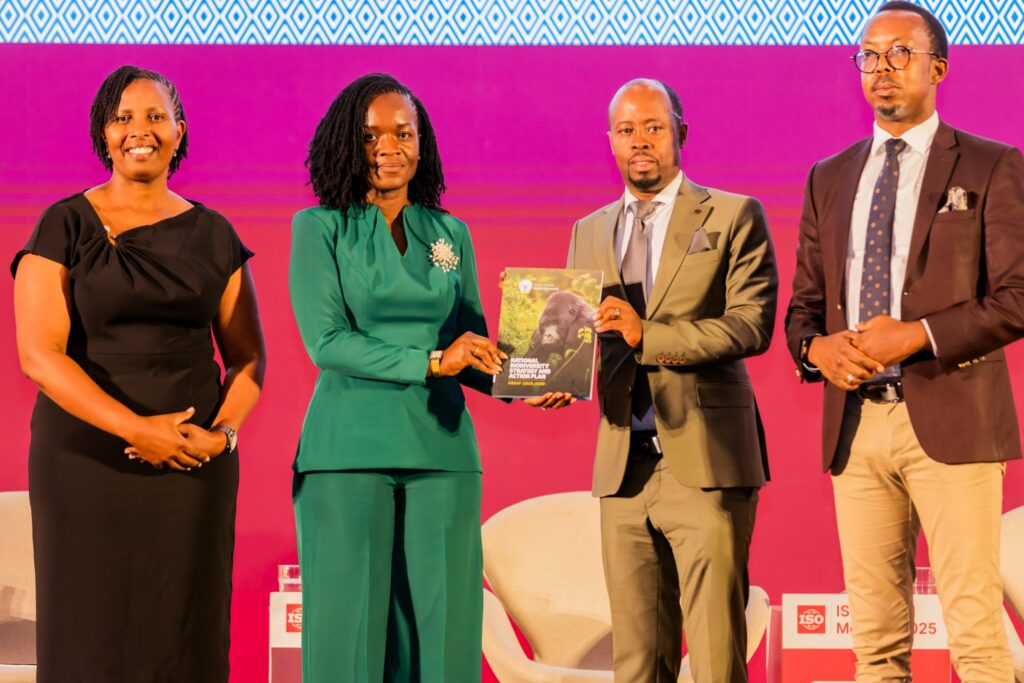
Rwanda officially launched the National Biodiversity Strategy and Action Plan 2025-2030, aimed at sustainable development.
The program was officially announced on Tuesday, October 7th, during the second day of the ISO meeting held in Kigali, Rwanda.
This initiative was launched to implement the international agreement on biodiversity conservation known as the Convention on Biological Diversity, signed in Rio de Janeiro in 1992.
Speaking at the launch, the Minister of Environment, Dr. Bernadette Arakwiye, stated that this is a significant step forward in the country’s efforts to protect biodiversity and achieve sustainable development.
She said, “The damage caused to the planet by degrading ecosystems is estimated at around 10 trillion US dollars annually. This is not just a figure; it is a stark warning urging us to act quickly. Because as biodiversity continues to decline, our nutrition, access to clean water, and human health are increasingly at risk.”
She added that conserving biodiversity is essential for safeguarding human health and the future of upcoming generations.
She emphasized, “This is not a rumor or an exaggeration. Our country’s development can be linked with biodiversity preservation. That’s why we must live with respect for and protection of the environment.”
Juliet Kabera, the Director General of the Rwanda Environment Management Authority (REMA), stated that this program builds on Rwanda’s 30-year journey in biodiversity conservation, including reforestation, wildlife protection, and promoting projects that support sustainable development.
The program will be implemented over five years at a cost of over 300 million US dollars, which will be used for environmental conservation activities, promoting environmentally friendly businesses, and enhancing the quality of biodiversity.
The initiative also aligns with the national Vision 2050 and the Green Growth and Climate Resilience Strategy, part of the government’s plan for accelerated development (NST2).