Rwanda could increase the minimum wage but end up worsening unemployment if the policy is implemented without considering employers’ ability to sustain jobs, Prime Minister Dr. Justin Nsengiyumva has warned.
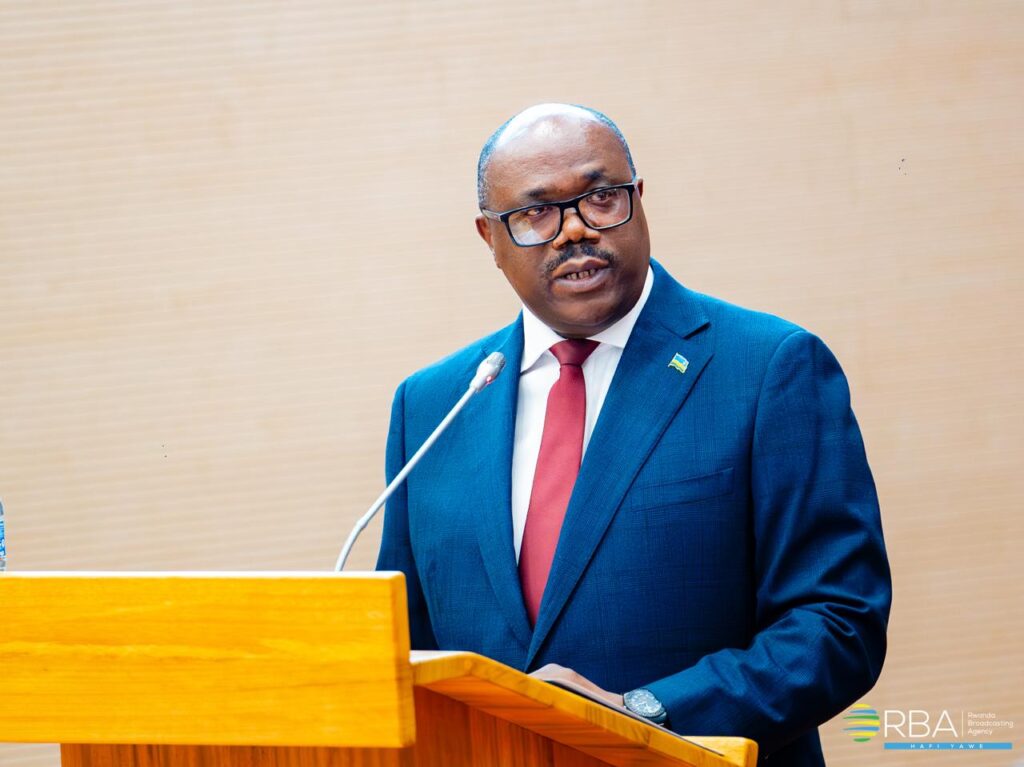
The Prime Minister made the remarks on Thursday, July 9, 2026, while addressing a joint session of Parliament on government efforts to safeguard economic stability and improve citizens’ welfare.
His comments came in response to a question from MP Jean Claude Ntezimana, who argued that Rwanda’s current minimum wage no longer matches the rising cost of living, creating a widening gap between workers’ earnings and market prices.
Nsengiyumva said the government understands the concerns surrounding low wages but stressed that any decision to increase the minimum wage must be carefully assessed to avoid creating unintended economic challenges.
He said the government’s goal is for citizens to earn incomes that allow them to live decent lives, support their families and meet basic needs, but added that wage discussions should also consider productivity and the financial capacity of employers.
“What we want as a government is for citizens to earn a sufficient income that enables them to live. There is a difference between a minimum wage and a living wage — one that allows a person to support themselves and their family,” he said.
The Prime Minister explained that employers rely on income generated from their businesses to pay workers, meaning salary adjustments must be aligned with business performance.
“If the revenue generated by businesses is not enough to cover the required costs, it becomes difficult for the government to simply order employers to pay a certain wage,” he said.
He cited an example of a company that currently pays workers Rwf50,000 and is required to double salaries to Rwf100,000, saying such a move could force some employers to reduce their workforce.
“An employer who has 10 workers may decide to reduce them to five because they cannot afford the increased wage costs. That would mean creating a problem of unemployment,” Nsengiyumva said.
He emphasized that the minimum wage debate requires a balanced approach that protects workers’ welfare while ensuring businesses remain capable of creating and maintaining jobs.
Rwanda’s current minimum wage, established in 1974, stands at Rwf100 per day for employees working under others. The rate has increasingly drawn public debate over whether it reflects the current cost of living and economic realities.