
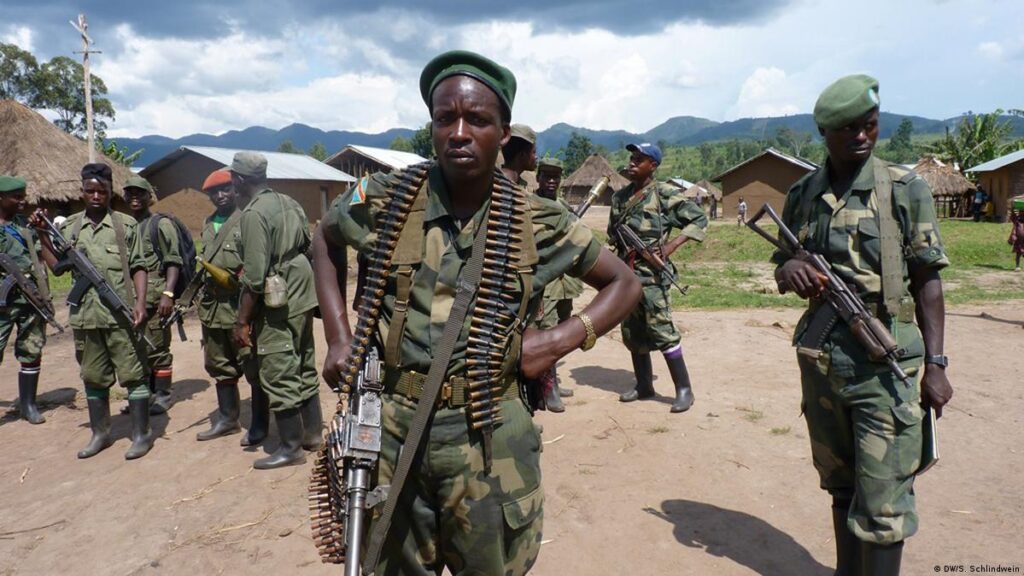
Rwanda’s minister of foreign affairs and cooperation, Amb. Olivier Nduhungirehe, says lasting peace in the Great Lakes region remains impossible as long as the FDLR rebel group continues to operate alongside the armed forces of the Democratic Republic of Congo (FARDC).
Speaking to Radio France Internationale (RFI), he outlined the main barriers preventing peace and stability in eastern DR Congo.
On June 27, 2025, Rwanda and DR Congo signed a peace agreement in Washington, facilitated by the United States. It committed both parties to dismantle the FDLR and lift the defensive measures taken by Rwanda along its border.
However, since the agreement was signed, attacks — including drone strikes — have continued to target civilians, particularly Congolese communities who speak Kinyarwanda.
Rwanda maintains that Kinshasa has not respected its commitments. Ambassador Nduhungirehe said that instead of implementing the ceasefire, DR Congo continues collaborating with the FDLR.
“There are technical working groups still meeting in Washington, and we hope they will bring some results. But none of this will work without political will from Kinshasa. The FDLR continues to cooperate with Congo’s army,” he said.
He added that the Washington agreement is clear and demands concrete action.
“It clearly states that the FDLR must be dismantled. It does not mean announcing where they are or issuing statements asking them to disarm. It means dismantling them in practical terms. Five months after signing the agreement, we have seen nothing.”
According to Rwanda, there is no sign of political will. Kigali argues that FDLR fighters are still integrated into FARDC structures and continue to receive support.
In late November, Rwanda and DR Congo reconvened under the Joint Security Commission Mechanism to discuss implementation of the Washington accords. Despite this, Kinshasa has continued launching offensives against civilians while protecting the FDLR.
“Nothing can be achieved if Kinshasa is not honest about the problem. Dismantling the FDLR would bring peace to the region. Using the group as an auxiliary force keeps the region in crisis,” Ambassador Nduhungirehe said.
The debate has also extended to the reopening of Goma International Airport. On October 30, French President Emmanuel Macron called for the airport to be reopened within two weeks to facilitate humanitarian assistance. He said it was part of restoring damaged infrastructure and easing access to aid.
However, Rwanda argues that reopening the airport without a clear halt to hostilities would jeopardize lives. Ambassador Nduhungirehe said humanitarian operations must be preceded by full security guarantees.
“As we speak, drone strikes are still targeting military positions, and at the same time people are asking to reopen the airport. Before talking about humanitarian operations, we must determine whether the ceasefire is respected,” he said.
Mediators, including Qatar, the United States and the African Union, continue pushing for restored diplomatic relations and lasting peace. It is expected that after the ongoing talks, the presidents of DR Congo and Rwanda will sign a final peace and economic cooperation agreement.
Rwanda insists that the conflict can only be resolved by addressing its root causes.
“The problem must be solved from the source,” Kigali maintains.