Rwanda has announced that electricity access across the country has reached 84%, with government officials expressing confidence that universal access will be achieved by 2029.
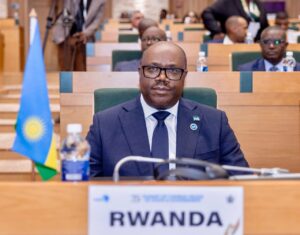
The update was provided by Minister of Infrastructure Dr. Jimmy Gasore during an interview with RBA, where he outlined progress under the National Strategy for Transformation (NST2), which aims to ensure that all Rwandans have access to electricity within the next three years.
Dr. Gasore said the electrification programme is advancing steadily, noting that 2,133 out of 2,148 administrative cells nationwide are already connected to the grid, representing 99% coverage at cell level. Only 15 cells remain to be connected, with ongoing projects already underway to close the gap.
“We are now at 84% electricity access. Almost all cells have electricity, and the remaining ones are already being addressed through active projects,” he said.
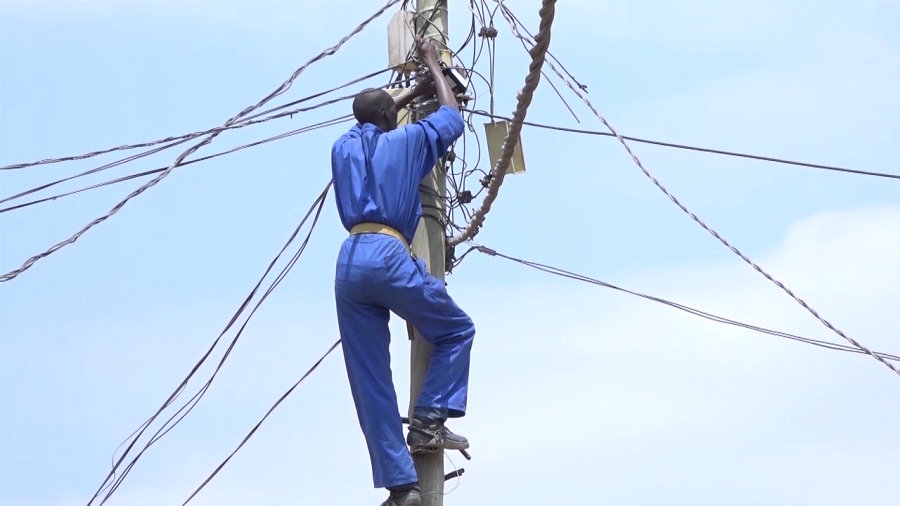
He explained that the national electrification strategy is being implemented through four main pillars: household connections, expansion of distribution networks, upgrading of existing infrastructure, and increasing generation capacity to meet growing demand.
As part of infrastructure upgrades, 440 transformers are expected to be replaced or upgraded in Kigali alone this year to improve efficiency and reliability of supply.
Several large-scale electrification projects are currently being implemented across the country. One recently completed project connected about 190,000 households in 10 districts, while another ongoing phase is expected to benefit an additional 190,000 households in districts including Musanze, Rubavu, Rusizi, and Nyabihu.
Further projects are planned to extend electricity to tens of thousands of households in the Southern and Eastern provinces. A broader programme targeting around 450,000 households is also underway, combining both on-grid and off-grid solutions, while another 200,000-household project is in the procurement stage.
On energy generation, the government is preparing to add 200 megawatts of solar power through agreements expected at the upcoming CEO Forum in Kigali. Additional capacity will come from hydropower developments and floating solar installations on lakes.
Rwanda is also strengthening regional energy cooperation, with electricity trade arrangements already in place with Uganda, advanced discussions ongoing with Tanzania, and interconnection efforts with Burundi already underway in selected areas.
Officials say these combined investments are expected to ensure reliable and universal electricity access across Rwanda by 2029.