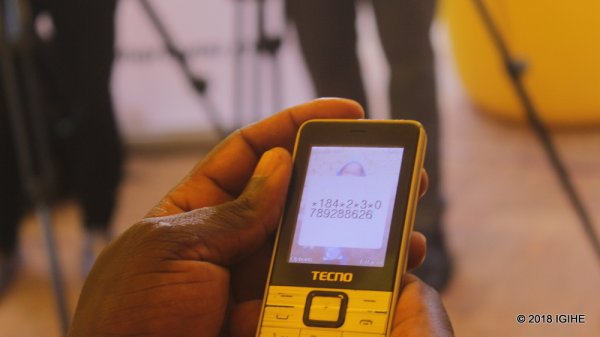
SACCOs are joining Rwanda’s e-Kash payment system as the country expands digital financial services and seeks to make money transfers faster and more affordable.
Fabrice Tuyizere Majyambere, Director of Payment Services at the National Bank of Rwanda (BNR), said some SACCOs in Kigali have already been connected to e-Kash, with the rollout continuing across the country.
He made the remarks on Thursday, October 8, during a BNR media briefing on the progress of the digital payment system, which was launched in July.
“Some SACCOs in Kigali have already been integrated, and we are continuing to add others across the country. We will then move to the Northern Province and other areas so that everyone can make payments through the e-Kash platform across different financial service providers,” Tuyizere said.
e-Kash became operational on July 14, bringing banks, SACCOs and other financial service providers onto a common payment platform.
The system allows customers to transfer up to Rwf10 million per transaction for a flat fee of Rwf20.
Tuyizere said the low transaction cost is also expected to increase competition among financial service providers and put pressure on those charging higher fees.
“If you have the option of transferring money between a bank and another institution for Rwf20, it becomes difficult to choose a service that charges you more than that,” he said.
He said the system gives providers that currently charge higher transfer fees an incentive to review their pricing and offer more affordable services.
The development comes amid concerns over the cost of money transfers through some telecommunications companies.
Prime Minister Dr Justin Nsengiyumva recently told Parliament that the issue of high transaction charges had been raised, with Senator Evode Uwizeyimana specifically pointing to MTN Rwanda.
BNR officials said e-Kash could help drive down such charges as customers gain access to cheaper alternatives.
By September 2026, e-Kash had processed 28.9 million transactions, with 97.8 per cent completed successfully.
The platform has recorded rapid growth. Between June 2025 and June 2026, its user base increased by 49 per cent, from 2.17 million to 3.25 million.
Monthly transactions rose by 72 per cent, from 2.9 million to five million, while the value of transactions increased by 318 per cent, from Rwf11 billion to Rwf46 billion.
SACCOs to expand digital services
BNR is also working to strengthen SACCOs’ capacity to provide financial services digitally and connect them with other financial institutions.
The plan will enable transactions between SACCOs and other financial institutions, as well as transfers between different SACCOs.
Members will increasingly be able to access their accounts through mobile technology without visiting SACCO branches, including making deposits and withdrawals.
The expansion of digital services follows the consolidation of Umurenge SACCOs at district level.
All 416 Umurenge SACCOs have now been consolidated into 30 district-level SACCOs, according to BNR.
The central bank said the consolidation has contributed to lower lending rates and improved access to credit.
When SACCOs operated at sector level, loan interest rates stood at 24 per cent. Following consolidation, rates have fallen to between 14 and 15 per cent.
BNR also said bringing members together has increased SACCOs’ capacity to provide loans, while making their governance and management easier.
Umurenge SACCOs were introduced in 2008 to promote saving and provide affordable credit to communities.