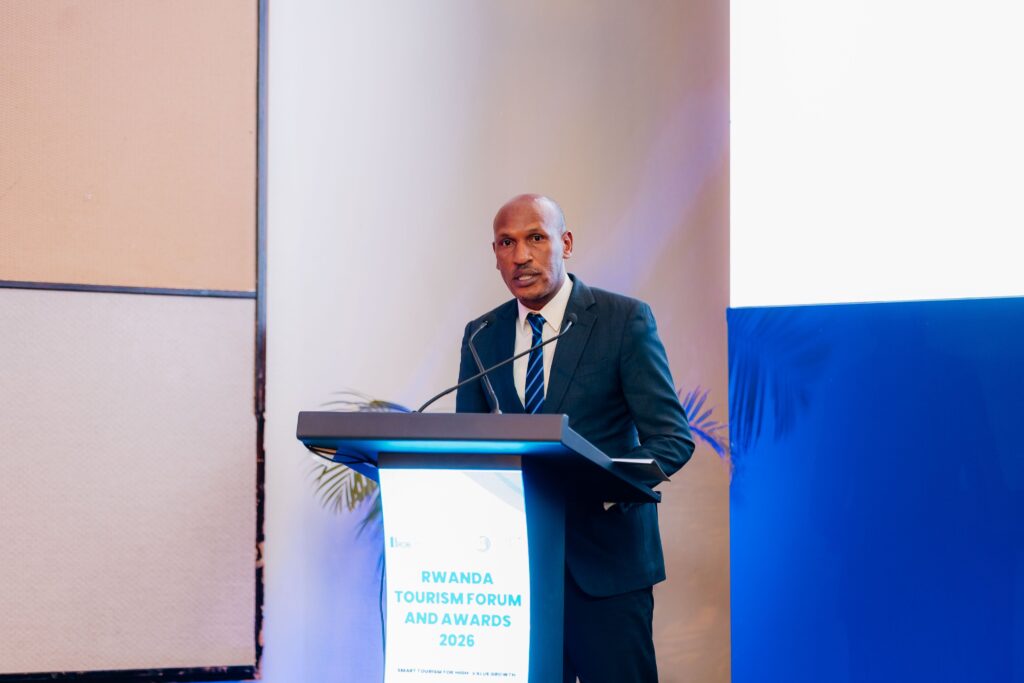
Rwanda’s tourism investors have been urged to embrace technology as a key driver of the sector’s growth and competitiveness in the international market.
The call was made on November 27, 2026, during a meeting of members of the Rwanda Tourism Chamber, who discussed how technology, particularly artificial intelligence (AI), could be used to improve and speed up the delivery of tourism services.
Hakiza Jackson, Director General of the Tourism Chamber at the Private Sector Federation (PSF), said technology enables hotels, tour operators and other tourism businesses to promote their services globally, make bookings and payments easier for visitors, and use data to better understand customer needs.
“If Rwanda is to compete with other tourist destinations in a world that is increasingly embracing technology, we cannot afford to be left behind,” he said.
He noted that even destinations with attractive tourism offerings risk being overlooked if they fail to use technology to market themselves effectively.
However, he stressed that tourism development should not rely on technology alone but must also be supported by high-quality hospitality services.
“Technology helps people discover us, but what makes them come back is how we welcome them, the kindness we show them and the quality of services we provide,” he said.
He also revealed that about 270 members of the Rwanda Tourism Chamber had received training from Google on using artificial intelligence to market their businesses and drive growth.
Nkusi Felly Karenzi, Head of Tourism and Hotels at the Rwanda Development Board (RDB), said the meeting aimed to explore ways for tourism operators to make greater use of technology to improve service delivery.
She said the discussions aligned with Rwanda’s ambition to become a leading international tourism destination, noting that wider adoption of AI would be important in achieving this goal.
Karenzi urged private sector players to strengthen their presence on social media, improve the use of technology in service delivery and payment systems, and invest in staff training.
She also called on the government, investors and other partners to work together to advance the tourism sector, stressing that “the future of Rwanda’s tourism is a shared responsibility.”
In 2025, tourism generated $685 million (more than Rwf997 billion) for Rwanda, up from $647 million in 2024. This represented a 6% increase in revenue, while the number of visitors to the country rose by 9% to 1.49 million.
Rwanda aims to generate $1.1 billion annually from tourism by 2029.