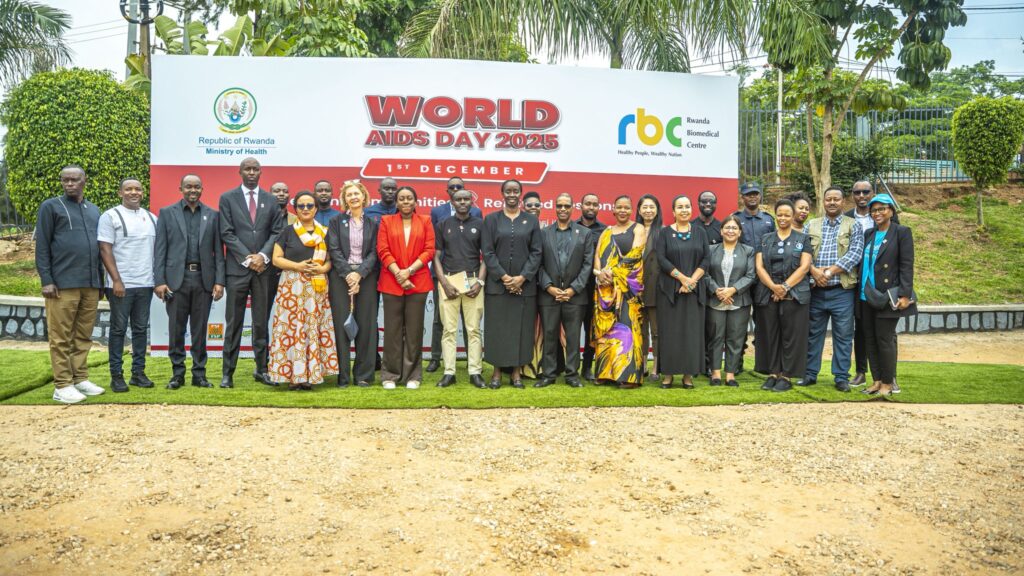
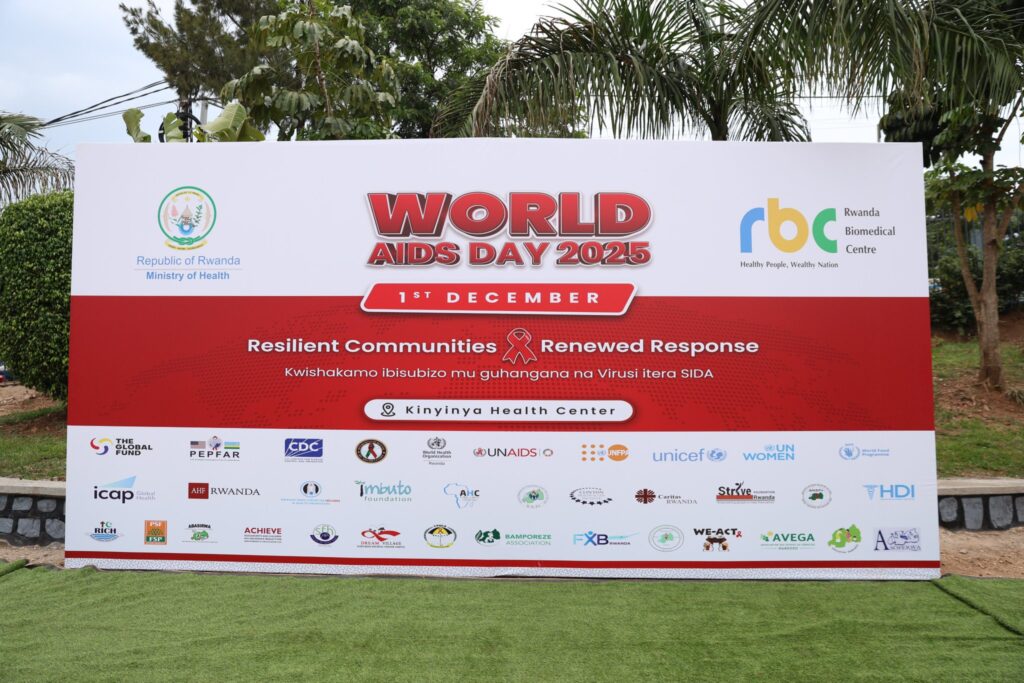
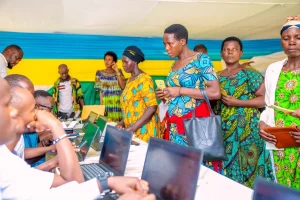
Rwanda joined the global community in commemorating World AIDS Day, observed each year on December 1st, the day was dedicated to raising awareness about HIV/AIDS and promoting solutions to combat the virus.
This year’s observance is being held under the national theme: ‘Resilient Communities, Renewed Response.
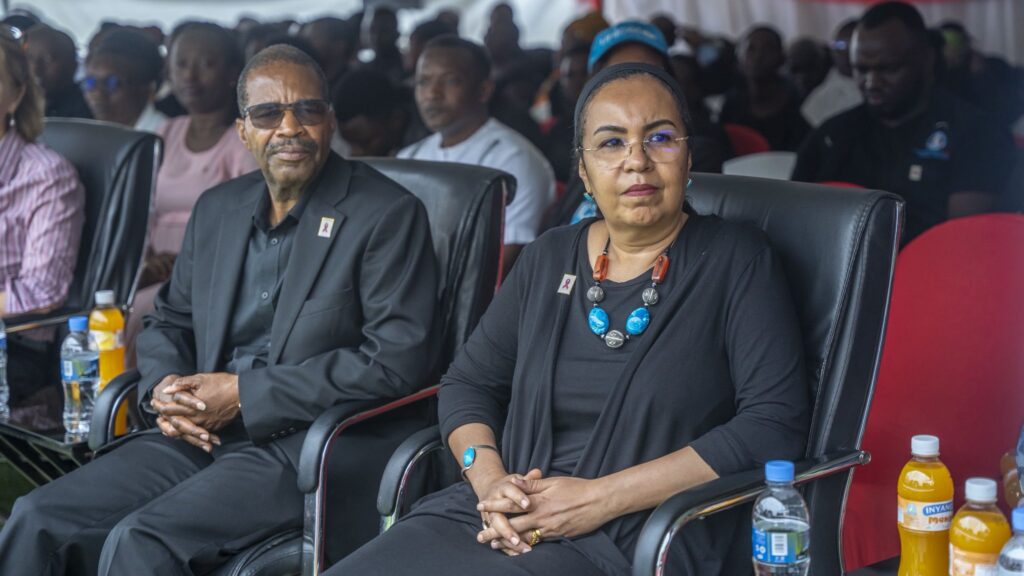
At the national level, celebrations were held at Kinyinya Health Center in Gasabo District, attended by officials from the Ministry of Health and the Rwanda Biomedical Center (RBC).
The event brought together government leaders, community members, and development partners to review progress made in the fight against HIV/AIDS and discuss strategies to strengthen ongoing interventions.
Health authorities reported that Rwanda continues to make significant strides against the epidemic, despite persistent challenges that require attention.
According to RBC, the country has reduced mother-to-child HIV transmission during childbirth to about 2%, though the ultimate goal remains zero transmission.
Dr. Ikuzo Basil, Director of HIV Prevention Unit in RBC, told The New Times that this achievement has been made possible through routine testing of all pregnant women and close follow-up at the community level.
RBC’s data also indicate that HIV prevalence among adults has fallen below 3%. Dr. Ikuzo emphasized that these results reflect effective implementation of national strategies.
Rwanda’s progress aligns with the UNAIDS 2030 global targets, which aim to end the HIV epidemic and reduce AIDS-related deaths.
The country has now achieved the 95-95-95 targets: 95% of people have gone for HIV test, 95% of those diagnosed are under treatment, and 95% of those on treatment have achieved viral suppression.
Dr. Ikuzo noted that antiretroviral therapy (ARV) remains central to controlling the virus. By 2023, over 216,000 people were on ARV treatment, and AIDS-related deaths had dropped to approximately 2,600 per year.
However, challenges persist, particularly among youth, with higher HIV prevalence among young women, including a 35.2% rate among Sex worker and 5.8% among Same-sex couples.
Other obstacles include decreasing of international funding for HIV programs, stigma, and the spread of misinformation on social media, all of which hinder access to healthcare services.
RBC plans to continue public awareness campaigns encouraging prevention, early testing, provision of ARVs including two-monthly injections and promoting self-testing to ensure that more people can access timely treatment and care.