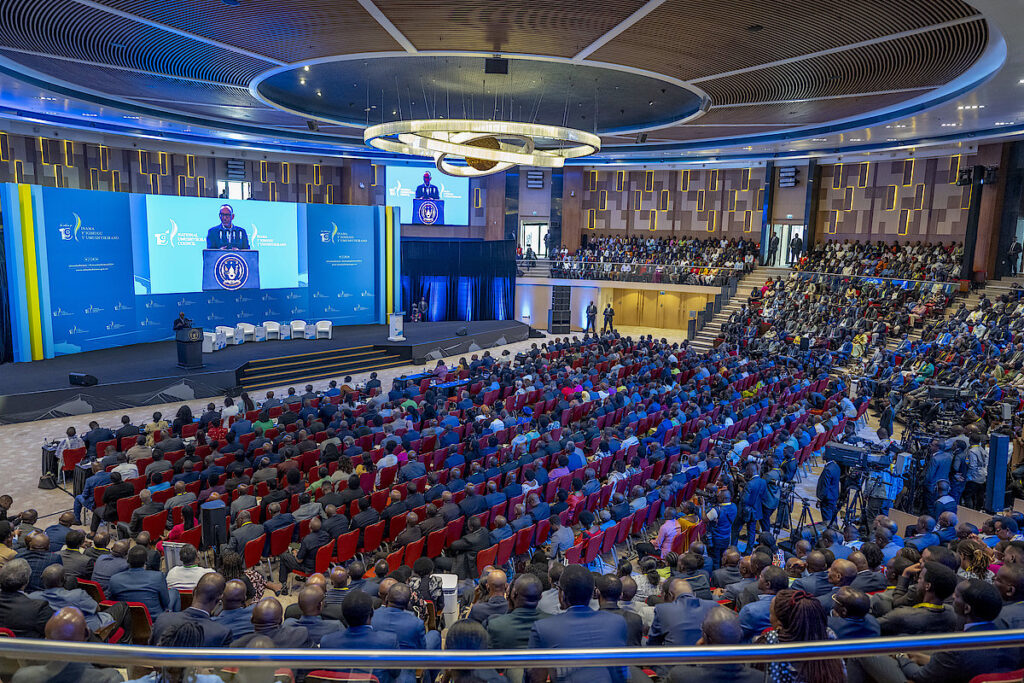
As Rwanda gears up for the 20th National Umushyikirano Council set for February 4–5 in Kigali, the Ministry of Finance and Economic Planning (MINECOFIN) has announced that more than 80 percent of resolutions adopted during the 19th Council have been implemented.
The 19th Umushyikirano Council, held on January 23–24, 2024, adopted 13 resolutions grouped under three key pillars: economic transformation, social welfare, and governance.
Umushyikirano serves as a national dialogue platform that brings together citizens and leaders to assess progress toward Rwanda’s long-term development goals, including the National Strategy for Transformation (NST2) and Vision 2050.
Speaking to Rwanda Broadcasting Agency (RBA), the Minister of State in charge of the National Treasury at MINECOFIN, Godfrey Kabera, outlined major milestones, particularly in agriculture. He said the country has expanded cultivated land and implemented multiple irrigation projects to boost agricultural productivity.
Projects include the development of Nyiramageni marshland, irrigation schemes along the Kanyaru River, and similar interventions in districts such as Kayonza and Kirehe, aimed at increasing crop yields and strengthening food security.
On economic development, Kabera noted that industrial parks (udukiriro) have been established nationwide and are increasingly driving job creation.
“More than 370,000 people have so far found employment through these industrial parks,” he said, adding that the facilities are helping improve productivity and support small-scale manufacturing.
In infrastructure development, the government has constructed about 4,200 kilometres of feeder roads to improve connectivity and market access for rural communities.
“These roads are continuously maintained, with over 58 percent currently in good condition, and the programme is ongoing,” Kabera said.
He also highlighted the growing contribution of Rwandans living abroad, noting that diaspora investments in sectors such as agriculture and industry have reached USD 35 million.
“This reflects the strong commitment of Rwandans in the diaspora to the country’s development agenda,” he said.
On access to clean water, Kabera reported that implementation has surpassed 80 percent. He further pointed to reforms under the Business Development Fund (BDF), which supports youth- and women-led enterprises, including the transfer of certain responsibilities to the Rwanda Development Bank (BRD) to strengthen service delivery and expand outreach.
The health sector has also registered notable gains, including the expansion of hospitals, increased capacity at health centres, and specialized training for medical professionals to treat conditions that previously required referrals abroad.
Additional services have also been integrated into the Community-Based Health Insurance scheme (Mutuelle de Santé).
In sports, Rwanda continues to strengthen talent development, with over 400,000 youths supported in football and more than 800 in basketball. Coaches are also receiving internationally recognized certifications to professionalize training.
On governance and civic education, more than one million people have participated in the Itorero (Intore) programme during school holidays, while over two million have engaged in the “Ndi Umunyarwanda” initiative.
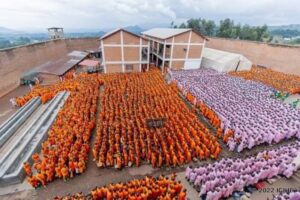
More than 4,000 participants, including inmates and students, have also undergone unity and resilience training aimed at promoting national cohesion and combating genocide ideology.
On digital service delivery, Kabera said the use of the Irembo platform has expanded significantly over the past two years, with 76.9 percent of services now available online and an additional 258 services integrated to improve access and efficiency for citizens.