The National Identification Agency (NIDA) has clarified how Rwanda’s new digital ID system will operate, emphasizing that individuals will decide which personal information to share based on the services they request or provide.
Speaking to B&B Kigali FM, NIDA Director Josephine Mukesha said the system allows users to select specific data to share with organizations, ensuring that only relevant information is disclosed. Individuals can also revoke access once a service ends.
“The individual alone decides what information to provide to a specific organization. When that engagement ends, they can instruct the organization to stop accessing their data,” Mukesha explained.
The system will rely on technology to confirm consent. For example, a user interacting with a financial institution will receive a one-time password (OTP) to approve the data sharing. Access can be revoked at any time or redirected to a different organization.
Digital ID rollout in Kigali
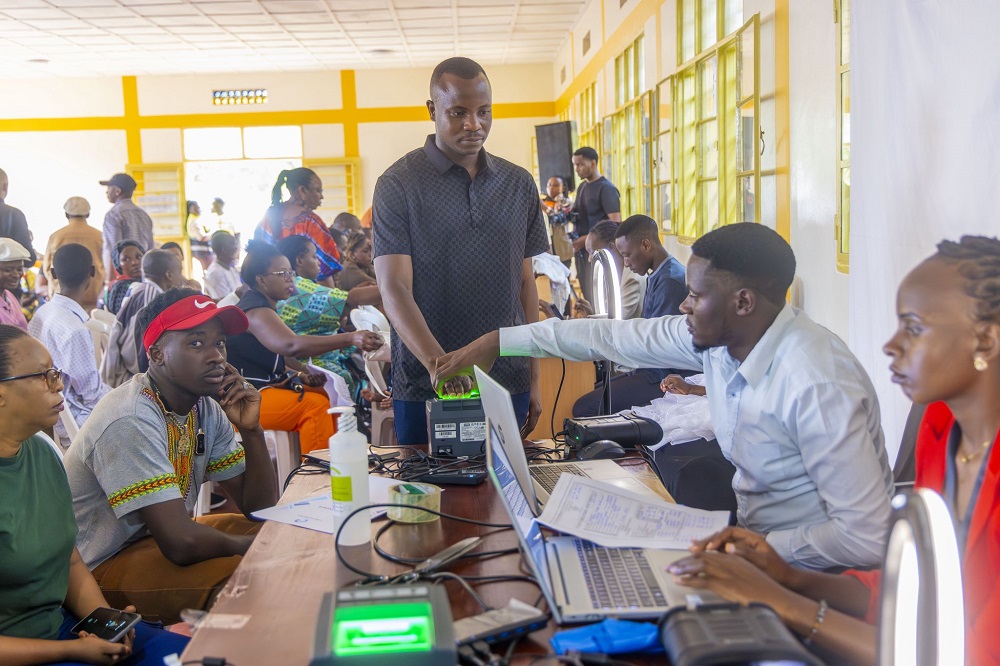
Following a nationwide verification campaign, NIDA launched digital ID services in Kigali on February 7, 2026. The rollout will take seven weeks, covering two to three sectors per week, with multiple registration sites in each sector.
In the first week, registration took place in Nyarugenge District (Nyakabanda, Rwezamenyo, and Gitega sectors, 17 sites), Gasabo District (Kimihurura and Kacyiru sectors, 14 sites), and Kicukiro District (Niboyi, Kagarama, and Kicukiro sectors, 12 sites).
Citizens must present their parents’ ID numbers or, if married, their spouse’s ID number. Registration can also be completed online via http://new.irembo.gov.rw, where users confirm personal data before visiting a nearby site for biometric capture.
Project background and features
The digital ID project, launched in 2023 with support from the World Bank, has a budget of Rwf 200 billion. The ID will be issued to Rwandan citizens, residents, refugees, asylum seekers, unregistered children, short-term foreign nationals, migrants, and stateless persons in Rwanda.
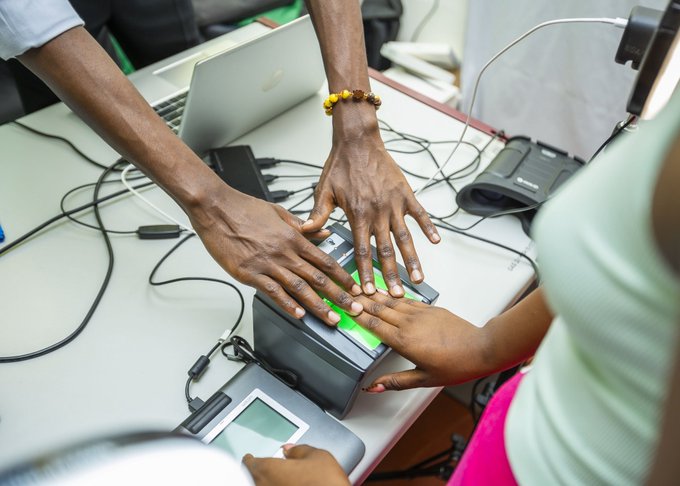
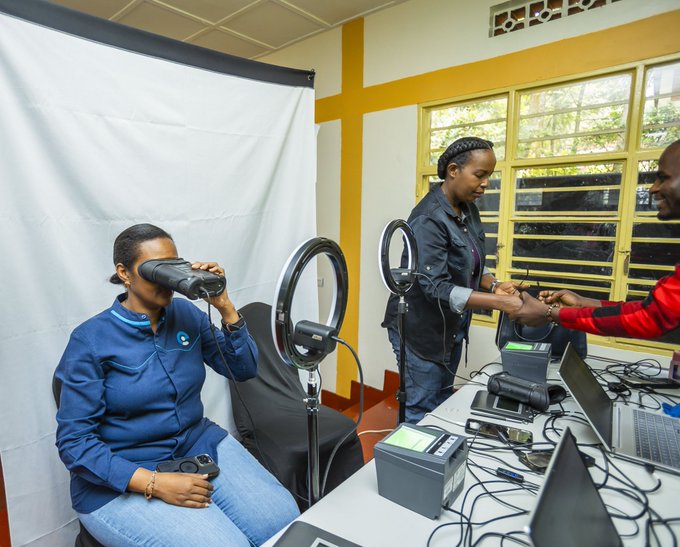
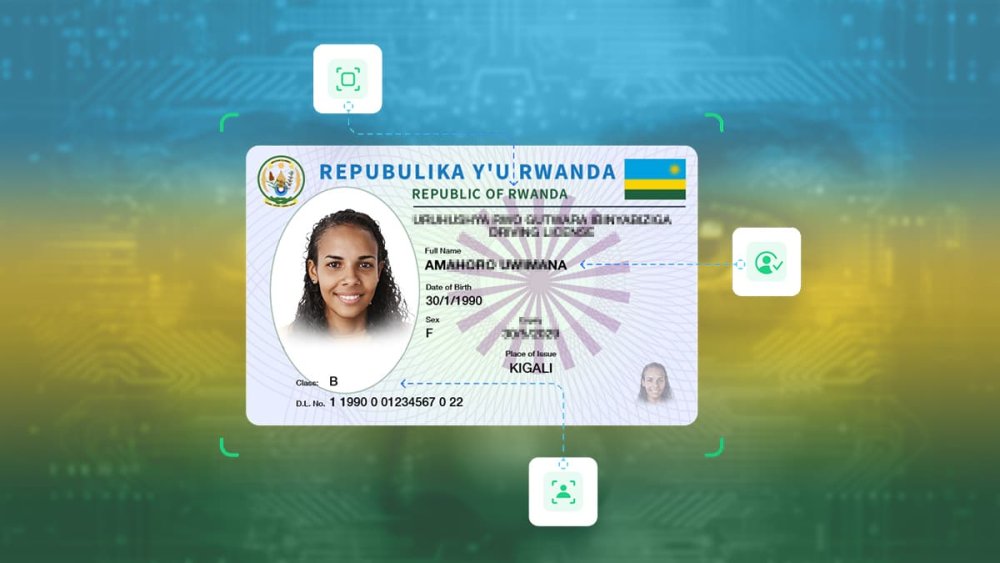
The digital ID will be available as a physical card and a QR code for mobile or computer use. It will include a unique token number for accessing personal information, separate from the traditional ID number. Biometric data will include iris scans, fingerprints, and facial recognition.
Children under five will receive a photo-only ID, while those aged five and above will provide full biometric data. Unlike previous systems, individuals will no longer need to carry a physical ID to access services.
NIDA plans to officially issue digital IDs in July 2026, with Rwanda now completing roughly one-quarter of the project’s implementation phase.
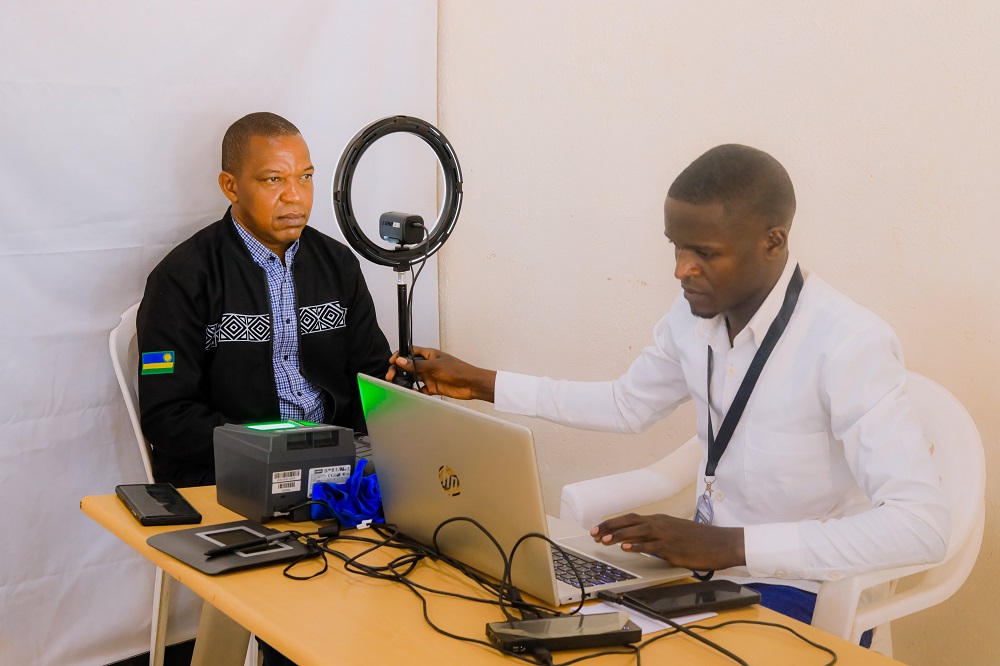
Iris scans are also included in the biometric data collected.