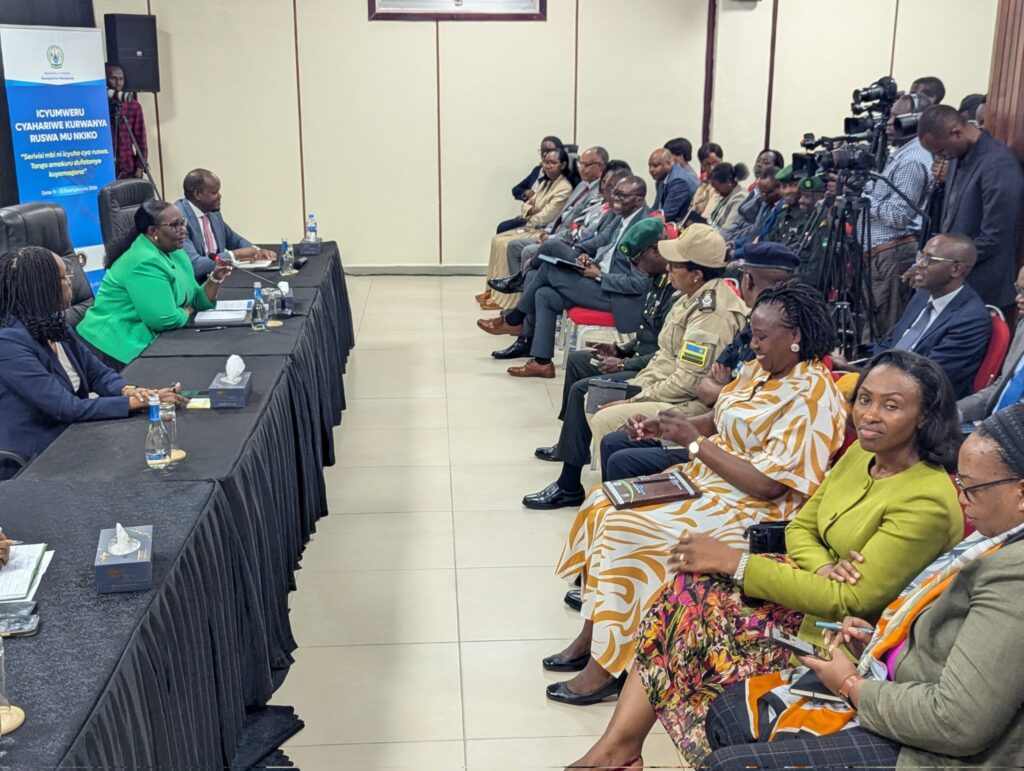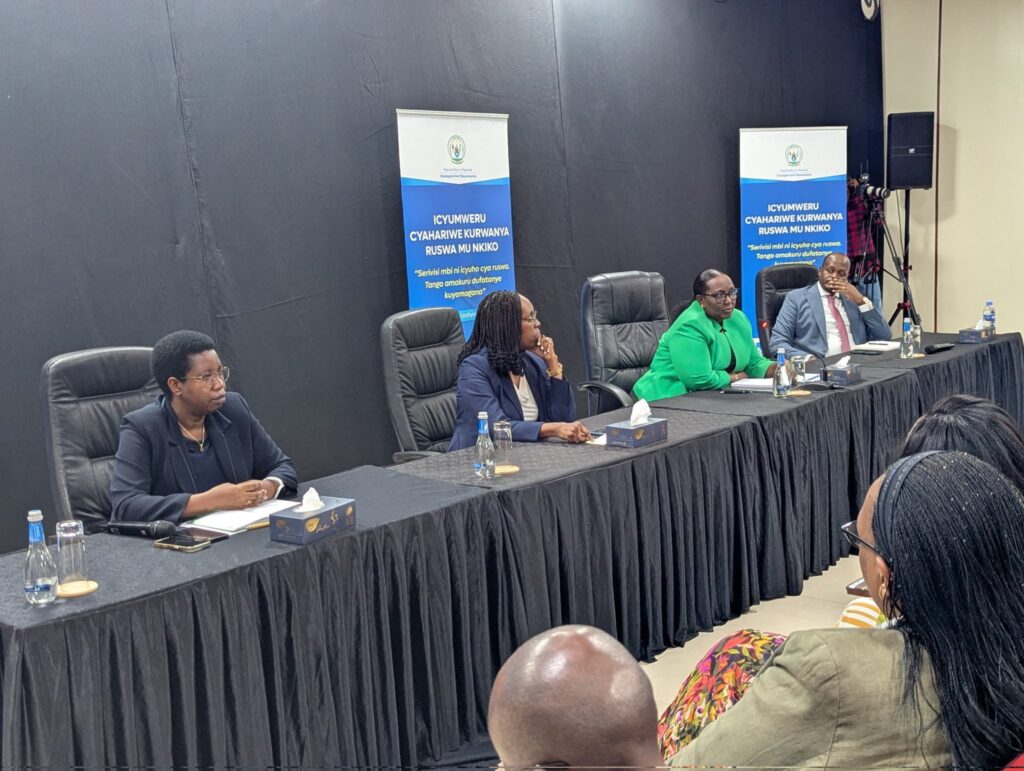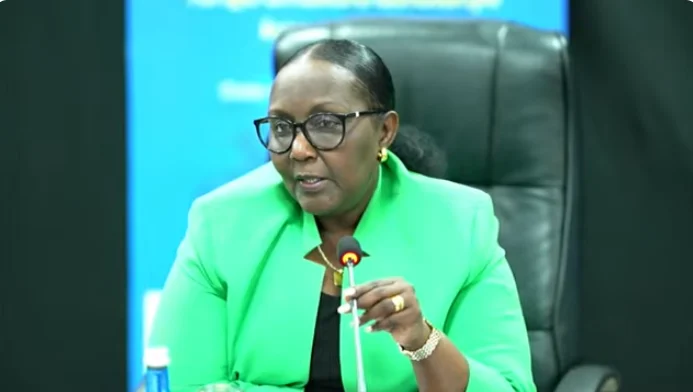
The President of Rwanda’s Supreme Court and Chair of the High Council of the Judiciary, Domitilla Mukantaganzwa, has warned judges against delaying court cases without valid reasons, calling on them to uphold citizens’ rights to timely justice.
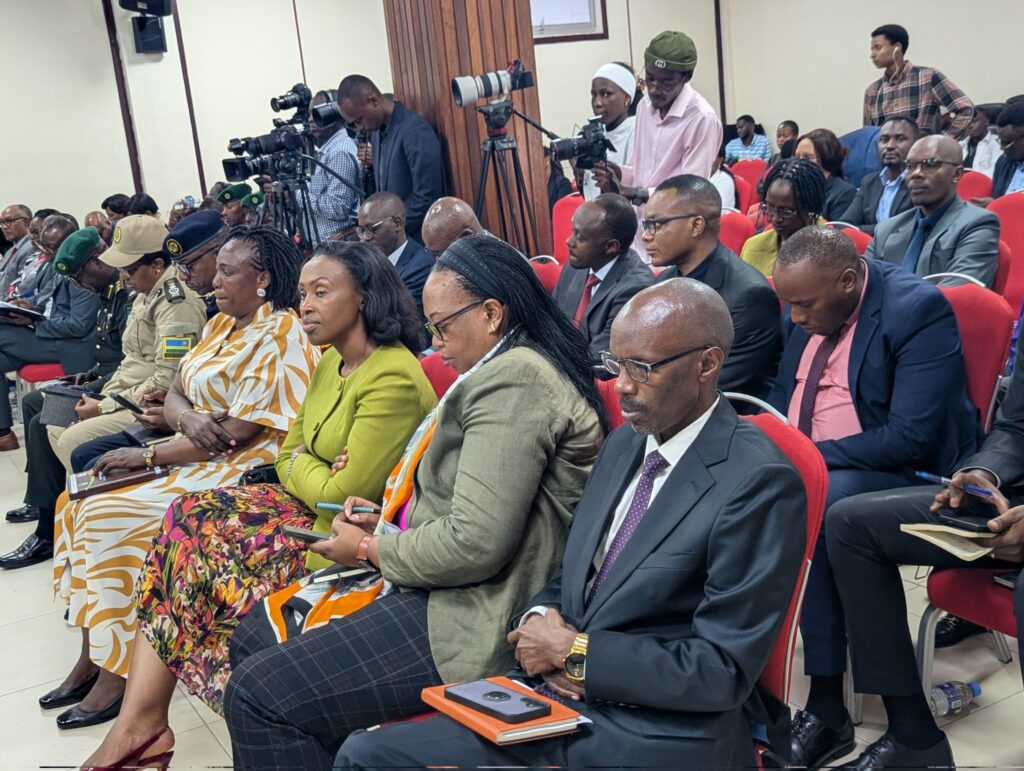
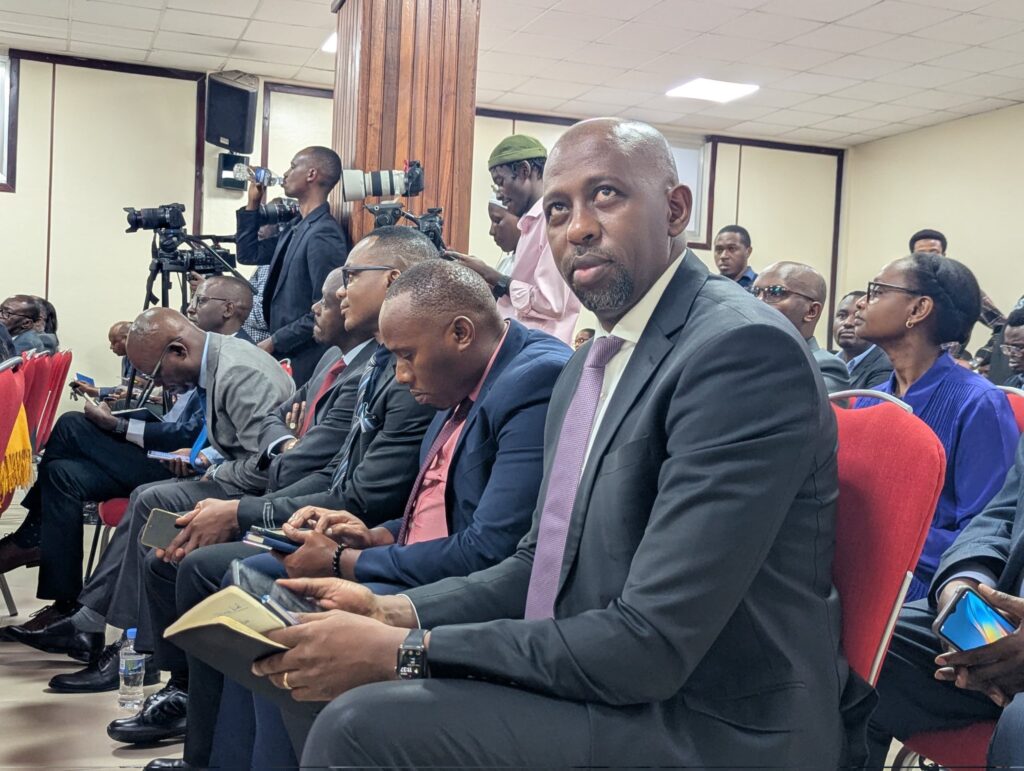
Mukantaganzwa made the remarks on Monday, February 9, 2026, during the launch of the annual Anti-Corruption Week in courts, attended by judiciary officials, the Rwanda Investigation Bureau (RIB), the Rwanda Governance Board, the Rwanda Correctional Service, NPPA, and other stakeholders.
The week-long campaign, themed “Poor service is a gap for corruption. Share information and let’s fight it together”, runs from February 9-13 and will feature awareness sessions, corruption case hearings, and public engagements, including in prisons.
Speaking to the press, Mukantaganzwa highlighted that some judges still adjourn cases repeatedly without notifying the parties, leaving citizens stranded at courts without receiving services.
She said: “I call on judges, registrars, and all court staff to provide proper services, keeping in mind that respecting a litigant’s rights is their core duty. Avoid delaying parties or denying them access to justice.”
Mukantaganzwa added that no judge is above the law and must act in the public interest, citing an example of a judge suspended after adjourned a single case 19 times without justification.
She urged citizens not to pay bribes for services they are entitled to, and to report poor service through the judiciary hotline 9040.
The judiciary reports that 13 judges were investigated last year for corruption, and over 50 judges have been dismissed for corruption-related offenses in the last 20 years. Similarly, 17 prosecutors and four lawyers faced investigations, while 50 RIB officers have been dismissed for bribery and misconduct.
Transparency International Rwanda’s 2025 study also revealed that corruption persists across institutions, including the police, judiciary, and prosecution. Under Rwandan law, corruption is classified as a serious, non-prescriptive crime.
Mukantaganzwa concluded that fighting corruption in courts requires joint effort from both officials and citizens to ensure transparency, accountability, and timely justice.