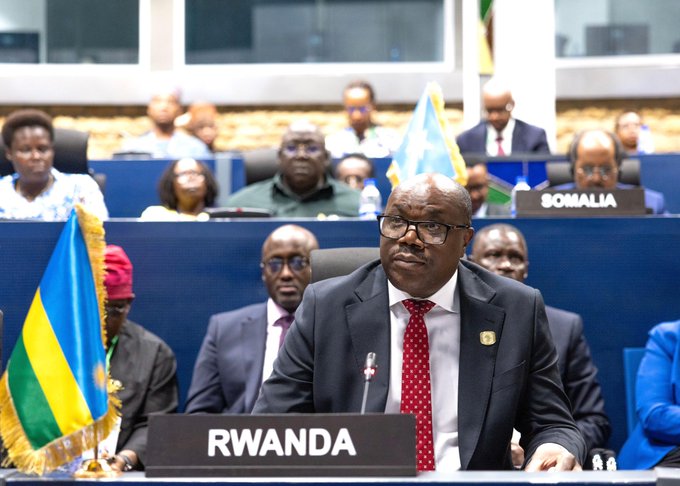
Rwanda has reaffirmed its readiness to share its post-conflict reconstruction experience with South Sudan, particularly in promoting unity and reconciliation as foundations for sustainable peace.
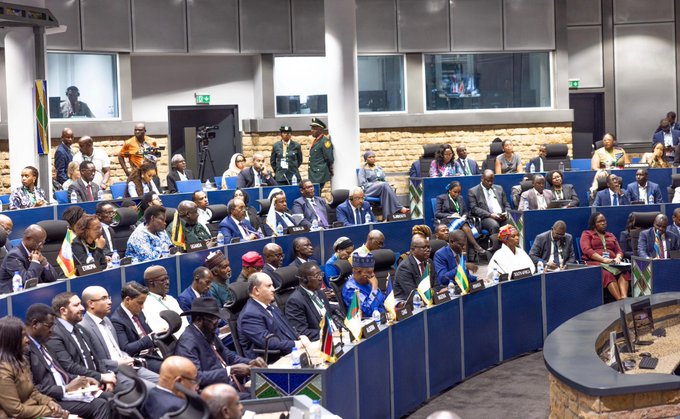
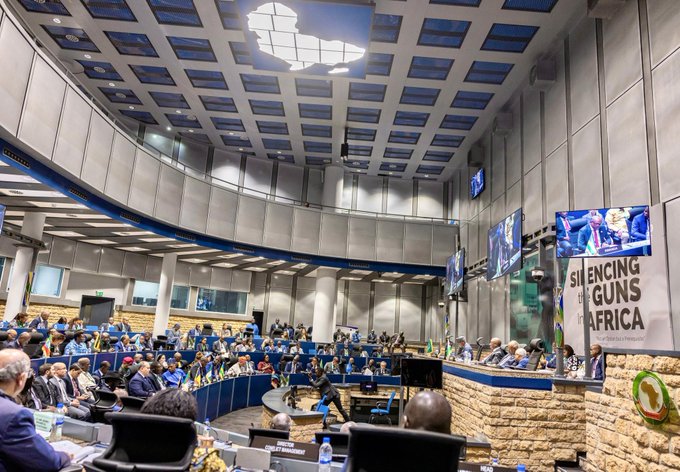
Prime Minister Dr Justin Nsengiyumva made the commitment on February 15, 2026, while addressing the High-Level Ad Hoc Committee on South Sudan convened by the African Union in Addis Ababa, Ethiopia.
The committee brings together African heads of state and government to mobilise political support and strengthen mediation efforts aimed at stabilising South Sudan.
Dr Nsengiyumva said the meeting reaffirmed the African Union’s continued commitment to implementing the 2018 revitalised peace agreement, describing it as the most credible pathway towards durable peace in South Sudan.
He commended the AU Ad Hoc Committee (C5) for its visit to Juba in January 2026, noting that the mission demonstrated Africa’s solidarity in supporting South Sudan’s peace process.
He said the outcomes of that visit remain critical to the implementation of the agreement and to preparations for general elections scheduled for December 2026.
As South Sudan’s transitional period approaches its conclusion, the Prime Minister stressed the importance of sustained continental support through AU-recognised mechanisms, including its commissions and the office of the special envoy of the chairperson.
He also acknowledged progress made under President Salva Kiir, particularly in maintaining stability and advancing electoral preparations.
He emphasised that strong political will remains essential to building trust among stakeholders and ensuring a credible transition.
In his closing remarks, Dr Nsengiyumva conveyed a message from President Paul Kagame, expressing Rwanda’s best wishes for lasting peace and development to President Salva Kiir, his government and the people of South Sudan.
He further thanked South African President Cyril Ramaphosa for convening the high-level meeting in support of South Sudan.
President Ramaphosa, in his remarks, described 2026 as a pivotal year for South Sudan due to the planned December elections.
However, he cautioned that elections alone would not guarantee lasting peace, stressing the need for sustained political commitment and a stable security environment to inspire public confidence.
Since gaining independence in 2011, South Sudan has experienced recurring conflict and political instability.
Two years after independence, violence erupted and plunged the country into prolonged turmoil.
Despite persistent challenges, the AU-backed peace framework continues to offer hope that stability and security can gradually take root.