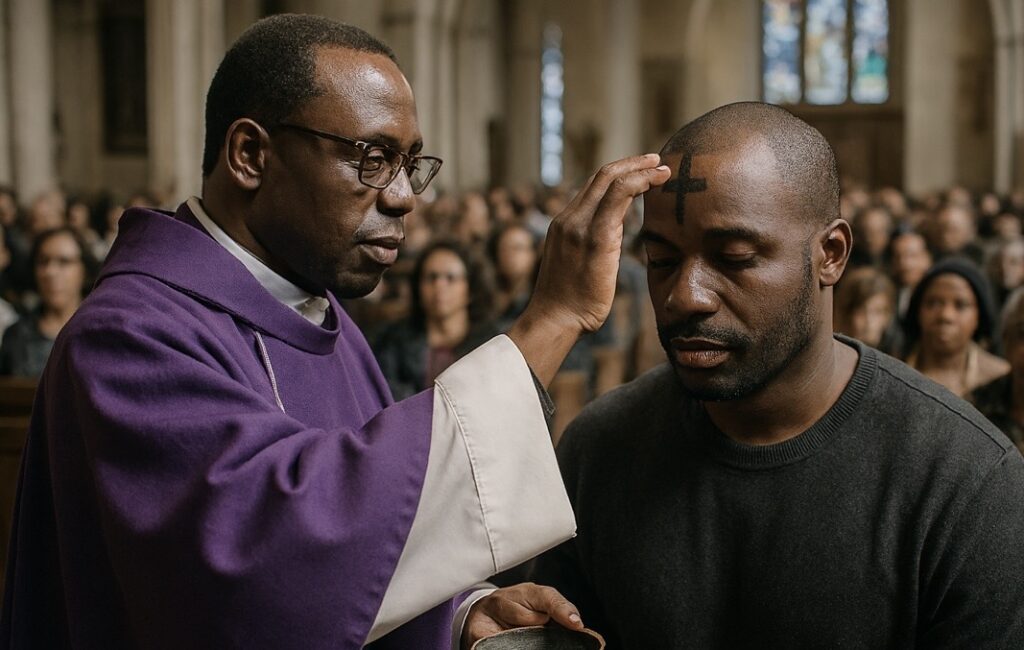
Catholics around the world on Wednesday, February 18, 2026, observed Ash Wednesday, marking the formal beginning of the 40-day Lenten season, a period of prayer, fasting and spiritual renewal in the Catholic Church.
The day is distinguished by the imposition of ashes on the forehead in the shape of a cross, a powerful symbol of repentance, humility and reflection on human mortality. As ashes are applied, clergy often proclaim the biblical words: “For you are dust, and to dust you shall return,” or “Repent and believe in the Gospel.”
Ash Wednesday falls six and a half weeks before Easter. In 2026, Easter Sunday will be celebrated on April 5, while Good Friday, commemorating the passion and death of Jesus Christ, will be observed on April 3.
The ashes used during the ceremony are derived from palm branches blessed on the previous year’s Palm Sunday. Burned and prepared for the ritual, they symbolise both continuity within the Church’s liturgical calendar and the call to conversion at the start of Lent.
Lent recalls the 40 days Jesus spent fasting and praying in the desert before beginning his public ministry. Although the season spans 46 calendar days, Sundays are excluded from fasting, hence the traditional reference to 40 days.
During this period, Catholics are encouraged to deepen their spiritual lives through intensified prayer, acts of charity and self-denial. The Church specifically calls for fasting and abstinence from meat on Ash Wednesday and Good Friday.
Historically, the observance of Ash Wednesday dates back to 591, when it was formally established by Pope Gregory I. In many countries, the day draws large congregations, often comparable to major feasts such as Christmas and Easter, reflecting its enduring spiritual significance.