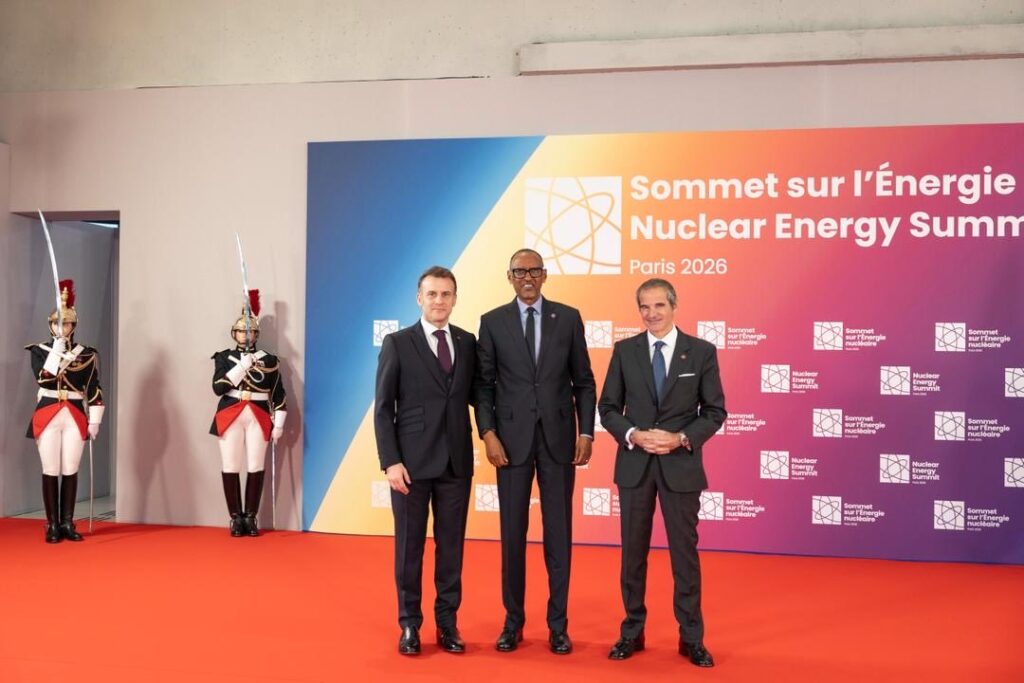
President Paul Kagame has emphasized that nuclear energy will play a central role in Rwanda’s long-term development strategy, helping the country achieve its goal of becoming a high-income nation by 2050.
He made the remarks on Tuesday, March 10, 2026, while attending the second International Conference on Nuclear Energy in Paris.
In his speech, President Kagame stressed that sufficient electricity supply is a critical pillar for economic growth and industrial development.
“Rwanda aims to be a prosperous country by 2050. To achieve this, we must ensure reliable electricity. That is why we have prioritized nuclear energy in our development strategy,” he said.
President Kagame explained that nuclear power will help Rwanda diversify its energy sources, secure a reliable and continuous supply of electricity, and support industrial growth, ultimately contributing to long-term economic transformation.
He noted that implementing such a program requires strong institutions, clear regulations, and a skilled workforce—foundations Rwanda is actively building. He also thanked the International Atomic Energy Agency for its ongoing support, particularly in assisting the Rwanda Atomic Energy Board (RAEB) and regulatory authorities.
“Over 100 Rwandans have already received training in nuclear science and engineering through partnerships with leading international institutions,” President Kagame said.
He added that the University of Rwanda has launched a new program in nuclear science, while the IAEA has conducted infrastructure assessments, confirming Rwanda’s progress in building the necessary pillars for a nuclear energy program.
President Kagame also highlighted technological advances that make nuclear energy accessible even to countries with smaller grids, notably through Small Modular Reactors (SMRs). He expressed confidence that Africa could become a major market for this technology in the near future.
He stressed the importance of international cooperation in advancing nuclear energy, emphasizing three priorities: securing sufficient investment, continuing technological partnerships, and establishing clear, stable international regulations.
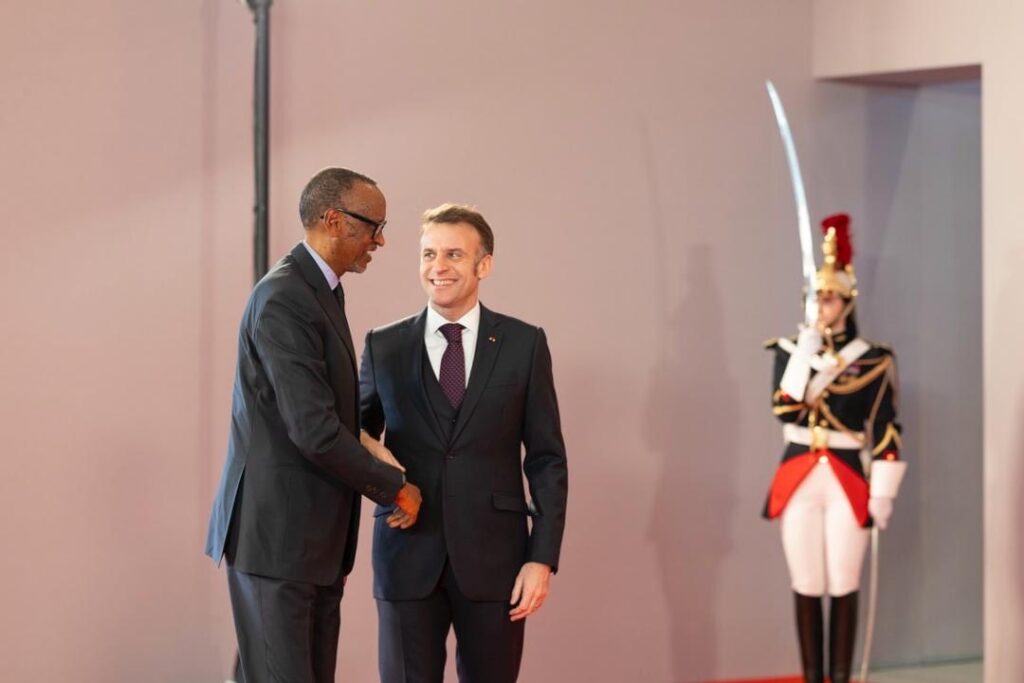
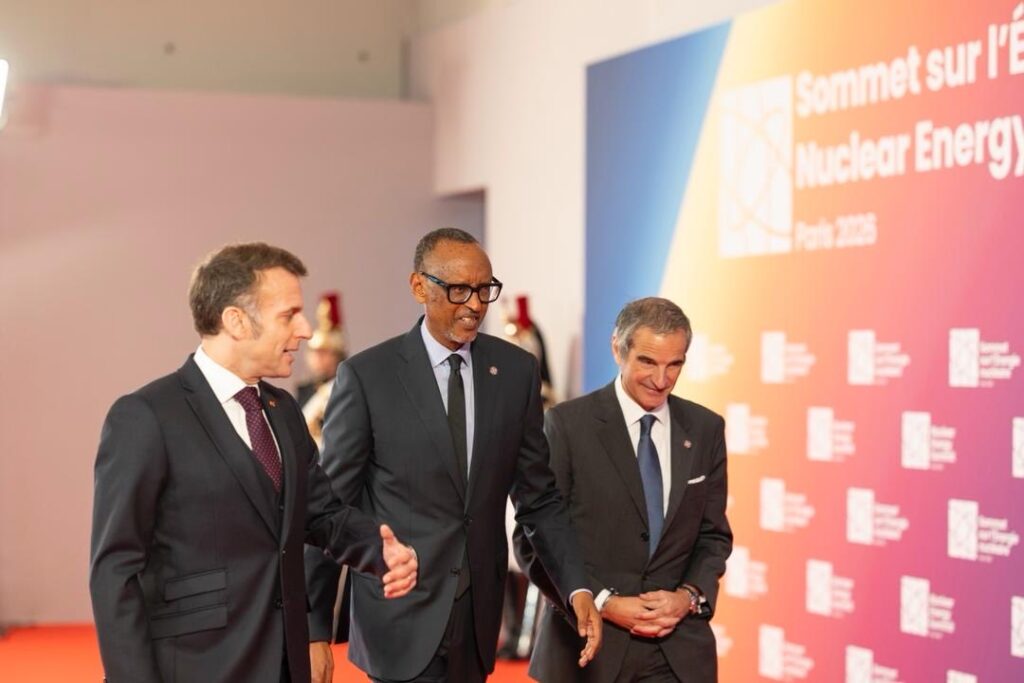
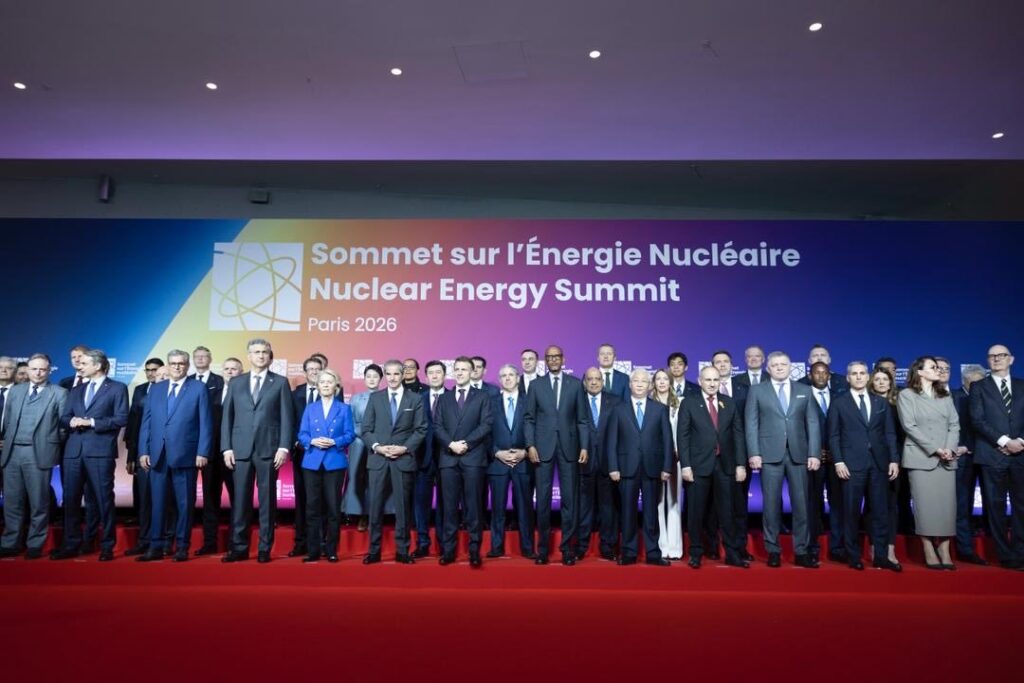
The conference was officially opened by President Emmanuel Macron and attended by IAEA Director General Rafael Mariano Grossi, along with energy experts and policymakers from around the world.
Participants discussed how nuclear energy could help countries secure sufficient, reliable electricity while addressing the global challenges of climate change. The conference also focused on modern nuclear technologies, such as small-scale reactors, which offer affordable and reliable power, as well as strategies for mobilizing the investment required to build and expand nuclear infrastructure.
The event comes as nations worldwide seek sustainable solutions to meet rising energy demands, with nuclear power recognized as a critical option for clean, reliable, and cost-effective electricity.