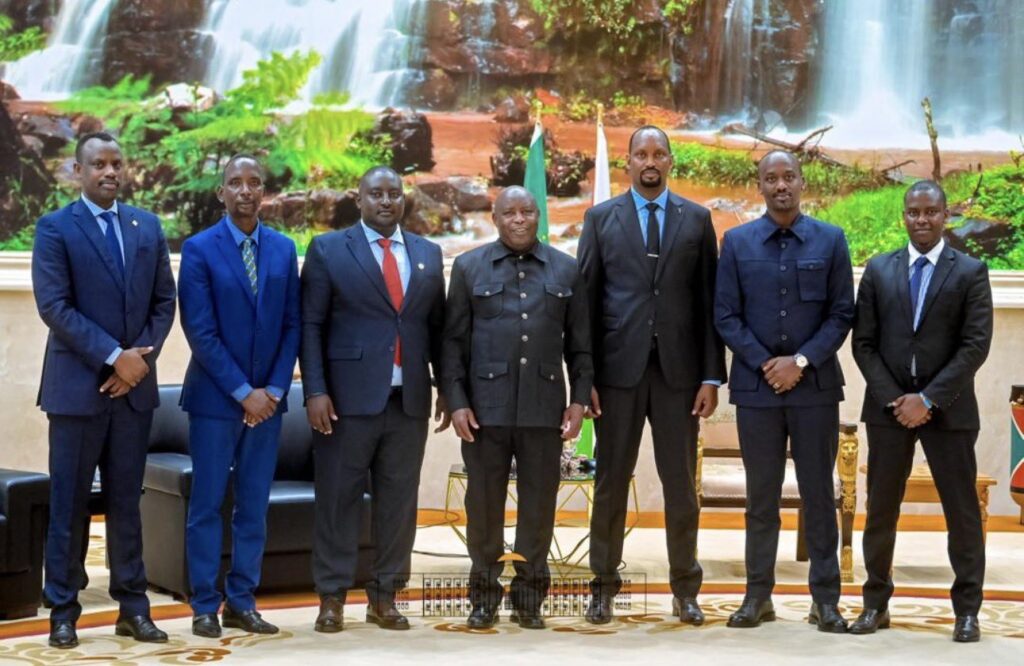
Rwanda’s Minister of Foreign Affairs, Amb. Olivier Nduhungirehe, has sharply criticized a group of Banyamulenge individuals who recently met Burundi’s President, Évariste Ndayishimiye, accusing them of undermining their community and advancing political interests under its banner.
The Minister’s reaction, shared Wednesday on X, follows the circulation of videos on social media showing the group meeting the Burundian leader and expressing gratitude for his country’s actions in eastern Democratic Republic of the Congo.
In the footage, the group commends Burundi’s military involvement in South Kivu, arguing that it is aimed at protecting Banyamulenge populations in the region. They also level accusations against Rwanda, alleging its role in attacks targeting the community.
However, multiple sources indicate that the individuals involved are neither widely known nor recognized as legitimate representatives of the Banyamulenge, both in the United States and across the diaspora.
Further reports suggest that some members of the delegation were previously affiliated with the Mahoro Peace Association (MPA) in the U.S., but have since established a separate entity claiming to represent Banyamulenge interests. They are also said to have maintained close ties with authorities in Kinshasa, including engagements with senior officials such as Patrick Muyaya.
Drawing historical parallels, Nduhungirehe warned that the instrumentalization of individuals against their own communities is not new in the region. He referenced the era of former President Juvénal Habyarimana and his MRND party in the 1990s, noting that similar tactics were employed.
“These practices of using individuals to betray their own community are not new in our region,” he stated.
He further pointed to figures such as Antoine Nyetera, accusing them of perpetuating a legacy linked to genocide denial and divisive narratives.
The Foreign Minister also challenged the delegation to visit Minembwe in the Hauts Plateaux of South Kivu to assess the situation firsthand. He alleged that drones operated by the Armed Forces of the DRC (FARDC) frequently strike the area, causing destruction to civilian homes.
Nduhungirehe additionally faulted President Ndayishimiye’s decision to receive the group, cautioning against conflating his role as Burundi’s Head of State with his responsibilities within the African Union (AU). He stressed that the AU Assembly of Heads of State and Government has not mandated such engagements.
The development adds to mounting geopolitical tensions in the Great Lakes region, where complex security dynamics and competing narratives continue to shape regional relations.