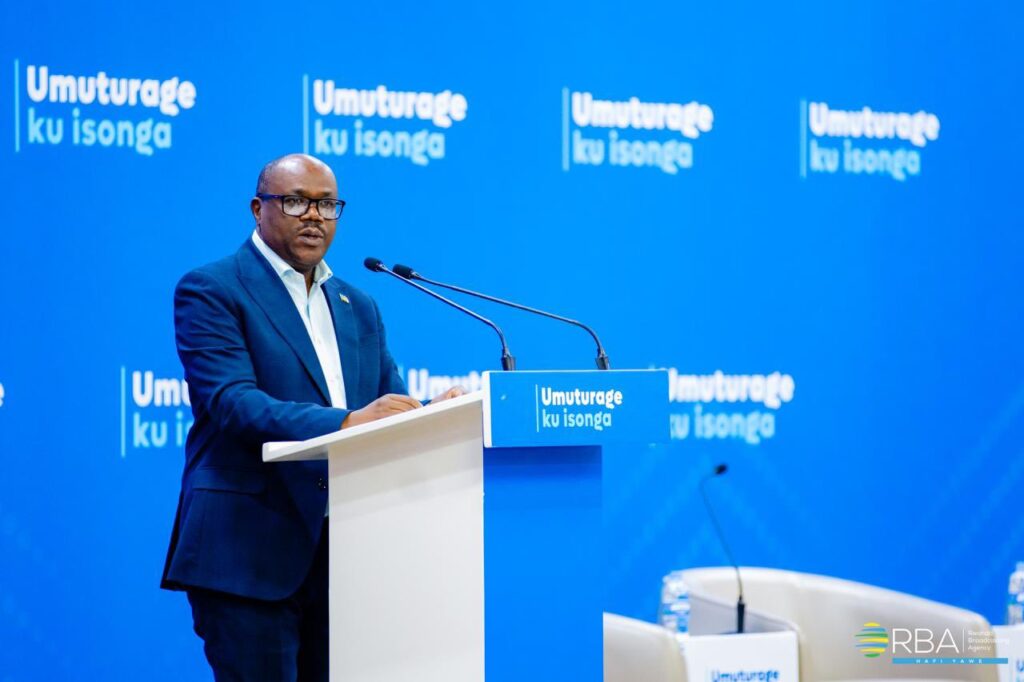
Justin Nsengiyumva has called on leaders at all levels of government to stay closely connected to citizens and respond swiftly to their concerns, warning that delays, particularly in agriculture, continue to undermine livelihoods.
He made the remarks on Monday while opening the Central and Local Government Meeting at Rwanda Military Academy Gako, where national and local officials are reviewing the implementation of government programmes under the theme “Citizen at the Center.”
Dr. Nsengiyumva said leaders must have a clear understanding of the challenges facing citizens and ensure timely solutions, noting that unresolved issues have a direct impact on people’s welfare.
“Agriculture remains the backbone of our economy, yet it continues to face recurring challenges that require urgent and coordinated responses,” he said.
He highlighted key risks including drought during the first planting season and excessive rainfall in the second, both of which lead to crop losses, reduced productivity, and food insecurity.
The Prime Minister warned that these challenges are being exacerbated by climate change, urging leaders to adopt a more proactive and responsive approach.
“Being close to citizens helps identify where problems exist—whether it is drought, floods, lack of inputs, or delays in planting—and enables timely intervention,” he added.
He further urged leaders to strengthen farmer support through improved seed use, mobilize citizens to participate in development programmes, and ensure timely escalation of issues beyond their capacity.
Dr. Nsengiyumva stressed that citizen-centered service delivery should be a guiding principle across all sectors, calling on leaders to prioritize responsiveness, accountability, and practical solutions to the challenges facing communities.